Button and coin batteries hide in ordinary objects: remotes, key fobs, kitchen scales, musical cards, flameless candles, thermometers, toys and hearing devices. Their small size makes them easy for a child to pick up and hard for an adult to notice on the floor. The safest approach is not a one-time tidy. It is a short household system for finding batteries, securing products and dealing with spent cells immediately.
Start with a ten-minute sweep
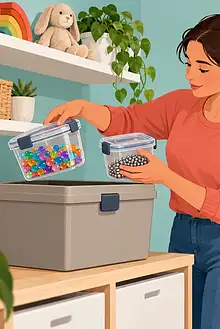
Take a small container with a lid and walk through the rooms a child uses. Look at every battery-powered object, not only toys. Turn it over and ask three questions: Does it use a button or coin battery? Can the compartment open without a tool or two deliberate actions? Is the cover cracked, loose or missing? Put questionable products out of reach until they can be repaired or replaced.
In the living room, check remotes, electronic candles, light-up decorations, talking books and small scales. In bedrooms, look at watches, calculators, night-lights and musical cards. In kitchens and bathrooms, inspect thermometers, scales and small timers. Bags, drawers and bedside tables deserve attention too; spare batteries often arrive there after a purchase and are forgotten.
Build three barriers
- Secure the product. Prefer a battery compartment closed with a screw or another child-resistant design. A piece of tape over an unsafe door is not a reliable long-term repair.
- Secure spare cells. Keep unopened batteries in their original packaging inside a locked or latched container, high and out of sight. “Out of reach” changes as children climb.
- Secure used cells. A flat battery can still cause injury. CPSC advises placing non-conductive tape over the terminals or around the battery and taking it to an appropriate battery collection point. Keep it locked away while waiting.
Tell every adult who visits or cares for the child where the safe container is. Grandparents and babysitters may use hearing aids, key fobs or medication organizers that bring small batteries into the home. A calm reminder—“Please put any loose battery straight into this box”—is more useful than a general warning.
Give children a simple rule
For preschoolers, use one short sentence: “Batteries are for grown-ups; do not touch—come and tell me.” For school-age children, add that a battery should never go in the mouth, even as a joke, and that they must tell an adult if they see one. Older siblings can help notice hazards, but should not be responsible for storing or disposing of cells.
A monthly visual check can be attached to an existing routine, such as testing alarms. Also repeat the sweep after holidays, parties, travel or gifts, when unfamiliar gadgets and loose packaging enter the house. If a battery-powered item is dropped, inspect the compartment before returning it to use.
If a battery may have been swallowed
Treat suspected ingestion as an emergency even if the child looks well. Do not wait for symptoms and do not make the child vomit. In the United States, call the National Battery Ingestion Hotline at 800-498-8666 or Poison Help at 800-222-1222 and seek emergency care immediately; elsewhere, use your local poison service and emergency number. CPSC relays specific honey guidance for some children aged 12 months or older, but only in a narrow situation and never as a reason to delay care. Follow the poison specialist’s instructions rather than improvising.
For a broader household readiness system, pair this sweep with EdCaptain’s one-page caregiver handover sheet and small-parts-free baby and toddler play pack.
Keep the sweep written down if several adults share the home, so a repaired product is checked again before it returns to an accessible room.