A feather, flower or close animal photo can feel like the perfect souvenir. Yet collecting, feeding or approaching wildlife can harm habitats and put both children and animals at risk. The alternative is not to make nature untouchable and tense. It is to give children interesting ways to look, listen and remember while leaving living things undisturbed.
Prepare before you arrive
Check the site’s current rules, weather, route and wildlife guidance. Some places specify viewing distances or close areas during nesting, breeding or fire risk. Bring water, suitable clothing, a basic first-aid kit and a way to record observations. Stay on marked paths where required.
Tell children the rule in positive language: ‘We watch wild animals from where they stay calm. We leave plants, rocks and homes where we find them.’ A picture or hand signal can help a young child remember.
Use the animal’s response as information
National Park Service guidance says to give wildlife room and move back if an animal reacts to your presence. Never follow, touch, tease or feed an animal. Food that seems harmless can change animal behaviour and bring it into conflict with people. Keep pets controlled according to local rules.
If wildlife approaches, do not use the moment for a closer picture. Calmly follow site-specific instructions and increase distance when safe. Adults manage the situation; a child should not be sent forward to ‘shoo’ an animal.
Replace collecting with noticing
Try one of these low-impact activities:
- Choose a colour and count how many shades you see.
- Draw the shape of a leaf without picking it.
- Photograph three textures from the path.
- Listen for bird calls and describe them with invented sounds.
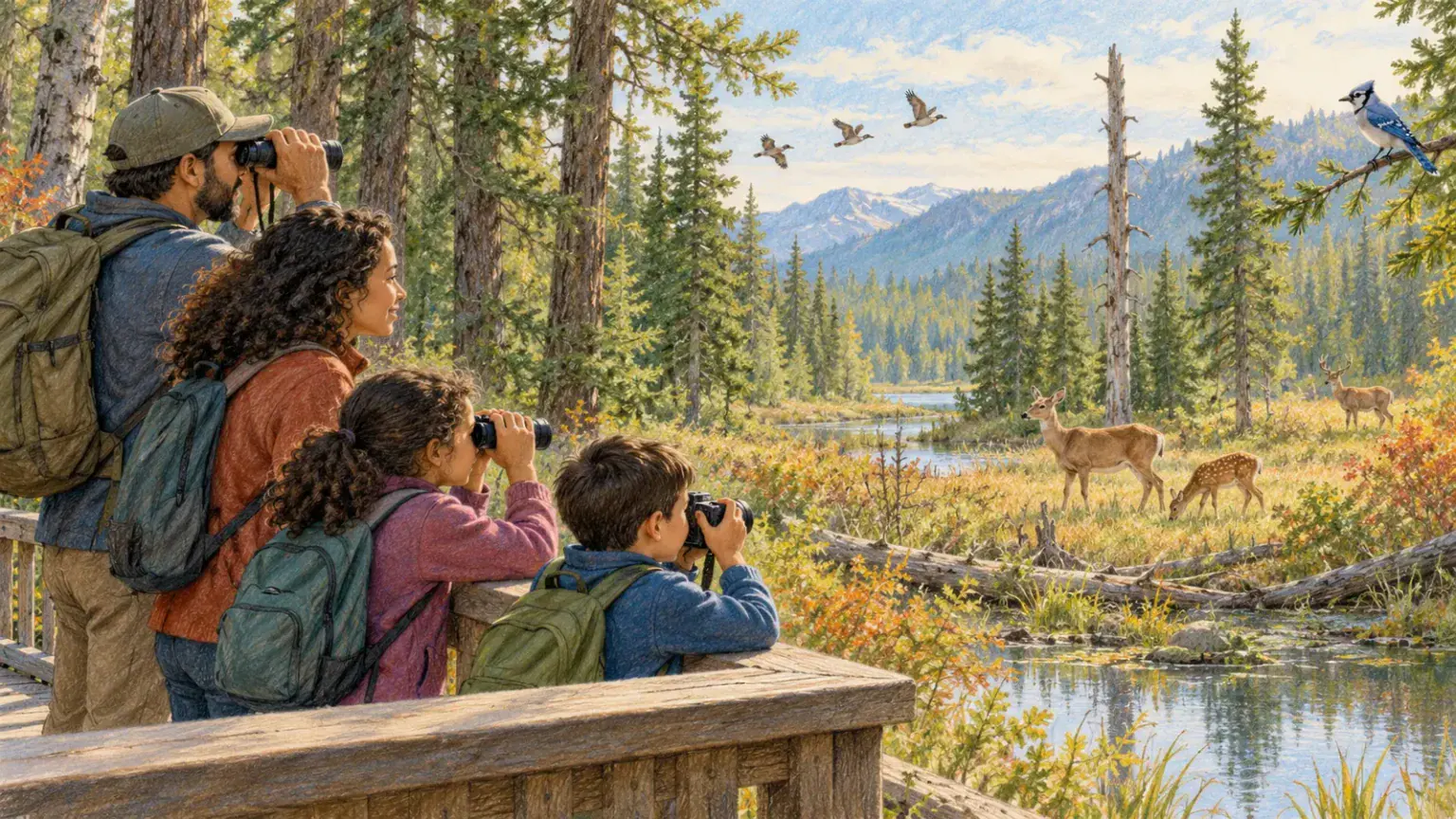
- Use binoculars to notice movement, not to pursue an animal.
For young children, keep the activity short. Older children can keep a nature journal, look up a species after returning home or compare seasonal observations. Avoid sharing the precise location of a sensitive nest or rare species publicly.
Know what should stay
Leave flowers, rocks, antlers, feathers, nests, eggs, shells, archaeological objects and other natural or cultural items in place unless local staff explicitly say otherwise. Even something that looks abandoned may provide food or shelter. Take home only your own belongings and waste.
If a child has already picked something up, respond without humiliation: ‘That belongs here. Let’s put it back gently where you found it.’ Do not ask them to handle an animal, egg, sharp object or unknown plant; an adult should seek ranger guidance.
Make safety ordinary
Keep children within the distance and supervision the setting requires. Do not pose near cliff edges, water, traffic or wildlife for a photo. Teach children not to put plants, berries, fungi or animal droppings in their mouths. Wash hands before eating. In places with large or dangerous wildlife, learn the specific safety protocol before the visit rather than relying on a general rule.
End with a memory, not a trophy
At home, choose one photo, drawing or sentence for a family nature record. Ask, ‘What did the animal do when nobody bothered it?’ That question shifts success from getting close to observing well.
For families balancing climate concern with action, see how to respond to climate worry. A calm family outing also benefits from the planning approach in solo travel with children, whether one or several adults attend.
Adapt for access and sensory needs
Respectful nature experiences do not require a long hike. Choose an accessible viewpoint, short path, garden or window where the child can observe comfortably. A child sensitive to sound may prefer a quiet time of day and hearing protection that still allows adult communication. A child with low vision can focus on safe sounds, textures of permitted built features and descriptive narration. Ask site staff about accessible routes rather than carrying or pushing a child onto unsuitable terrain. Protecting nature and including the child are compatible goals.