A first flight includes far more than time in the air: transport to the airport, queues, security, unfamiliar toilets, waiting, noise and then a seat that must be shared with strangers nearby. Preparation helps when it makes the sequence familiar without promising that the child will love every part.
Confirm the safety plan before the story
Ask the airline about tickets, seating, child-restraint rules, stroller handling and assistance. Rules differ by country, airline and aircraft. The US Federal Aviation Administration strongly urges an approved child restraint system for young children and says the restraint must have the required aircraft-use certification. Booster seats and baby carriers are not approved restraints during some phases of flight. Follow the airline, aviation authority, device label and manufacturer instructions that apply to your journey.
If using a child seat, confirm that it fits the aircraft seat and practise installing it according to its manual. Do not buy or borrow a look-alike aviation harness without verifying approval and authenticity.
Show the journey in five pictures
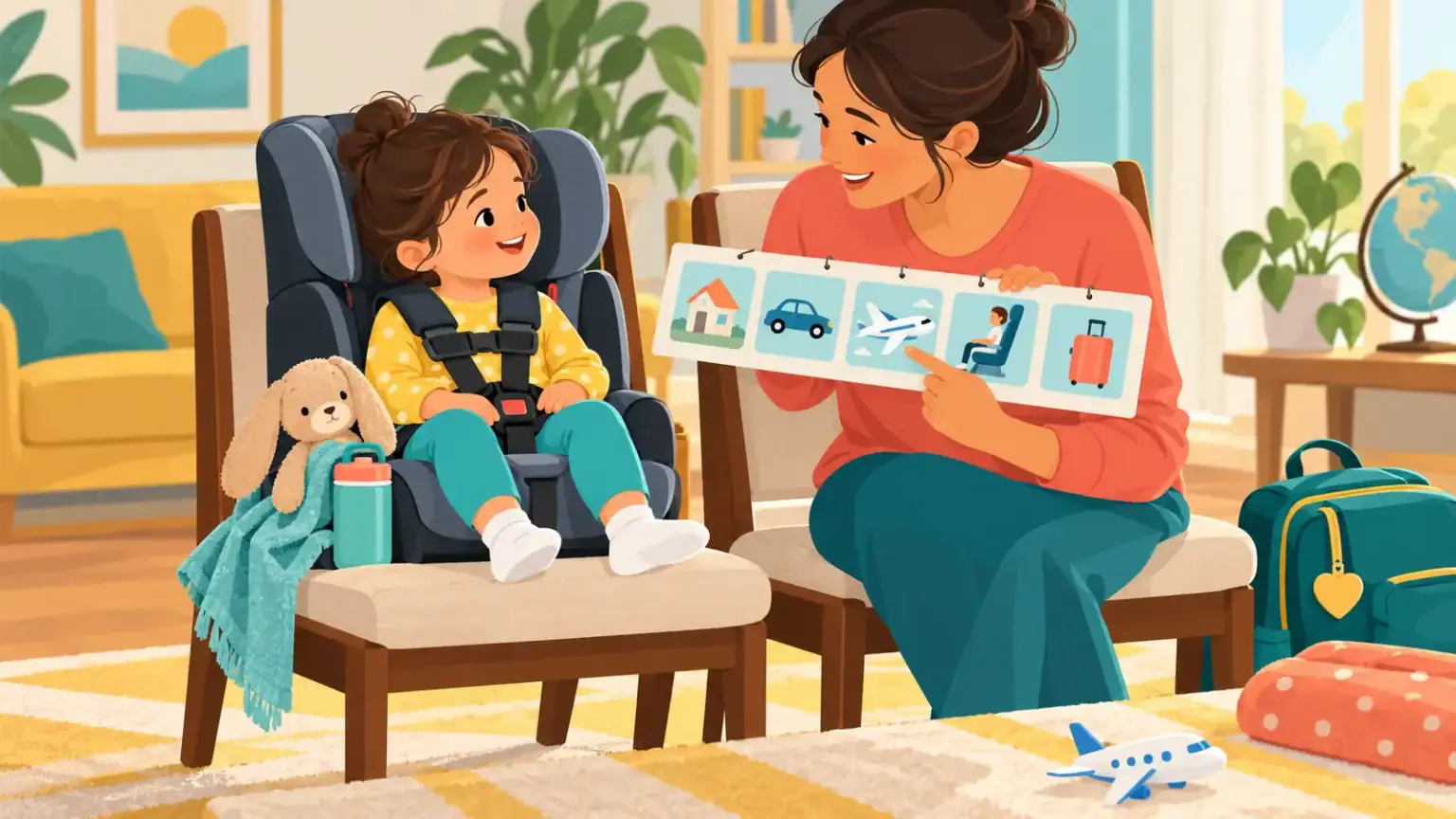
Use simple drawings or photos: leave home, check bags, pass security, wait at the gate, sit on the plane, arrive. For a preschooler, say one sentence per step. An older child may want details about scanners, announcements or toilets. Be truthful: ‘There may be loud sounds and waiting. I will stay with you.’
Rehearse sitting with a lap belt or approved restraint, keeping a small bag under control and waiting before standing. Never stage turbulence by shaking a child. Instead explain, ‘Sometimes the plane bumps like a road. We keep our belt on and listen to the crew.’ FAA guidance recommends remaining buckled because unexpected turbulence can injure unrestrained passengers.
Pack for access, not abundance
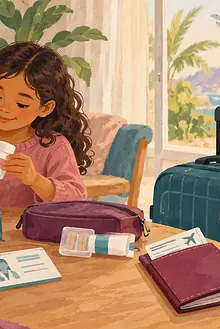
Place documents, medicines, wipes, a change of clothes and one comfort item where the adult can reach them. Choose quiet activities without many loose pieces. Download entertainment before travel and bring suitable headphones if the child uses them. Liquids, food and equipment must meet security and airline rules.
For a baby or child with health needs, discuss feeding, pain, allergies and travel fitness with their clinician. Do not give sedating medicine simply to make a child sleep on a flight.
Build sensory exits into the plan
Arrive with enough time to avoid rushing, but not so early that waiting becomes endless. Find a quieter gate area if available. Offer movement before boarding when safe. A child who cannot tolerate a greeting, noise or touch still deserves respect; our guide to a low-pressure sensory plan offers adaptable ideas.
During the flight, keep expectations modest. A child may cry, ask the same question repeatedly or reject the activity you packed. Use short phrases: ‘You are safe. The belt stays on. I’m here.’ Follow crew instructions even when they interrupt a soothing routine.
Plan the arrival too
Know how you will travel from the airport and whether an appropriate child restraint will be available. Keep one familiar snack and essential medicine accessible until you reach the accommodation. On the first day, reduce optional plans if everyone is tired.
If one adult is travelling alone, the practical ideas in Solo Travel With Children can help simplify bags and handoffs.
After the flight, review gently
Wait until everyone has rested, then ask one or two questions: What was easier than you expected? What should we change next time? A young child might point to a picture; an older child may name a difficult queue or noise. Record only useful details, such as which snack travelled well or when the child needed movement. Do not replay crying or fear as a funny family story without the child’s consent. The review should improve the next journey, not grade this one.