A beautiful room can still look very different from a child’s height. The useful goal is not to make temporary accommodation perfectly childproof. It is to find the few hazards most likely to matter, change what you can, and decide where an adult must stay close.
Pause before unpacking
Keep your child beside you, in a stroller, or with another adult while one caregiver takes a slow lap of the room. If you are travelling alone, use a snack or quiet activity within sight rather than letting a young child explore first. Photograph the room before moving objects so you can restore it later.
Do a child-height scan
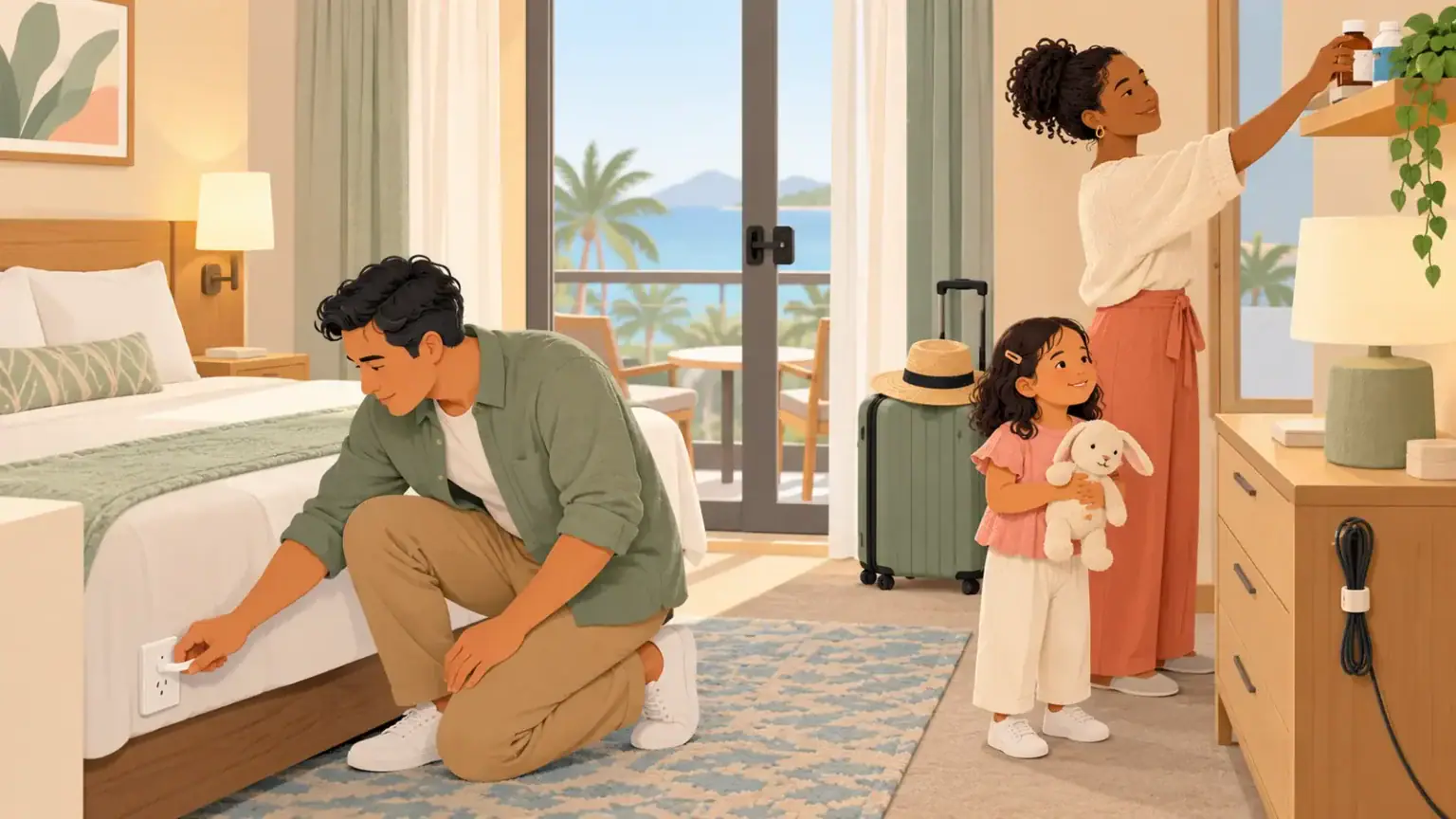
Kneel or sit where your child can reach. Look for dropped tablets, coins, button batteries, cleaning pods, matches, sharp objects, blind cords, loose cables and furniture that can tip. Check under the bed and sofa, inside low drawers, beside bins and around the minibar. Put medicines, toiletries, keys, hot drink supplies and small objects in a high closed cupboard—not just on a bedside table.
Test the main door, connecting door, windows and balcony door. A chain that an older child can reach is not a complete plan. Use the room’s high latch if it works, move a noisy suitcase near the door as an alert without blocking an exit, and tell children that balconies are adult-together spaces. Never move heavy furniture or improvise a barrier that creates a fall, fire or entrapment risk.
Make sleep genuinely safe
Ask before arrival what cot or play yard is supplied, then inspect it. It should be sturdy, correctly assembled and free from broken parts. Babies need a firm, flat sleep surface with no pillows, loose blankets, bumpers or soft toys. Do not place a cot beside curtains, cords, heaters, lamps or a reachable window. If the supplied equipment seems damaged or unsuitable, request a replacement or use safe equipment you brought.
Check bathroom, kitchen and water access
Close the toilet lid, empty the bath, move razors and appliances, and keep cleaning products high. Test water temperature yourself. In a rental, check the cooker controls, kettle cord, knives and balcony or pool access. A locked door does not replace active supervision near water. If the property has a pool, agree which adult is watching before anyone gets in.
Give older children a role
A school-age child can help spot “things a baby could swallow” or remind the family where bags belong. Keep the tone practical rather than frightening. Try: “This room was set up for many kinds of guests. Let’s make it work for our family.” If travel itself is new, pair this check with a calm first-flight preparation plan. For car-based stays, the breaks and equipment checks in this family road-trip guide can help.
Pack a tiny room-safety kit
- A small roll of painter’s tape for loose cords or rarely used low switches
- A night-light that does not become hot
- A few removable cabinet fasteners you already know how to use
- A zip pouch for medicines and small valuables
- A familiar sleep item appropriate for your child’s age
Do not cover smoke alarms, sprinklers or ventilation, and do not tape over emergency information. Report exposed wiring, broken locks, unstable railings or unsafe furniture to the property. Ask for another room when a serious hazard cannot be fixed promptly.
Before you leave
Reverse the setup: remove temporary fasteners, return moved objects, check high cupboards for medicines and scan under the bed. The same slow lap that made arrival safer can prevent a rushed departure.