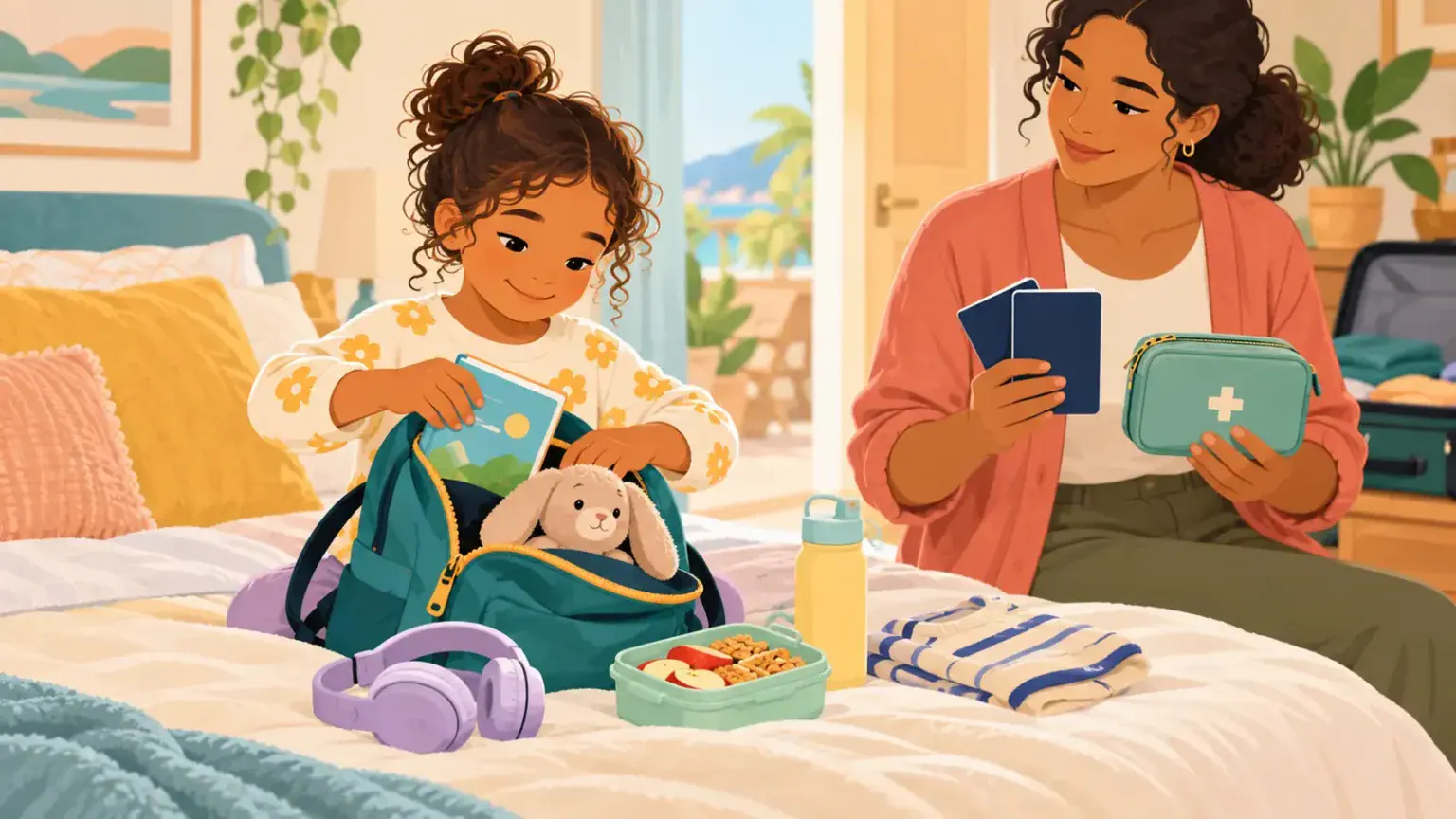
Letting a child pack their own travel backpack can build anticipation and useful independence. It should not make them the keeper of passports, emergency medicine or the one item the whole family cannot travel without. The simplest split is: the child chooses what makes the journey manageable; the adult carries what keeps the journey possible and safe.
- Start with two lists
- Choose the bag by the child, not the fantasy
- Use a three-pile packing method
- Let the child practice the journey
- Pack for access, not entertainment overload
- Set simple bag rules
- When the child changes their mind
- At the end of the trip
- Pack for the return journey too
- Sources and further reading
Start with two lists
Make an “adult-only essentials” list before inviting the child to pack. It includes travel documents, tickets, keys, money, emergency contacts, prescribed medicines, allergy supplies, chargers needed for medical or communication devices, and any safety equipment. Keep these in a consistent adult-controlled place. For medicine planning, use this child travel medicines checklist.
The child’s list can include one comfort item, one quiet activity, a book, headphones, a layer of clothing, tissues and a familiar snack where appropriate. The exact list depends on age, trip length and what the carrier permits.
Choose the bag by the child, not the fantasy
A small backpack should sit comfortably, close securely and remain light enough for the child to carry without strain. Do not fill every pocket because space exists. A preschooler may carry only a soft toy and picture book. A school-age child can manage several items. A teenager can take more responsibility, but the adult should still verify critical arrangements.
Use a three-pile packing method
- Must help me: a comfort or access item the child genuinely uses.
- Good for the journey: quiet activities, snack and spare layer.
- Nice but optional: extra toys or bulky objects.
Pack the first pile, add from the second, and use the third only if the bag remains manageable. This avoids turning packing into an argument about every object.
Let the child practice the journey
Have them put the bag on, walk around, sit down and find one item without emptying everything. Check for dangling straps, leaking bottles and small items that could be lost. At home, rehearse putting the bag on the security belt and waiting for it to come back. The first-flight preparation guide explains how to make airport procedures predictable without promising they will be easy.
Pack for access, not entertainment overload
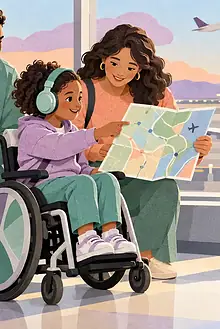
A child who uses AAC, hearing technology, sensory supports or mobility equipment needs those items reachable—not buried below toys. Keep backups and charging plans with the adult. For a child with allergy needs, separate safe food and emergency treatment clearly; this food-allergy travel plan can help.
Set simple bag rules
- The bag stays with the family, not beside a bin or café table.
- The child asks before taking out food or electronics.
- Valuable or irreplaceable items stay home unless truly needed.
- An adult does the final check and carries critical essentials.
When the child changes their mind
If the bag feels heavy or an item becomes annoying, receive it without “I told you so.” Independence includes revising a plan. Before leaving each location, use the same short check: bag, comfort item, headphones, bottle. Older children can lead the check; the adult still verifies.
At the end of the trip
Ask which item was actually useful and which never left the bag. That reflection makes the next packing list shorter and more personal. The goal is not a perfectly packed child. It is a child who participates in preparation while still being safely held by the adult system around them.
Pack for the return journey too
Leave one small empty pocket or a little space for an item acquired during the trip. Before returning, repeat the same adult-and-child split instead of assuming the first arrangement survived. Check that wet clothes, rubbish or opened food have not made the bag unpleasant, and remove any object that is restricted on the next leg. If another adult takes over, say clearly which bag the child carries and where the essentials remain.