Travel changes brands, kitchens, languages and routines—all things families may normally use to manage a food allergy. The answer is not to promise zero risk. It is to make the child’s existing medical plan portable, reduce guesswork and keep emergency treatment within reach.
- Start with the child’s own plan
- Keep essential medicine with the child
- Pack a safe-food buffer
- Ask precise restaurant questions
- Prevent cross-contact in temporary kitchens
- Prepare the child without transferring the burden
- Plan for transit and accommodation
- If a reaction may be happening
- Do a five-minute daily reset
- Sources and further reading
Start with the child’s own plan
Before travel, review the written allergy or anaphylaxis action plan with the child’s clinician. Confirm which medicines to carry, how to store them, when to use them and when to call emergency services. Check expiry dates and obtain enough supply for delays. This article cannot replace those individualized instructions.
Keep essential medicine with the child
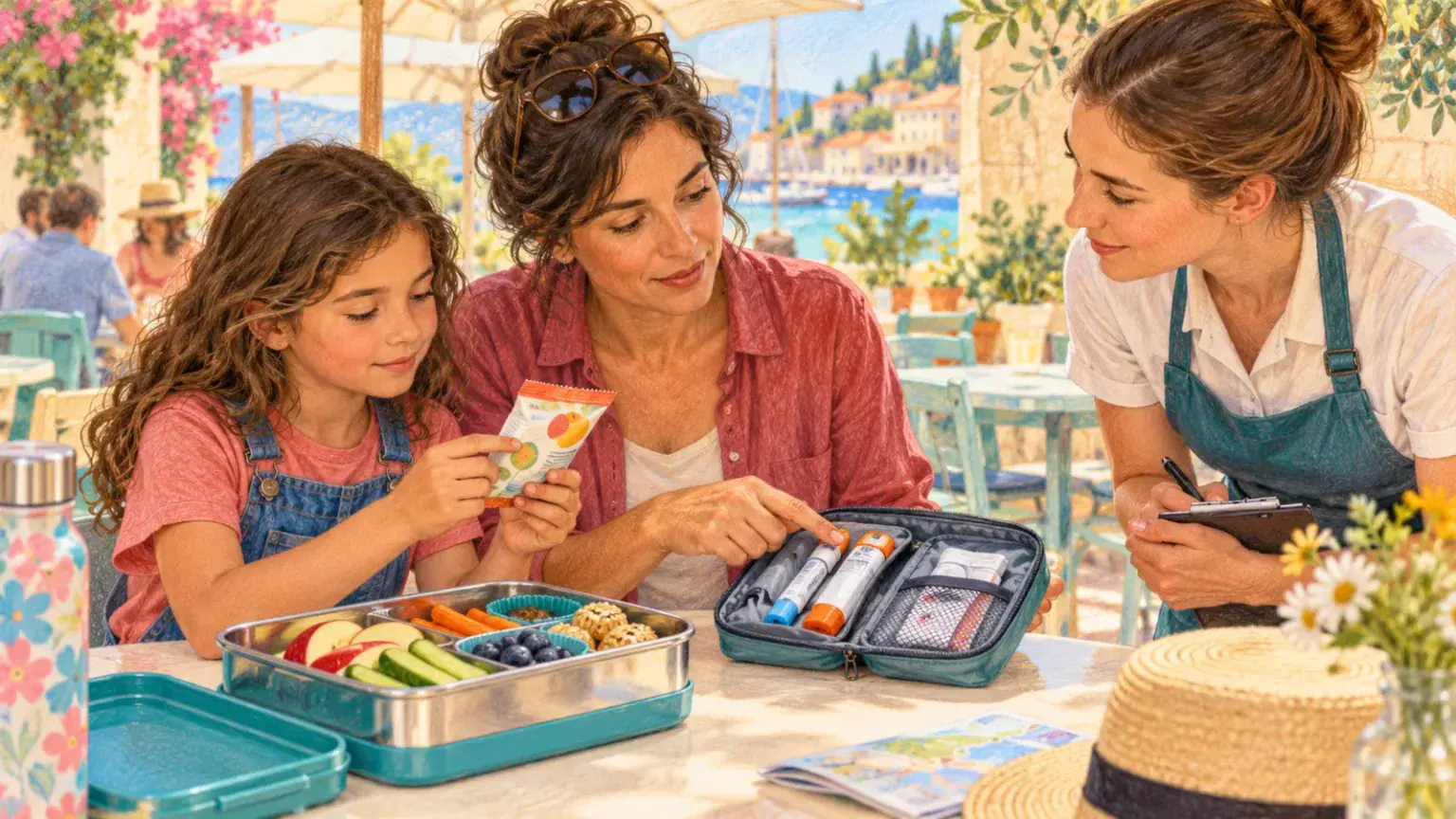
Do not put all emergency medicine in checked luggage or a distant car boot. The responsible adult should know exactly where it is, and older children should practice telling another adult. Keep original labels and supporting documentation required by the carrier or destination. The broader packing steps in this child travel medicines guide can help you build a reliable handoff.
Pack a safe-food buffer
Bring familiar, sealed foods for the journey and an unexpected delay, within transport and customs rules. Recheck every label even for a familiar product: ingredients and manufacturing information can change, and a product sold in another country may use a different recipe. Never assume a “free from” claim covers the child’s particular allergen or cross-contact risk.
Ask precise restaurant questions
“Is this safe?” can invite an overconfident answer. Instead ask what ingredients are used, how the dish is prepared, whether utensils and cooking oil are shared, and who can verify the information. A translated allergy card can support the conversation but should not replace it. If staff cannot answer, choose a simpler option or use your backup food. Leaving is a valid decision.
Prevent cross-contact in temporary kitchens
In a rental, wash surfaces and utensils before use, check sponges and chopping boards, and store the child’s food separately. In a shared breakfast area, watch serving spoons and crumb-contaminated spreads. For babies and toddlers, clean the highchair tray rather than relying on its appearance.
Prepare the child without transferring the burden
- Young children can learn not to eat food until their adult checks it.
- School-age children can practice saying the allergen clearly and showing their medicine pouch.
- Teens can lead questions, while an adult still verifies plans and medication access.
Use calm language: “We ask every time because kitchens can change.” Avoid presenting the child as difficult or making them apologize for safety needs.
Plan for transit and accommodation
Tell the airline, train operator, camp or hotel early, then verify what they can actually provide. Policies do not guarantee an allergen-free environment. Clean the child’s seating surface, discourage food sharing, and identify where medical help is available. If the journey may also trigger nausea, follow the child’s clinician’s advice and use this motion-sickness preparation guide rather than adding unapproved remedies.
If a reaction may be happening
Follow the child’s emergency plan immediately. Do not wait for symptoms to become severe and do not rely on an article or internet search during an emergency. Use prescribed emergency medicine as directed and call local emergency services. Tell responders the suspected allergen, symptoms, medicine given and time.
Do a five-minute daily reset
Each morning, check that medicines are accessible, the action plan is with the responsible adult, backup food is replenished and the day’s venues have been considered. Confirm who carries the medicine during a swim, excursion or childcare handoff. This short reset prevents yesterday’s arrangement—medicine in another bag, food left in a room—from quietly becoming today’s emergency gap.