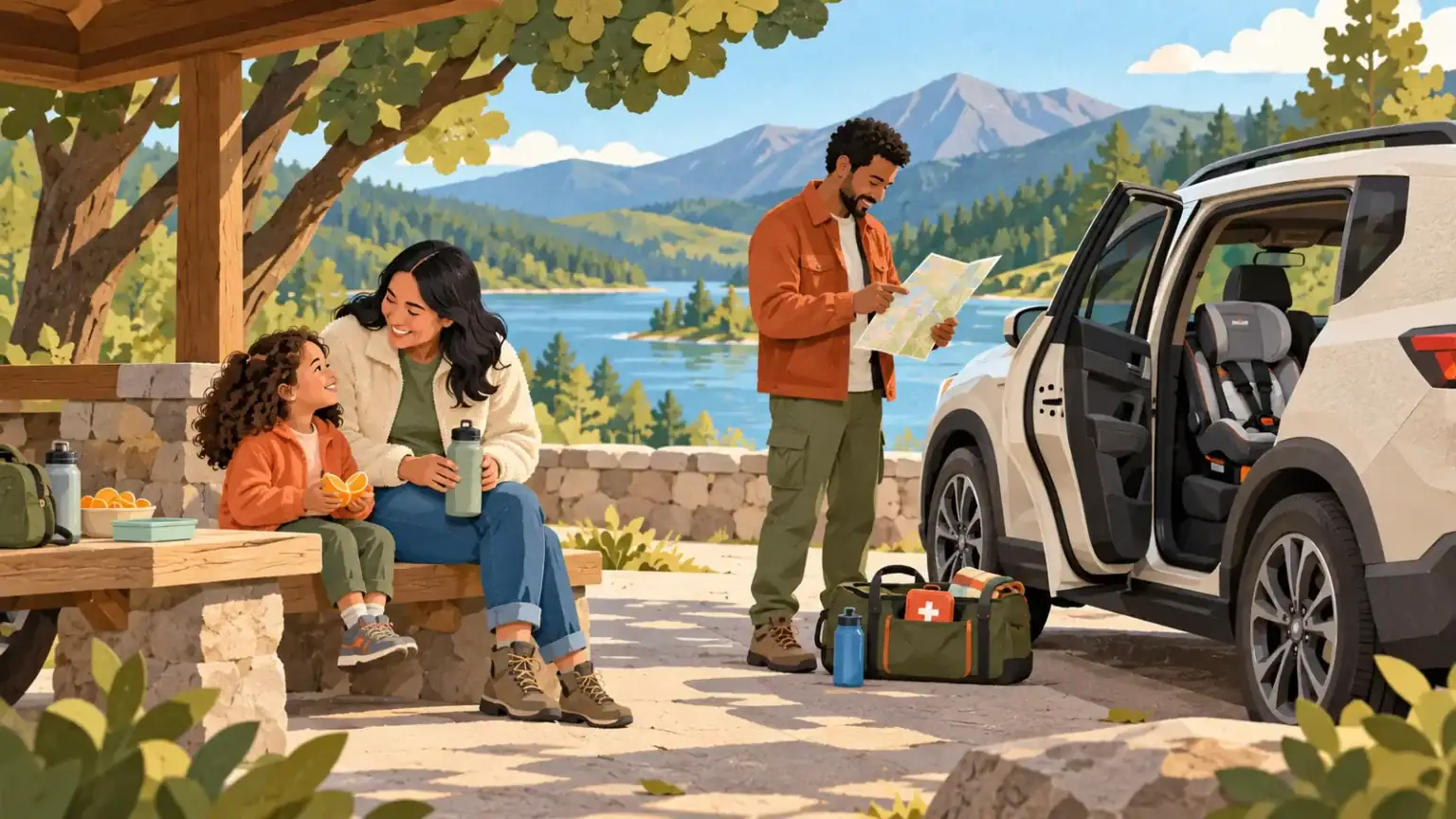
A route that looks simple on a map can feel very different with feeding, toilets, car-seat discomfort, traffic and a tired driver. The safest plan assumes stops will happen and protects the driver’s attention instead of trying to beat an ideal arrival time.
Prepare the car before packing entertainment
Check tyres, lights, fluids and servicing according to the vehicle manual. Review weather, road conditions, fuel or charging stops and safe alternatives. NHTSA recommends an emergency roadside kit with items such as a charged phone, first-aid supplies, flashlight, drinking water, non-perishable food, basic tools, warm layers and a map. Adapt the kit to climate, route and local advice.
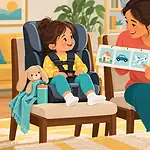
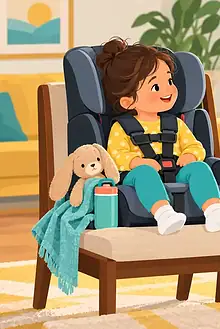
Every child needs the age- and size-appropriate car seat, booster or seat belt required by local law and the restraint manufacturer. Install it before travel, not at the roadside. In US guidance, children under 13 ride in the back seat; other jurisdictions may specify different ages. The applicable law and product instructions control.
Give children an honest route
Instead of promising ‘We’re nearly there,’ show three or four landmarks: breakfast stop, bridge, lunch, destination. Young children can move a clip along a picture strip. Older children can follow the route without becoming responsible for navigation.
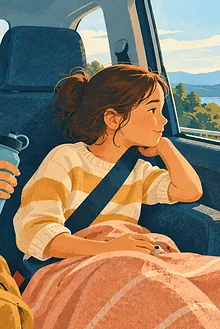
Say what is fixed: ‘Your belt stays fastened while the car moves.’ Then offer choices that are genuinely available: music or story, apple or crackers, quiet time or conversation.
Make breaks part of the plan
Schedule regular opportunities for the driver to rest and for everyone to use a toilet, drink and move safely. Babies and children with medical or positioning needs may need individualized advice from a clinician or restraint specialist. Never unbuckle a moving child to feed, comfort or change them. Pull over in a safe legal place.
At stops, supervise children closely around traffic. Do not leave a child alone in a vehicle, even briefly; vehicle temperatures can become dangerous. Lock the parked vehicle and keep keys away from children.
Protect the driver’s attention
The driver does not manage dropped toys, open containers or arguments. A second adult can help when available. If travelling alone with children, stop before solving a problem. Mount navigation legally, set audio before moving and put the phone out of hand. If the driver feels sleepy, irritable or unable to focus, stop somewhere safe rather than relying on caffeine, cold air or loud music.
Pack for the next two hours
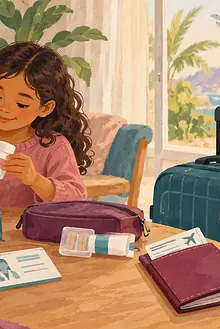
Keep water, simple food, wipes, a change of clothes and essential medicines accessible to the non-driving adult. Secure luggage so it cannot become a projectile. Avoid hard, sharp or very small loose toys. Screens may worsen motion sickness for some children; our guide to child motion sickness offers alternatives.
Arrive with energy left
Tell hosts that arrival time is approximate. If delays grow, cancel the first optional activity. A successful road trip is not one with the fewest stops; it is one in which the driver stays alert, restraints remain correctly used and children arrive cared for.
For packing and handoff ideas when one adult travels with the children, see Solo Travel With Children. If using borrowed equipment at the destination, review secondhand safety checks.
Plan for children with additional needs
A child who uses adapted seating, medical equipment or communication support may need more space and longer stops. Confirm that equipment is secured according to its instructions and that emergency contacts and backup supplies are accessible. Do not improvise padding, belt routing or restraint changes for comfort. Ask the child’s clinician, occupational therapist or a qualified child-passenger-safety professional for individualized advice before the trip. Tell the child which parts of the plan are flexible so they can request a break without feeling they have ruined the journey.