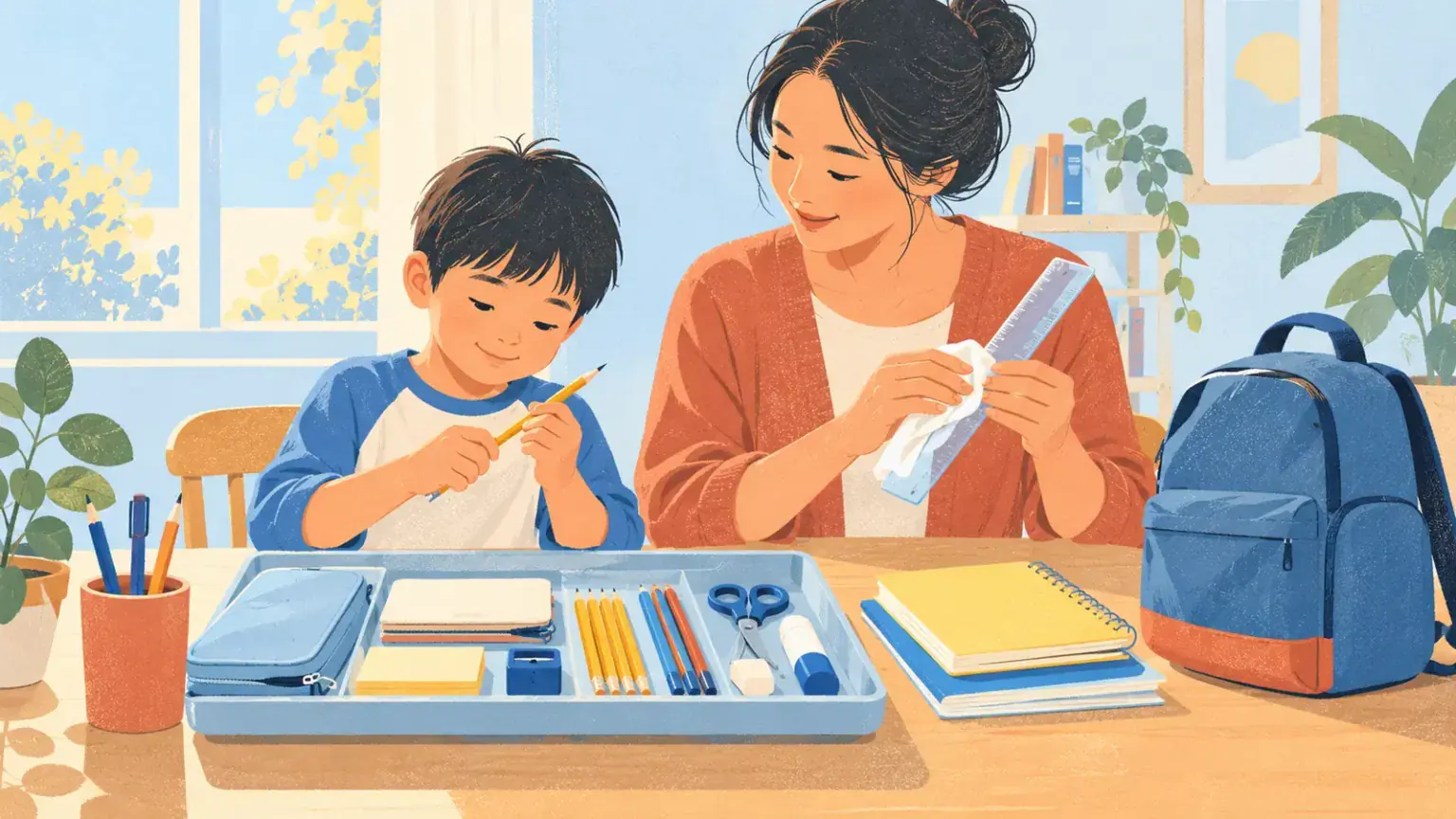
A new school term can trigger a shopping list before anyone checks the drawer. Reusing supplies can reduce waste and cost, but a child should not be sent with dried markers, the wrong notebook or something that attracts unwanted attention. The useful question is not ‘Can we avoid buying anything?’ It is ‘What do we already have that genuinely works for this child and this classroom?’
Get the real list first
Use the current school or teacher list rather than last year’s memory. Note exact requirements for size, colour, safety and labelling. Some items must be individual for hygiene or learning reasons. If a requirement is unclear, ask before buying a substitute. School systems differ, so local instructions take priority.
Run a function test together
Spread likely supplies on a table and make three groups: ready, fixable and replace. Test pens on scrap paper, sharpen pencils, check rulers for cracks and open lunch containers to see whether seals still work. Remove staples, blades, leaking batteries and broken plastic. Clean reusable items according to the maker’s instructions.
Give children real choice within the usable group. A younger child might choose between two pencil cases. An older child can decide whether a partly used notebook suits rough work but not a class that requires a fresh book. A teen can help compare the list with what is already at home.
Reuse without embarrassment
Ask privately how the child feels about an item. Some children enjoy visible repairs; others worry about peer comments. A plain, functioning item may feel easier than one covered in slogans or a conspicuous patch. Do not announce to teachers or classmates that the family is ‘saving the planet’ through the child’s possessions unless the child wants that shared.
If a child rejects everything because peers have new supplies, acknowledge the social pressure. Set a clear budget and offer a compromise: reuse the sturdy bag and choose one new item they value, or decorate a plain folder at home. Sustainability is not improved by buying a reusable product the child will not use.
Buy fewer, better-fitting replacements
When something truly needs replacing, choose the correct size and durability for the task. Avoid bulk packs unless the family will use or share them. Skip novelty pieces that interfere with writing or become classroom distractions. Keep receipts until the school confirms the item works.
Label only what the school requests, using the child’s privacy needs as a guide. Do not place a full address or unnecessary personal details on visible items.
Create a small return station
One tray near the homework area can hold pencils, erasers and rulers that come home. At the end of term, invite the child to sort what remains usable. Donate only items an organization has asked for; an unsolicited bag of half-working supplies transfers the sorting burden to someone else.
EPA school guidance highlights practical programs for reuse, repair, recycling and waste reduction. Families can apply the same sequence at home: check, maintain, share appropriately, then recycle only through accepted local routes. For a child-friendly way to explore packaging, try My Plastic Parcel. For calmer family purchasing decisions, the principles in our secondhand safety guide are also useful.
When the school list is unaffordable
Contact the school privately and early. Ask which items are essential on day one, which may be shared, and whether the school has a supply bank or assistance route. Do not send a child to negotiate the exception or explain family finances in front of classmates. If relatives want to help, give them the exact list rather than accepting random supplies. A clear request protects dignity and prevents well-meant purchases that do not meet classroom requirements.