A week’s worth of packaging can tell a family quite a story. You do not need to collect rubbish from the street to explore it. A few clean items, or drawings of them, are enough to begin.
Prepare a safe sorting table
Choose a short session with a caregiver or teacher. Use clean, dry packaging from your own household that an adult has checked, plus paper for a tally. Picture cards are a good alternative, especially for younger children.
Exclude batteries, electronics, medicines, chemical containers, broken pieces, sharp edges and anything dirty or mouldy. Keep plastic bags and small lids away from young children. Adults handle any cutting; do not heat or burn plastic.
Look, count and ask
- Group the items by what they were used for: drinks, snacks, deliveries or something else.
- Count each group. Make a tally or draw the items. This describes your sample, not what every household uses.
- Ask which item could have been avoided, used again safely or replaced by something you already own.
- Find out what your local collection service actually accepts for recycling. A recycling symbol does not guarantee that an item is accepted nearby.
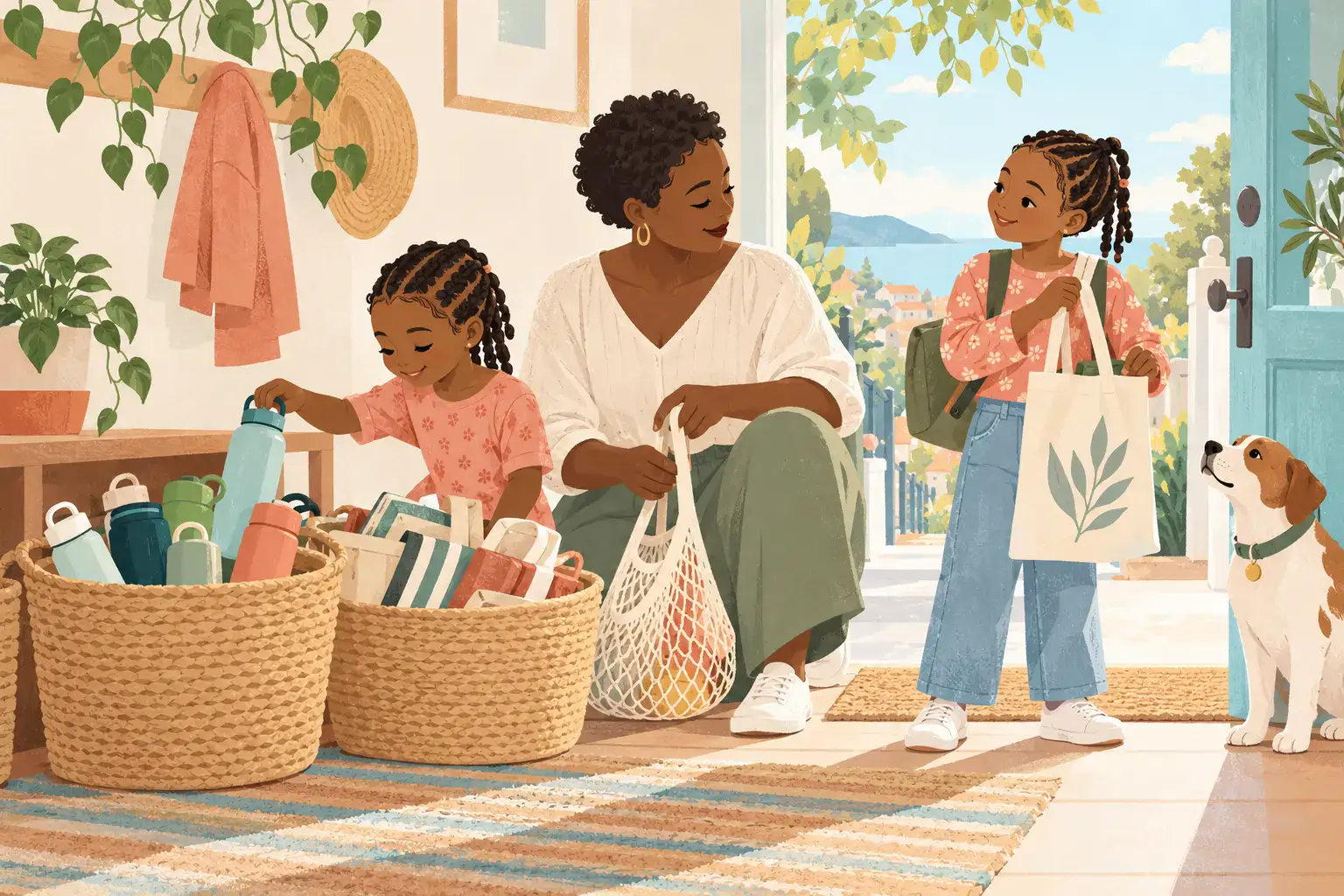
- Choose one manageable change for the coming week. Remembering an existing shopping bag may be enough.
- Check back. Did the change fit the family’s budget, time and access needs?
Reuse does not have to become a craft project
Using an appropriate container again for its intended purpose may be more useful than making something decorative that nobody needs. Do not reuse chemical containers for food or water. Keep an adult in charge of deciding what is suitable.
If your child wants to make something, a clean cardboard organiser is a simple option. Avoid cutting plastic bottles into sharp-edged pots. You can draw a proposed design instead of building it.
Keep the conversation fair
Some packaging protects food, medicines or accessibility needs. Families also have different shopping options. Talk about manufacturers, collection systems and community choices as well as household actions. This is a chance to notice a problem together, not blame a child for it.
UNEP’s roadmap puts reducing unnecessary plastic and expanding reuse alongside recycling and wider changes to product systems. A household activity is a small part of that picture. Finish with the change you can try, rather than a promise to eliminate every piece of plastic.
Further reading
UNEP: reducing plastic pollution through reuse, recycling and system change