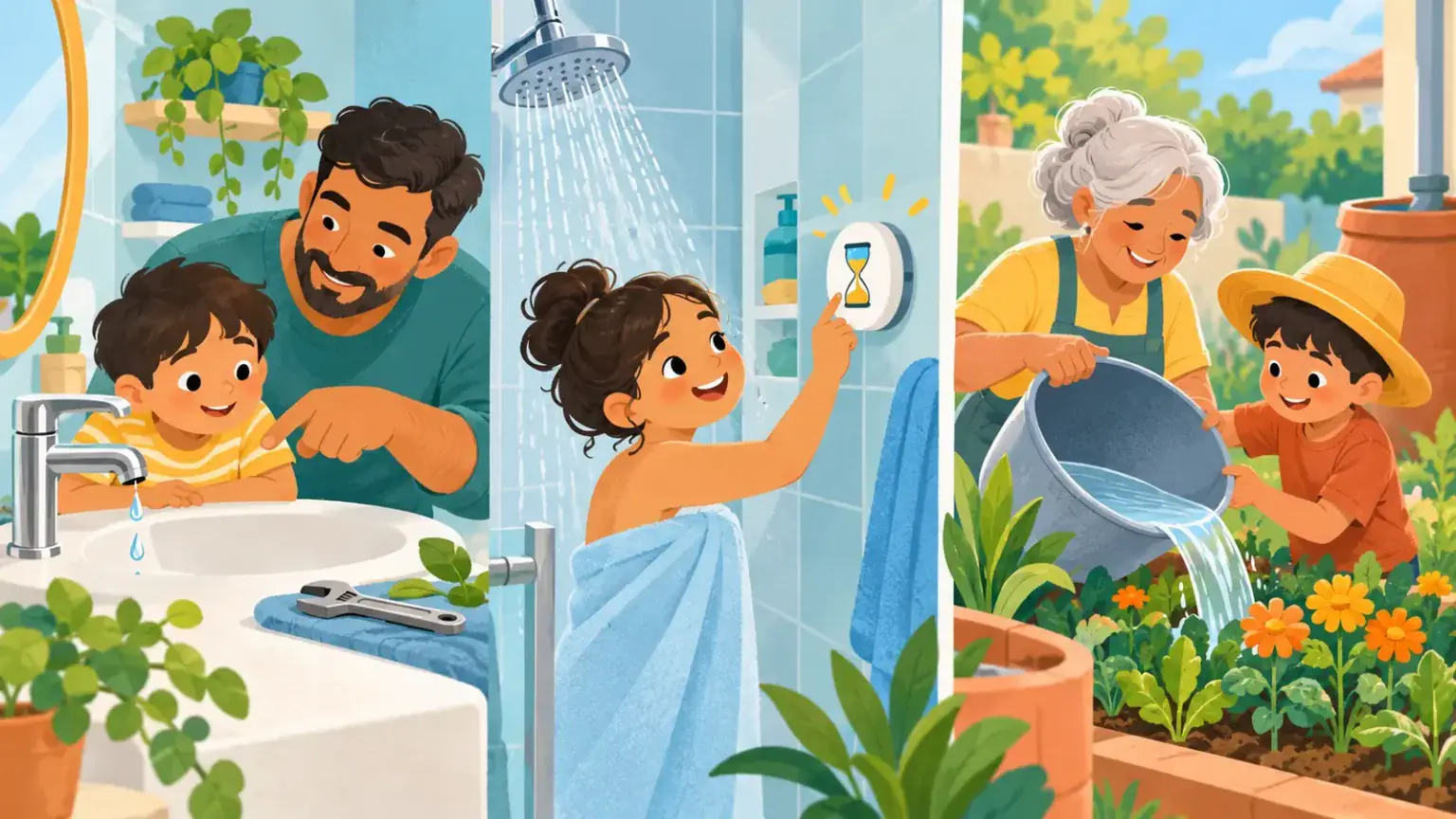
A child can spot a dripping tap and help time a shower, but they should not be asked to monitor every flush or shame a sibling for using water. A family water audit works best as a short experiment led by adults: notice where water goes, fix obvious waste and choose one habit the household can sustain.
Explain the purpose without creating fear
Say, “Clean water takes work and energy to reach our home, so we use it carefully.” If drought or unreliable supply affects your area, give factual, age-fitting information and explain the adults’ plan. Do not threaten the family will run out because a child took a longer bath.
Map one ordinary day
Walk through the home together and list where water is used: drinking, cooking, washing hands, bathing, toilets, laundry, cleaning, pets and plants. Include essential use so the audit does not imply that hygiene or hydration is wasteful.
Young children can use picture cards. Older children can read a meter with an adult, estimate shower time or compare a running tap with a filled basin. Avoid unsupervised access to meters, tanks, roofs or plumbing.
Find leaks first
Look for dripping taps, toilets that keep running, damp patches and hoses that do not close fully. Report leaks to the responsible adult, landlord or utility. Children may help observe; they should not dismantle plumbing or handle contaminated water.
The US EPA WaterSense programme notes that fixing leaks and turning off taps can save substantial water. Exact quantities vary by fixture and country, so focus on your household rather than turning an example into a promise.
Choose a two-week experiment
- Turn off the tap while brushing teeth.
- Use a familiar song or timer for a shorter shower without rushing safe washing.
- Run washing machines or dishwashers with full loads when appropriate.
- Keep safe leftover drinking water for plants.
- Water plants early or late to reduce evaporation.
- Use a bucket and sponge where safe instead of a continuously running hose.
Select one or two changes. Too many rules make everyone forget which action matters.
Keep health and accessibility first
Some people need more water or time because of medical care, disability, menstruation, toileting, skin conditions or sensory needs. Do not compare. Safe handwashing, drinking and prescribed care come before a conservation target. Reused water must never be mistaken for drinking water, and local guidance matters for rainwater and greywater.
Give children roles, not enforcement power
A child can make picture reminders, record a leak, water plants or celebrate a repaired tap. Adults pay bills, arrange repairs and address repeated waste. If one child starts policing others, reset the role: “You can remind once. I will handle the decision.”
Use a short family meeting to agree on the experiment and review it. Keep the tone collaborative, like clean-up relays, rather than scoring who is most environmentally good.
Measure what you can actually know
If the bill or meter is easy to interpret, compare similar periods and note visitors, weather or repairs. Otherwise use process measures: the leak was fixed, taps were turned off during brushing, or full loads became easier. Avoid promising a specific bill reduction.
Connect water to place
Learn where local water comes from and who maintains it. Visit a safe public information site, notice seasonal rainfall or ask the utility for child-friendly resources. Families can write respectfully about a public leak. This keeps the lesson larger than individual guilt.
For a broader waste activity, My Plastic Parcel shows how to observe before choosing one change.
Close the audit
After two weeks, ask what worked, what was annoying and what should become routine. Thank children for observations, not for controlling other people. Keep one change and release the rest.
A good family water audit does not make a child anxious every time a tap runs. It makes hidden systems visible, fixes genuine waste and shows that adults and children can cooperate while health, dignity and safety remain non-negotiable.