By EdCaptain editorial desk · Published
The party is booked, but buying another stack of cups and plates feels wasteful. A borrowed party kit could help—until you realise that nobody has checked who collects it, whether it includes enough bowls, or where the washing happens after the venue closes.
A reusable party kit is a practical borrowing arrangement, not just a box of tableware. This guide is for caregivers organising the booking, hygiene and return. The aim is a manageable celebration, with a clear plan for the work before and afterwards.
Start with the meal and venue, not the kit photograph
Write a short list of what you will actually serve and who needs a place setting. Include adults who will eat, rather than counting only the invited children. Soup needs bowls; cake may need a separate plate or a clean replacement. Check whether the caterer or venue already supplies suitable tableware before borrowing more.
Consider access needs too. A guest may need a familiar cup, adapted cutlery or a more stable dish. Ask privately rather than assuming a uniform set will work for everyone. Bringing an appropriate familiar item can be part of the plan.
The Party Kit Network’s FAQs explain that members run their kits independently. Contents, handover arrangements, charges and washing services vary. Treat the listing as a starting point and confirm the terms with the person lending your actual kit.
Ask these questions before reserving
Send the date, venue and expected numbers with one clear enquiry. For example: “We need plates and cups for a small family party. Can you confirm the quantities, collection and return times, and who washes everything?” Then check the details:
- Contents: How many of each item are included? Are serving utensils, jugs, storage boxes and lids part of the loan?
- Suitability: What materials are supplied, and what foods, drinks and cleaning methods are they designed for?
- Cost: What is the hire fee, deposit, washing charge and policy for missing or damaged items?
- Handover: Where and when must you collect and return it? Is delivery available?
- Washing: Must items come back washed and dry, or does the lender provide a washing service? What preparation is required before returning used items?
A washing service can change whether borrowing is feasible. As one concrete UK example, the Malvern Hills NCT Party Plate Library says it handles the washing. That is a local service description, not a promise about other libraries. Confirm current availability and terms directly.
Give the return journey an owner
Put collection and return appointments in the calendar before the party. Include travel, washing and drying time where required. Check the venue’s closing time: access to a sink during the event does not necessarily mean permission to stay and wash afterwards.
Name the adult who will collect, the adult who will manage used items, and the person who will return the kit. One person can hold several roles, but the work should be explicit. “We’ll sort it out later” often becomes a job for whoever remains when the guests leave.
Our guide to sharing caregiving work through specific requests offers language for agreeing a complete task. For this event, a useful request might be: “Can you take responsibility for washing, drying, counting and returning this box by the agreed time?”
If the container is heavy or the collection point is inaccessible, ask about smaller boxes, assistance or delivery. Consider transport and washing costs alongside the hire fee. Borrowing need not be the cheapest or easiest option in every household.
Check the kit together at collection
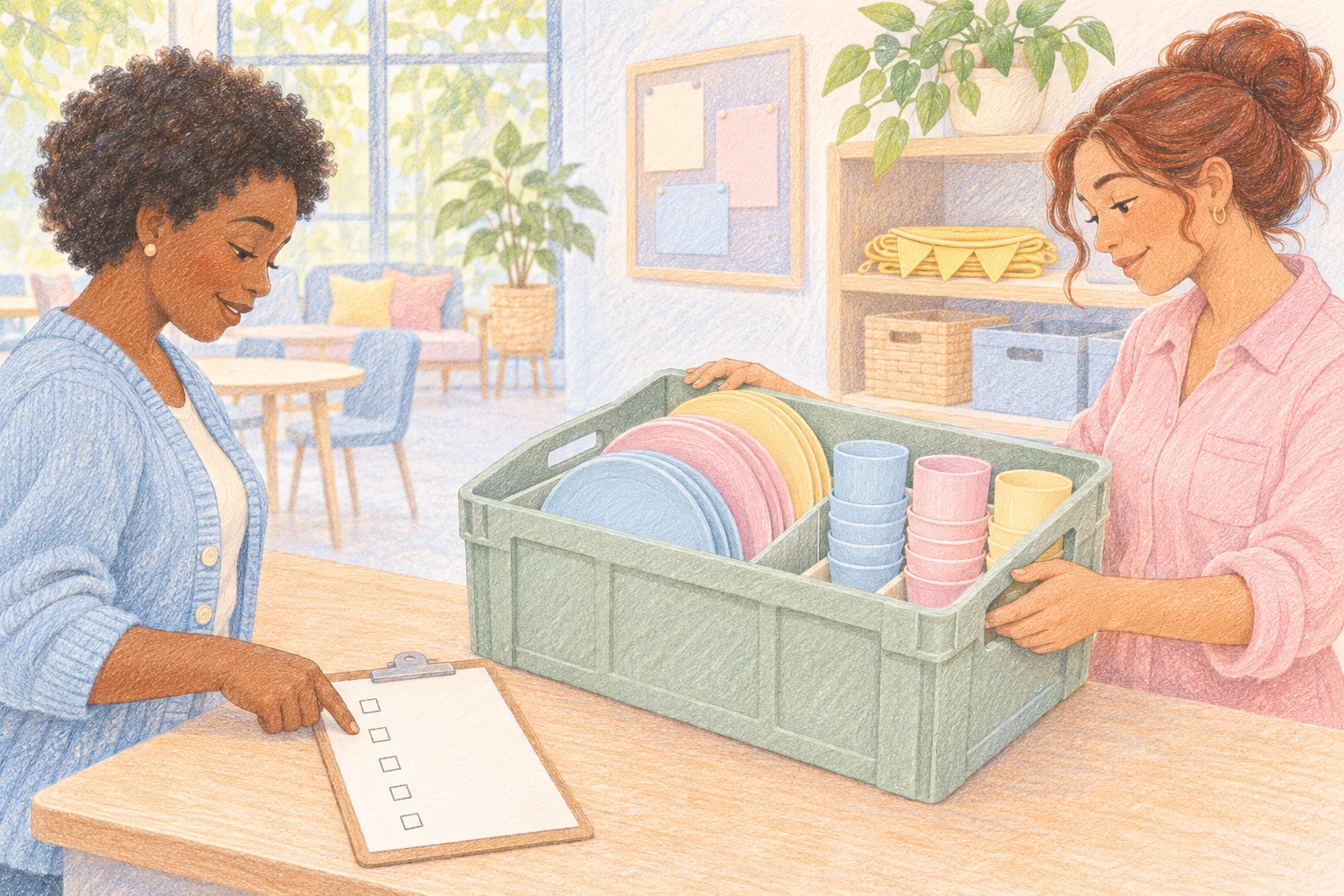
Use the lender’s inventory to count the items before leaving, and note any existing damage. Ask permission to photograph the contents if that would make repacking easier. Report discrepancies then rather than trying to reconstruct them after the event.
Check that food-contact items are clean and in good condition. Set aside anything cracked, chipped or damaged and ask the lender for a suitable replacement; do not quietly repair it for serving food. Confirm care instructions for the actual items, including whether each component is dishwasher-safe. A label on one plate does not establish the instructions for every jug or lid.
Keep clean tableware protected during transport and storage. Do not mix it with food scraps, cleaning chemicals or used equipment. Agree where the empty storage boxes can stay at the venue without blocking doors or creating a trip hazard.
Plan hygiene and allergy arrangements separately
Food Standards Scotland’s cleaning guidance stresses clean hands, work surfaces, cloths and utensils. Wash equipment thoroughly using a suitable method and follow the item’s care directions. Keep equipment used for raw foods separate from clean items ready for serving.
A borrowed kit is not automatically suitable for a guest with a food allergy. Food Standards Scotland advises asking guests or caregivers about their needs, cleaning surfaces and equipment thoroughly with hot, soapy water, and preventing allergen cross-contact. Cooking does not remove food allergens.
Discuss the arrangement with the guest or child’s caregiver before the event. Do not promise that a quick rinse makes shared tableware allergen-free. If you cannot meet an agreed requirement, say so early and agree a safer alternative. Our food-allergy party plan covers the wider arrangements, including the child-specific emergency plan. Choosing tableware does not replace those preparations.
Make clearing up and returning straightforward
Have adults direct used tableware to an agreed collection point, separate from clean serving items. Keep any required cleaning products, hot washing water and heavy boxes under adult control. Follow the lender’s instructions for food scraps and packing used items if they provide washing.
If washing is your responsibility, allow enough time to clean and dry everything properly before repacking. Food Standards Scotland notes the importance of keeping cleaning cloths clean and letting them dry between uses. Do not substitute a hurried wipe for the agreed cleaning process.
Count the kit against the inventory, including its boxes and lids. Tell the lender promptly about missing or broken pieces and follow the agreed replacement process. Confirm the handover and any deposit refund rather than assuming that leaving a box outside completes the return.
Afterwards, keep a short note: what you borrowed, what went unused and whether transport and washing worked. That makes the next decision easier. If borrowing creates too much work, simplify the menu, use suitable tableware already available, or choose another feasible arrangement. Reuse works best when returning the kit is part of the plan from the beginning.
Sources and further reading
- Party Kit Network: how independently run kits operate.
- NCT Malvern Hills: a local plate-library example.
- Food Standards Scotland: kitchen and equipment cleaning.
- Food Standards Scotland: preparing food for people with allergies.
Read our editorial policy.