By EdCaptain editorial desk · Published
You like the idea of washable nappies, but a photograph of twenty neatly stacked ones does not tell you where they will dry in your flat. Nor does it explain who will wash them when everyone is tired. You can investigate those questions before buying a full set.
For a baby or toddler aged 0–2 who wears nappies, a small part-time trial can help you judge the actual routine. It does not require a promise to stop using disposables. Your baby’s comfort and a workable care arrangement matter more than completing a challenge.
Choose one ordinary part of the day
Start with a daytime stretch at home when you can check your baby and change them promptly. Keep your usual suitable nappies available. Avoid making a first attempt coincide with travel, an overnight experiment or a day when the washing machine is unavailable.
Define the question narrowly: “Can we manage a few daytime reusable changes, then wash and dry everything properly?” The trial is about finding out, not stretching how long one nappy lasts. The NHS advises changing wet or dirty nappies as soon as possible and keeping the skin clean and dry.
Agree a review point after you have completed a few use–wash–dry cycles. A fixed number of days is less informative if most of that time the nappies are waiting to dry. Stop sooner if fit, skin comfort or the laundry arrangement is not working.
Borrow or try a small selection first
Ask a local nappy library, waste-reduction service or supplier whether it offers a loan or small trial. As one UK example, South Oxfordshire’s council page describes local kits with different styles and care guidance. This is an example of what to look for, not a scheme available to every reader.
Before paying or borrowing, ask:
- Does this size and design suit my baby’s current measurements and needs?
- Which parts are required, and can someone demonstrate the exact system?
- How must it be prepared, washed, dried and returned?
- What are the hire charge, deposit, return date and replacement conditions?
- Can I get fit advice if it leaks or leaves uncomfortable marks?
Do not assume that a “birth to potty” description guarantees a good fit for every baby. Inspect borrowed items for damage, worn fastenings and missing parts, and follow the provider’s hygiene instructions. Keep the product directions; a video about a different system may not answer your question.
Walk the laundry route before the first change
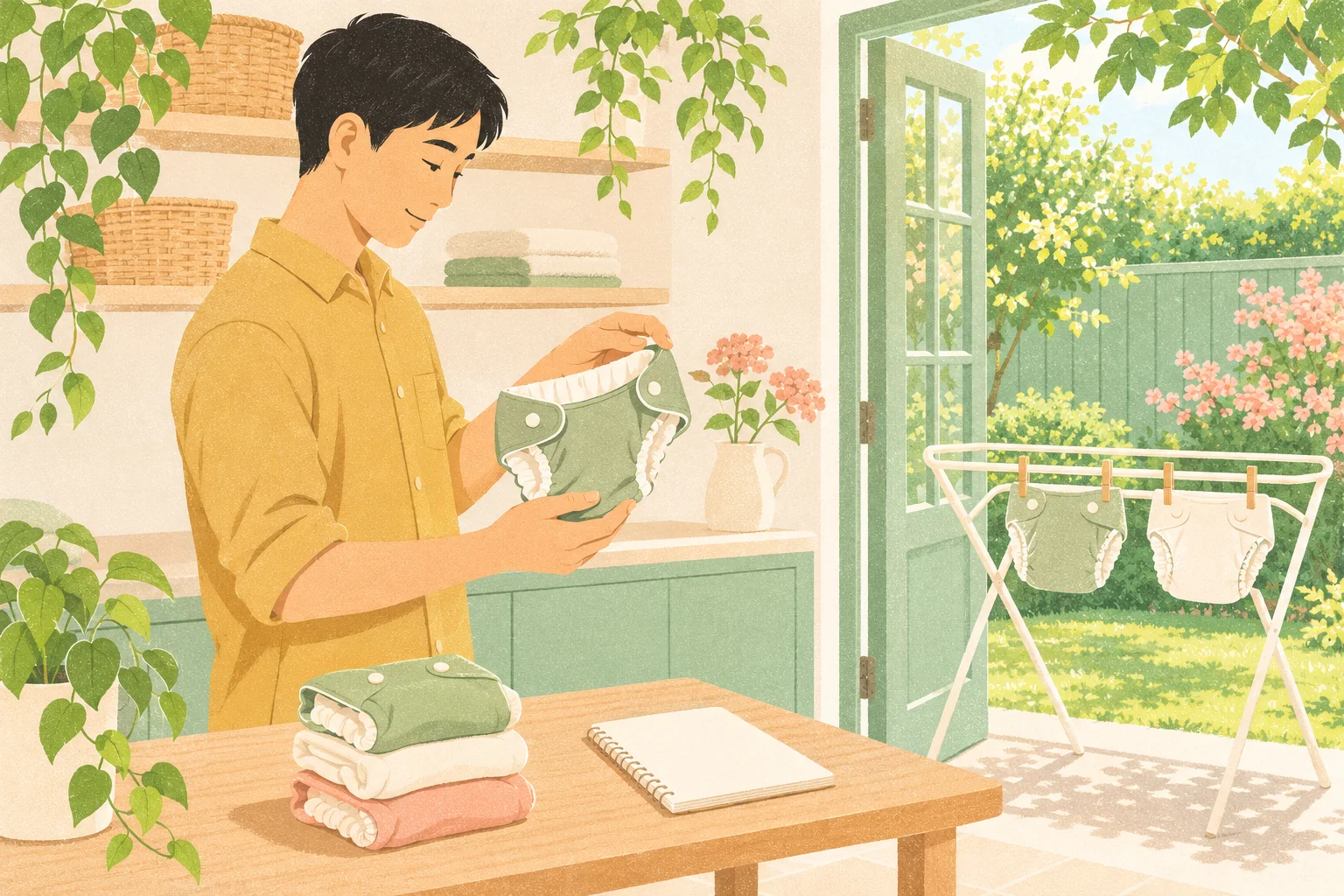
Think through the whole journey: used nappy, safe temporary storage, washing, drying and back into the clean supply. Check access to a suitable machine, detergent, water, electricity and a safe drying place. If you use shared laundry facilities, confirm their rules. If a nappy laundry service is available, ask about collection, charges and missed collections.
The NHS changing guide says cloth nappies can be machine washed at 60°C, advises washing poo-soiled nappies separately from other laundry, and warns against fabric conditioner because it reduces absorbency. Choose products whose care instructions support a suitable hygiene routine; resolve conflicting instructions with the supplier or a health professional before use.
Follow the exact product’s detergent, preparation and storage instructions. Do not invent a chemical soak or a hotter cycle to solve uncertainty. Keep used-nappy storage, bags and laundry products securely beyond children’s reach. Our changing-station guide explains how to arrange supplies without stepping away from a baby.
The North London Waste Authority’s practical guide includes part-time use, libraries and demonstrations. It also says not to flush disposable liners and to avoid drying nappies on radiators or heaters. Check your chosen item’s drying directions rather than assuming every component can go in a tumble dryer.
Practise the change without adding pressure
Gather the correct clean components, cleaning supplies and spare clothes before you begin. The NHS recommends a changing mat or towel on the floor; if you use an elevated changing surface, never leave your baby unattended or turn away. Wash your hands before and after changing.
Ask the supplier to show you how the design should sit at the waist and legs. The aim is a comfortable fit, not tighter fastening to force a seal. Do not ignore rubbing or discomfort to finish the trial. For a wriggling toddler, have everything ready rather than trying to assemble an unfamiliar nappy while they wait.
If there is a leak, change your baby and their clothing promptly. Note the product, fit and circumstances, then seek product-specific advice. One leak does not identify its cause. Buying more inserts at random can obscure the question you were trying to answer.
Record what the routine actually costs you
A brief note is enough: which nappy was used, any fit or skin concerns, the wash required, drying time and who completed each step. Include hire charges, detergent, washing and drying costs where you can estimate them, rather than comparing only purchase prices. Do not assume another family’s savings will match yours.
Make the work visible too. “I’ll do the washing” can leave someone else sorting, hanging, checking dryness and putting everything away. Agree who owns those steps. Our guide to sharing the caregiving load with specific requests can help turn a general offer into a complete task.
A caregiver with limited hand strength may need different fastenings; someone without an accessible drying area may need a different arrangement entirely. The useful question is whether this system works for the people doing the care, not whether they can push through it.
Decide what to keep, change or pause
You might continue with a few daytime changes, try another size with advice, or decide that now is not a good time. A mixed routine is a legitimate outcome. Do not delay changes, crowd unsafe drying spaces or leave one exhausted adult carrying extra work to reach a waste-reduction target.
If a rash persists, worsens or spreads, or your baby has a high temperature or seems very uncomfortable, seek advice from a health visitor or doctor, as the NHS recommends. Do not diagnose the rash or keep experimenting with products while your baby is distressed.
Before expanding your supply, check that you can complete the wash-and-dry cycle comfortably and that every caregiver knows the routine. A small trial that answers those questions is useful even when the answer is “not this system” or “not this month”.
Sources and further reading
- NHS: changing your baby’s nappy and cloth-nappy hygiene.
- NHS: nappy rash and when to get help.
- South Oxfordshire District Council: an example of local trial kits.
- North London Waste Authority: reusable nappy options and practical guidance.
Read our editorial policy and health information disclaimer.