
By EdCaptain editorial desk · Published
“My friend didn’t have any lunch, so I gave them mine.” You may hear both kindness and a problem in that sentence. Your child noticed someone who needed help, but went without their own meal to solve it. Another child might have stayed silent because the school says not to share food.
For children aged 6–12, a useful plan is simple: respond quietly, get a school adult involved, and offer company if it is welcome. Children can care about a classmate without becoming responsible for feeding them.
Start with what your child actually knows
If your child tells you about an incident, ask, “What did your friend say, and what happened next?” Listen before deciding what it means. A forgotten bag, a lunch payment problem and a difficulty at home can look similar from a nearby seat. An empty tray alone does not tell your child why someone has no food.
Avoid questions your child would need to investigate: “Can their parents afford lunch?” or “Does this happen every day?” Instead, ask whether a member of staff knew and whether the classmate received help. If the concern is unresolved, contact the school privately yourself.
Give your child a small, usable plan
- Respond without making an announcement. If a classmate says, “I haven’t got lunch,” your child could reply, “Shall we ask the lunch supervisor for help?” They do not need to ask for an explanation.
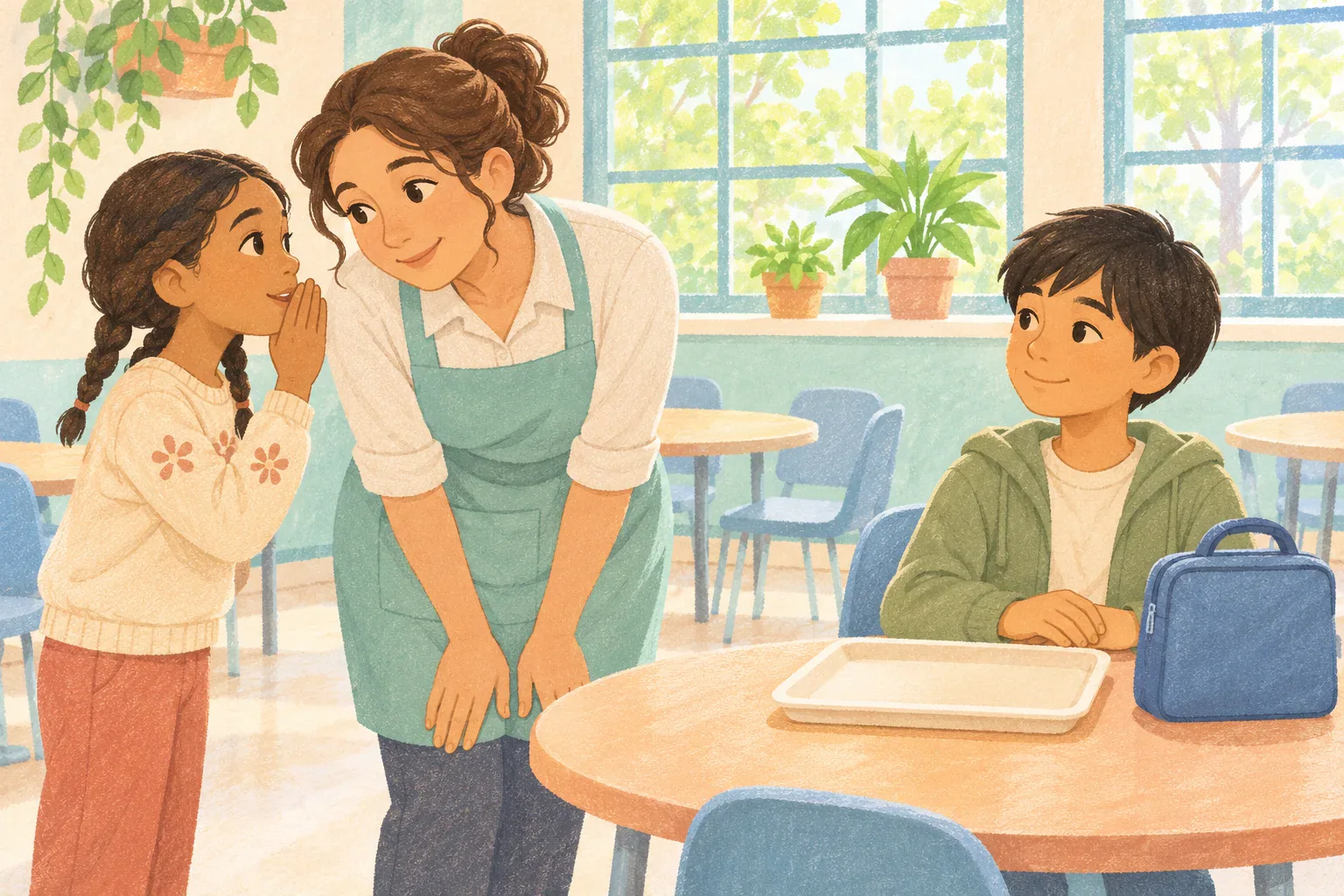
- Find the adult responsible during lunch. Identify the actual person or role at your child’s school: a lunchtime supervisor, teacher or other designated member of staff. Your child can say quietly, “My friend says they haven’t got lunch. Can you help?”
- Let the adult take over. Staff can check what has happened and use the school’s arrangements. Schools have different meal systems, so avoid promising your child that a particular food or free meal will always be available.
- Offer ordinary company. “Would you like me to sit with you?” gives the classmate a choice. Your child can accept a no and carry on treating them normally. They should not follow the classmate around to check whether they eat.
If the first adult is unavailable or the child still has no food and no one is helping, your child can approach another member of staff. They do not need to wait until home time to mention an immediate lunchtime problem.
These are specific examples of offering help without taking over: make a small offer, listen to the answer, and bring in someone who can act.
Explain why “don’t share food” still matters
A child may think a no-sharing rule is unkind in this situation. Explain its purpose: “We don’t always know what food is safe for someone else. Getting an adult is a way to help safely.” The American Academy of Pediatrics’ guidance on managing food allergies at school identifies food trading as an allergy risk and recommends enforcing no-food-sharing rules.
Do not make your child the person who checks labels, decides an allergy is mild, or works out whether a homemade item is suitable. Teach them to follow the school’s food rules rather than swapping snacks, giving away their meal or lending lunch money. A child with their own dietary needs should keep the food prepared for them.
If a classmate becomes unwell, your child should get an adult immediately rather than trying to fix the problem with food. School staff should follow the child’s emergency plan where applicable and seek emergency help for a serious reaction. Trouble breathing or collapse needs urgent adult action; your child should not wait to see whether it passes.
Keep it private without promising secrecy
Your child can protect a classmate’s dignity by leaving their name out of playground conversations and group chats. No photographs, public collections or “look how I helped” posts are needed. There is also no need to tell other children why the adult came over.
If the classmate says, “Don’t tell anyone,” practise a kind boundary: “I won’t tell the other kids. I do need to ask an adult who can help with lunch.” Ask the adult discreetly even if the classmate does not want company. Privacy should not leave a child without help.
Childline’s guidance on asking an adult for help explains how to choose someone trusted and why safety concerns can limit confidentiality. For your child, the practical distinction is between sharing a concern with responsible staff and spreading someone’s personal information.
Practise for your child’s age and communication needs
Ages 6–9: Rehearse one sentence and one destination. You play the supervisor; your child says, “Someone needs help with lunch.” Then swap roles so they hear a calm response. Keep the practice brief and use an invented classmate, not a real child’s name.
Ages 10–12: Add a more discreet approach: “Could I speak to you for a moment?” Practise what to do if a friend asks for secrecy or if other children start asking questions. “The teacher is helping” is enough; your child does not owe peers an explanation.
A child who uses a communication device can have a short help request ready. A child who finds speaking difficult could show a note or approach staff with a trusted peer. Ask the school to agree an accessible way to raise an urgent concern so writing a message does not delay help.
Finish practice by asking, “Which part would feel hardest?” Use the answer to simplify the plan. If your child worries about upsetting their friend, our guide to comforting a sad friend offers more ways to show care while accepting another person’s response.
If it happens again, adults follow up
Thank your child for noticing and telling you. Say, “You can tell staff when someone needs help. You don’t have to save your lunch for them or solve what is happening.” Do not ask your child to keep a record of the classmate’s meals.
Contact the school privately with the facts your child reported. Ask who can check the concern and what your child should do next time. If one contact does not respond and you remain concerned, use the school’s safeguarding or welfare route. The aim is for responsible adults to act, while both children can return to being classmates.
Sources and further reading
- American Academy of Pediatrics: Managing food allergies at school: information for families.
- Childline: Asking an adult for help.