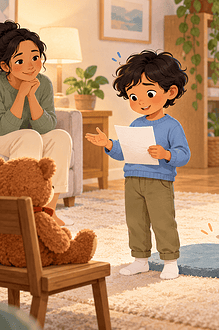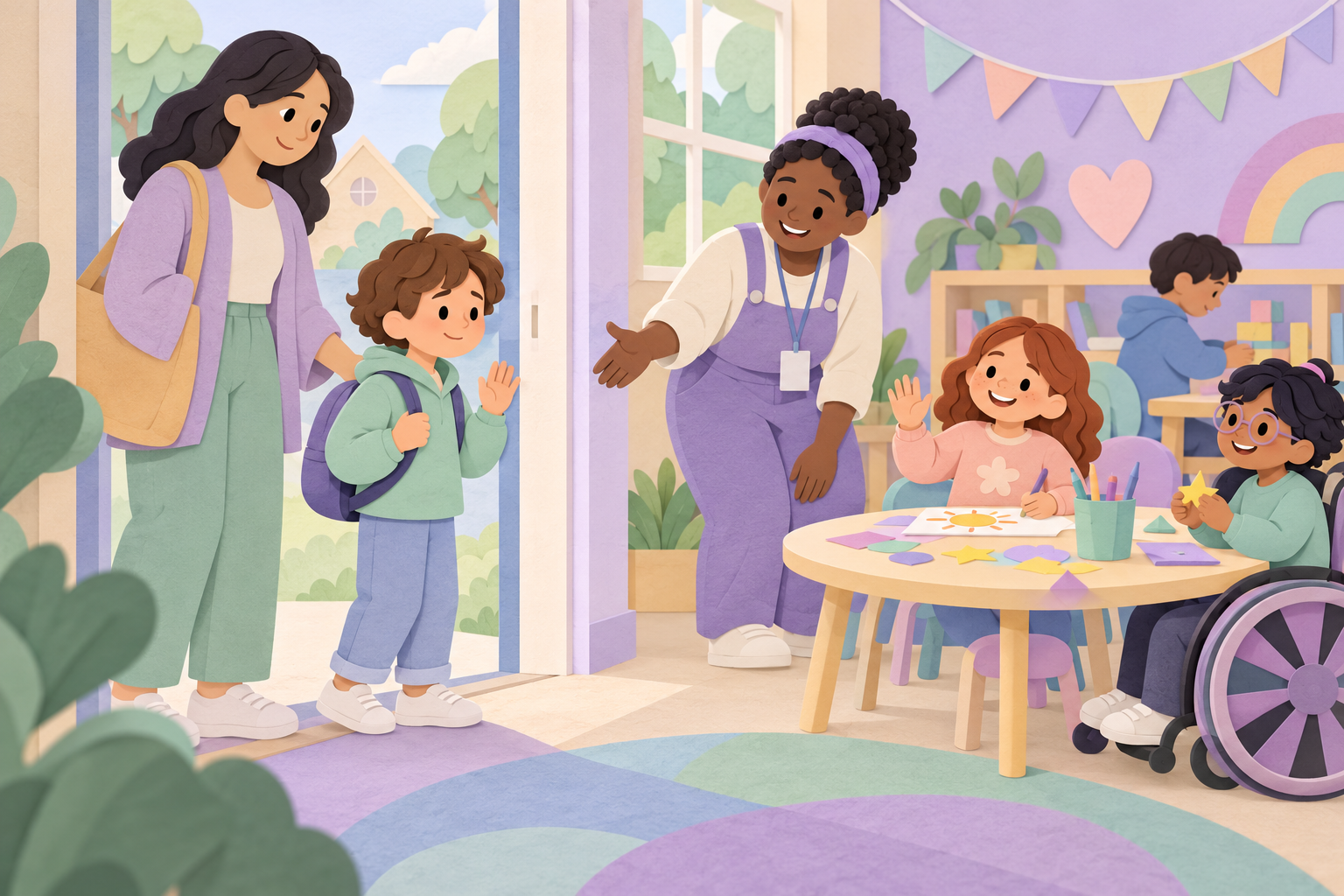
“Go on, tell everyone your name.” To an adult, it sounds like a tiny request. To a child who dislikes being watched, it can feel like a spotlight switching on without warning. They may hide, whisper, give a silly answer or look to you to speak for them.
A useful self-introduction is a skill, not a test of confidence or manners. Children can learn it through preparation, choice and repetition. The aim is not a perfect speech. It is a simple way to enter a new situation while remaining themselves.
Protect the warm-up period
When arriving somewhere new, give your child a few minutes to observe. You might tell the adult quietly, “Maya likes to warm up before talking.” Then offer a low-pressure entry: helping carry something, choosing a seat or standing beside you while you greet people.
If someone asks a question and your child freezes, pause. Do not immediately answer every question for them, but do not leave them stranded either. Try, “Would you like to tell them, whisper it to me, or have me answer this one?” This keeps communication moving while preserving agency.
Create a small introduction menu
Prepare two or three versions, not one script that must be performed exactly.
- One line: “Hi, I’m Nia.”
- Two lines: “Hi, I’m Nia. I like making things.”
- Question version: “I’m Nia. What do you like to play?”
For a preschooler, a wave, name card or showing a favourite toy may be enough. A school-age child can add one safe interest. A teen may prefer a context-specific line: name, school or role, and what brought them to the group. A child who communicates nonverbally can use a device, gesture, card or prepared message. An introduction counts when it creates connection; speech is not the only route.
Practise sideways, not under inspection
Role-play while walking, cooking or travelling so your child does not feel examined. Take turns being the newcomer, the host and the person who forgets what to say. Include realistic interruptions: someone mishears the name, two people speak at once, or the child needs to ask for repetition.
Practise an exit line too: “Nice to meet you. I’m going to find my seat,” or “I need a minute; I’ll come back.” Knowing how an interaction can end often makes starting easier.
Brief the adults, not the audience
Before a gathering, tell a teacher, coach or relative what helps: one question at a time, no teasing about quietness, and permission to pass. Ask them to offer an activity rather than demand a performance. “Would you like to help me set out the pencils?” is often a gentler opening than “Why won’t you say hello?”
Avoid announcing your child’s difficulty in front of them. “He never talks to strangers” can become an identity they feel obliged to protect. Speak privately and use temporary language: “He may need a little time today.”
Let the child own the information
Children should not have to reveal personal details to seem friendly. Help them choose safe information and avoid sharing an address, schedule, phone number or anything they want to keep private. They can redirect: “I’d rather not say, but I like football.”
This matters especially online. Usernames, location clues, school details and photographs can travel beyond the intended group. A teen’s digital introduction should fit the setting and reveal only what is necessary.
Debrief without scoring
After the event, ask what helped and what made it harder. Do not count words or compare siblings. Offer a specific observation: “You looked at the coach and said your name when you were ready.” If your child did not speak, notice another step: entering the room, staying nearby or using a gesture.
If introductions remain extremely distressing, or silence is persistent in particular settings despite the child speaking comfortably elsewhere, discuss it with the child’s teacher and healthcare professional. Hearing, language, anxiety and communication differences deserve understanding rather than discipline.
For related support, see supporting a slow-to-warm child, joining a group without taking over, and active listening without demanding eye contact.