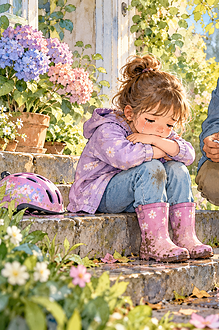
Some children run into a party before you have put down the gift. Others stand beside you, study the room and join only after they understand what is happening. Needing time is not a flaw. It can be part of temperament, and support works better than pressure.
Describe the need, not the child
When an adult says, “She is shy,” the child may hear a permanent identity and other people may stop inviting her in. Use temporary, practical language instead: “She likes to watch first,” or “He will say hello when he is ready.” This tells others how to help without defining the child.
A slow start is different from refusing every social situation. Notice what helps: a familiar adult, advance information, a quieter corner, one child rather than a group, or a task to do with their hands.
Prepare the first five minutes
Before a new setting, offer concrete details. “We will walk into the hall. Your teacher will be near the blue door. You can stand with me, wave, or say hello. Then we will put your bag away.” Photos of the place, a short visit or a simple pretend-play rehearsal can reduce uncertainty.
Agree on a small first step, not the whole event. It might be watching one game, handing out napkins or building beside another child. If choices help your child, use the same calm structure described in limited choices without losing the boundary.
Be a bridge, then step back
- Greet the other child or adult yourself.
- Offer shared information: “You both like drawing animals.”
- Start an activity that does not require eye contact or quick conversation.
- Stay nearby until your child’s body softens, then create a little space.
Do not require hugs, eye contact or a performance of confidence. A wave, nod or spoken greeting are all respectful options. Our guide to respecting a child’s no to hugs has more ideas for greeting relatives.
Notice courage without making it a show
Afterward, name one action privately: “You watched for a while, then asked Maya for a blue block.” Avoid announcing, “Look, you finally talked!” in front of the group. For younger children, celebrate tiny entries. School-age children may want help planning what to say. Preteens often prefer a quiet check-in and some control over when you intervene.
Keep an exit plan for situations that are optional: a signal for a break, ten minutes outside, or leaving at an agreed time. For school and essential appointments, the plan can be a supported entry rather than avoidance.
When to ask for more support
Talk with a pediatrician, school counsellor or qualified mental-health professional if fear is intense, lasts over time, causes repeated stomachaches or panic, prevents school attendance or friendships, or limits ordinary family life. Seek prompt help after a sudden change linked to bullying, trauma or another serious event. A professional can help distinguish temperament from anxiety, communication differences or other needs.