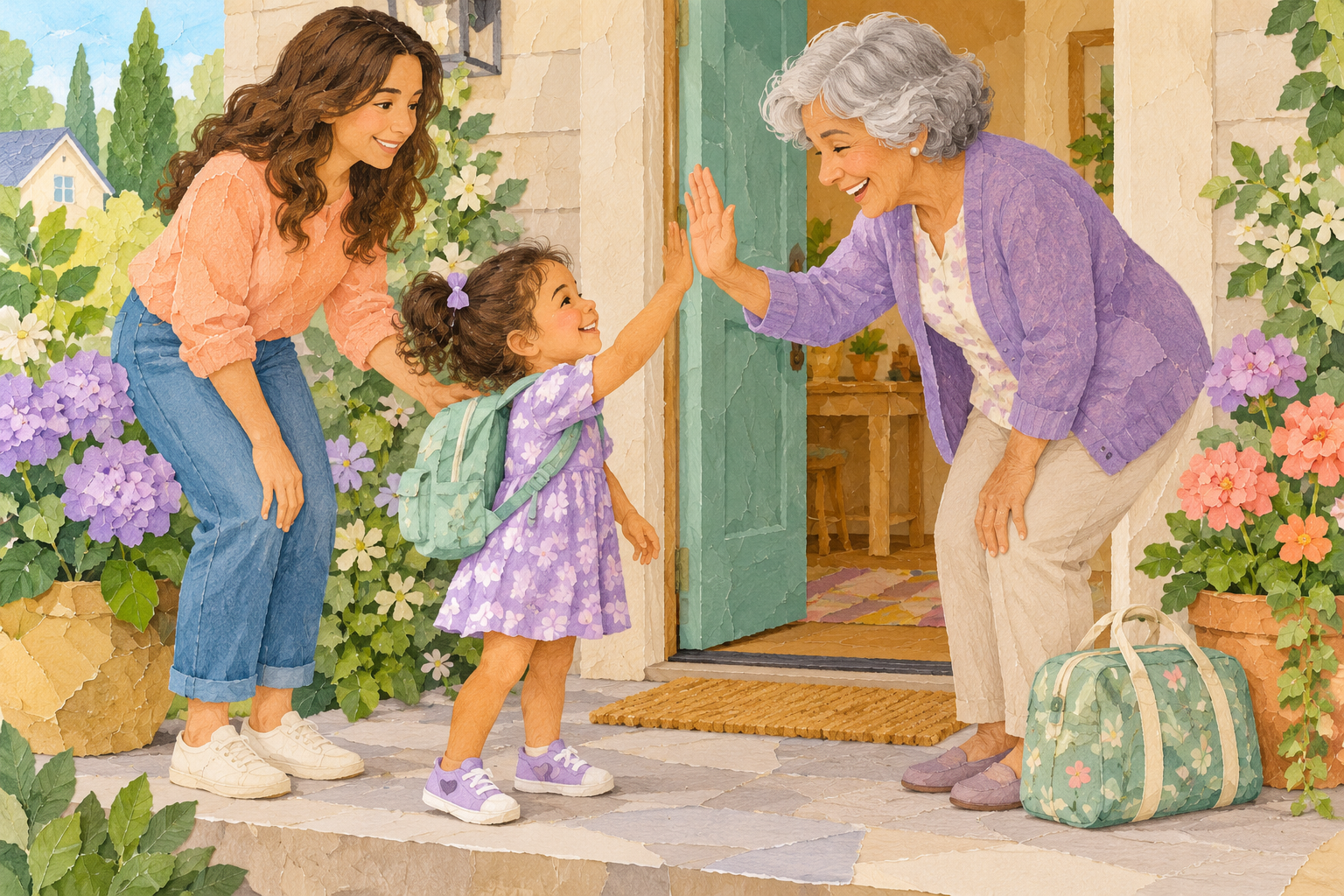
A relative opens their arms and your child steps behind you. It is tempting to smooth over the awkwardness with, “Go on, give Grandma a hug.” But affection is not a debt a child owes for being loved, receiving a gift or visiting family.
The American Academy of Pediatrics advises caregivers not to force or guilt children into hugs or kisses. Children can learn warmth, gratitude and respect without being required to offer physical touch.
Support the “no” without making a scene
You can step in lightly: “No hug today. Would you like to wave, give a high-five or say hello?” If the child does not choose, model the greeting yourself: “We’re happy to see you.” This protects the child without casting the relative as unsafe or unkind.
Talk with frequent visitors before the doorway moment if needed. Try: “We’re teaching the children that they can choose how to show affection. Please offer rather than insist.” Most adults respond better when they know the plan is consistent, not personal.
Manners are still possible
Body autonomy does not mean children never need to acknowledge people. You can expect an age-appropriate greeting while allowing options:
- a wave, smile, high-five, fist bump or blown kiss;
- a spoken hello or goodbye;
- showing a drawing or choosing a song together;
- sitting nearby without touching.
A child who uses few or no spoken words might look, gesture or use their communication system. A child who needs more time can greet after settling in. Do not demand eye contact as proof of respect.
Teach the rule in both directions
“Your body belongs to you” also means respecting another person’s body. If your child wants to climb onto someone, kiss a baby or pull a friend into a hug, prompt them to ask and notice the answer. Adults can model: “May I hug you?” and accept “no” without sulking.
Necessary care is different from optional affection. A young child may need help with a seat belt, hygiene or a medical examination. Explain what will happen, offer choices where possible and use only the touch needed for care and safety. Listening to discomfort helps you respond; it does not mean every necessary task is optional.
If a child suddenly avoids a familiar person
Do not interrogate or assume a cause. Stay calm, respect the refusal and make space for the child to talk in their own words. If they describe inappropriate touch, say you believe them, avoid leading questions and seek appropriate professional help. The AAP guidance emphasizes that children should know they can tell a trusted adult about touch that feels uncomfortable.
For more language about kind refusal, see helping children say no without being unkind. Our guide to different ways of participating can also help families make room for varied social comfort.