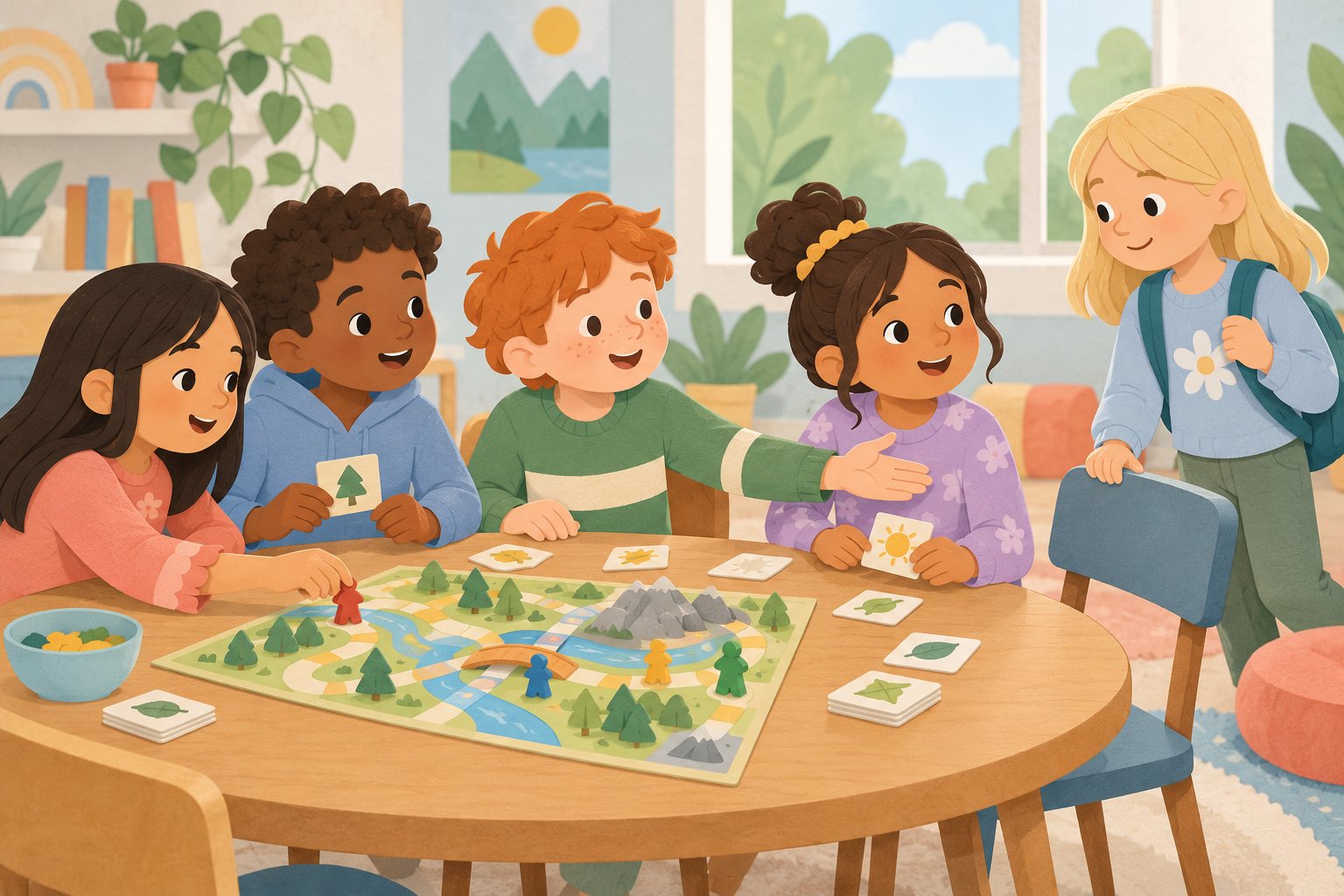
Joining a conversation or game that is already moving is a surprisingly complex skill. A child has to work out what the group is doing, notice whether there is space, choose words that fit, and handle a possible “not yet.” Some children rush in and start directing. Others hover until the moment has passed. Both may need the same thing: a simple entry routine they can practise when nobody is under pressure.
Teach “watch, wait, add”
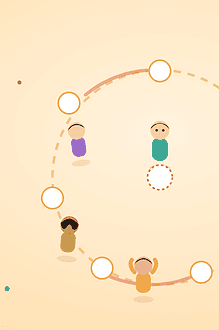
Give the skill three short steps. Watch long enough to understand the activity. Wait for a natural opening—a pause, a new round, or a person looking up. Then add one small contribution rather than changing the whole plan.
For a game, that contribution might be, “Can I be on a team?” or “Is there a job I can do?” In a conversation it could be, “That happened to me too,” followed by one sentence. The aim is not perfect timing. It is entering in a way that leaves room for the people already involved.
Practise the invisible clues
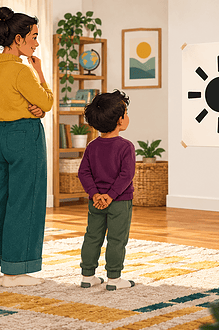
Children often hear “Don’t interrupt” without being shown what an opening looks like. During a family conversation, quietly point out useful clues: a speaker finishes, two people stop laughing, a new card is dealt, or the group asks a question. Watching a short scene with the sound low can make the clues easier to notice. Ask, “Where was there space to join?” rather than testing your child for a single correct answer.
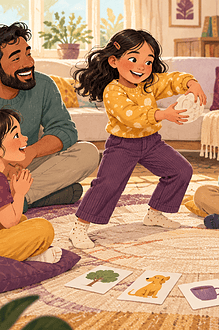
A quick role-play can help. Two people build with blocks or discuss a favourite snack while your child practises entering. Try three versions: joining too quickly, waiting so long that the moment disappears, and using “watch, wait, add.” Keep it playful and let your child play every role.
Offer scripts that do not take over
- “What are you playing?”
- “Can I join the next round?”
- “Would another helper be useful?”
- “I have an idea. Do you want to hear it?”
- “Can you show me the rules first?”
Contrast these with takeover openings such as “You’re doing it wrong” or “Everyone has to play my way.” A child with an exciting idea can store it for later: “I have another version we could try after this round.” That respects the group’s current plan without asking the child to hide their creativity.
Prepare for “not now”
Sometimes a group is full, a private conversation is happening, or the children want to finish first. Rejection can sting even when it is not personal. Rehearse a dignified response: “Okay, tell me when the next round starts,” then move to a backup activity or another person. If exclusion is repeated, targeted or cruel, adults should not leave the child to solve it alone; check what is happening and involve the responsible adult.
Adapt the skill by age and communication style
For ages 3–5, use one concrete cue: “Look at the game, then ask, ‘Can I play?’” Stay nearby to help translate the answer. For ages 6–9, practise matching an idea to the group’s current goal. Tweens and teens can notice more subtle questions: Is this a public discussion? Is the group open to another person? Would a message first be less intrusive?
A child does not need to make eye contact or speak quickly to join well. They may point to a role card, type a question, use an AAC device, or ask an adult or peer to help create an opening. Give enough processing time and treat the child’s usual communication method as real participation.
Coach after, not through, the moment
Unless safety is involved, avoid narrating every move in front of peers. Later, ask one neutral question: “What helped you get into the game?” or “Where did the group make space?” Notice the specific skill—waiting for a pause, asking about the rules, or accepting “next round”—rather than praising popularity.
For more practice, try sharing roles in a group task, conversation turn-taking, or a low-pressure game for new playmates.