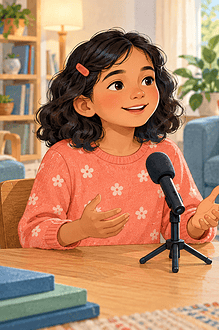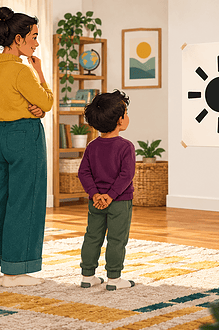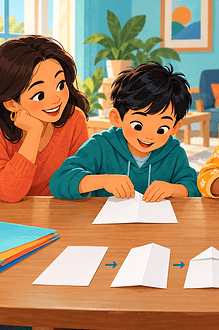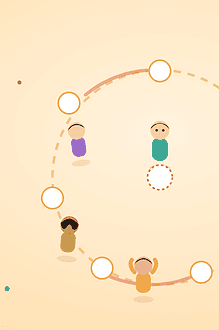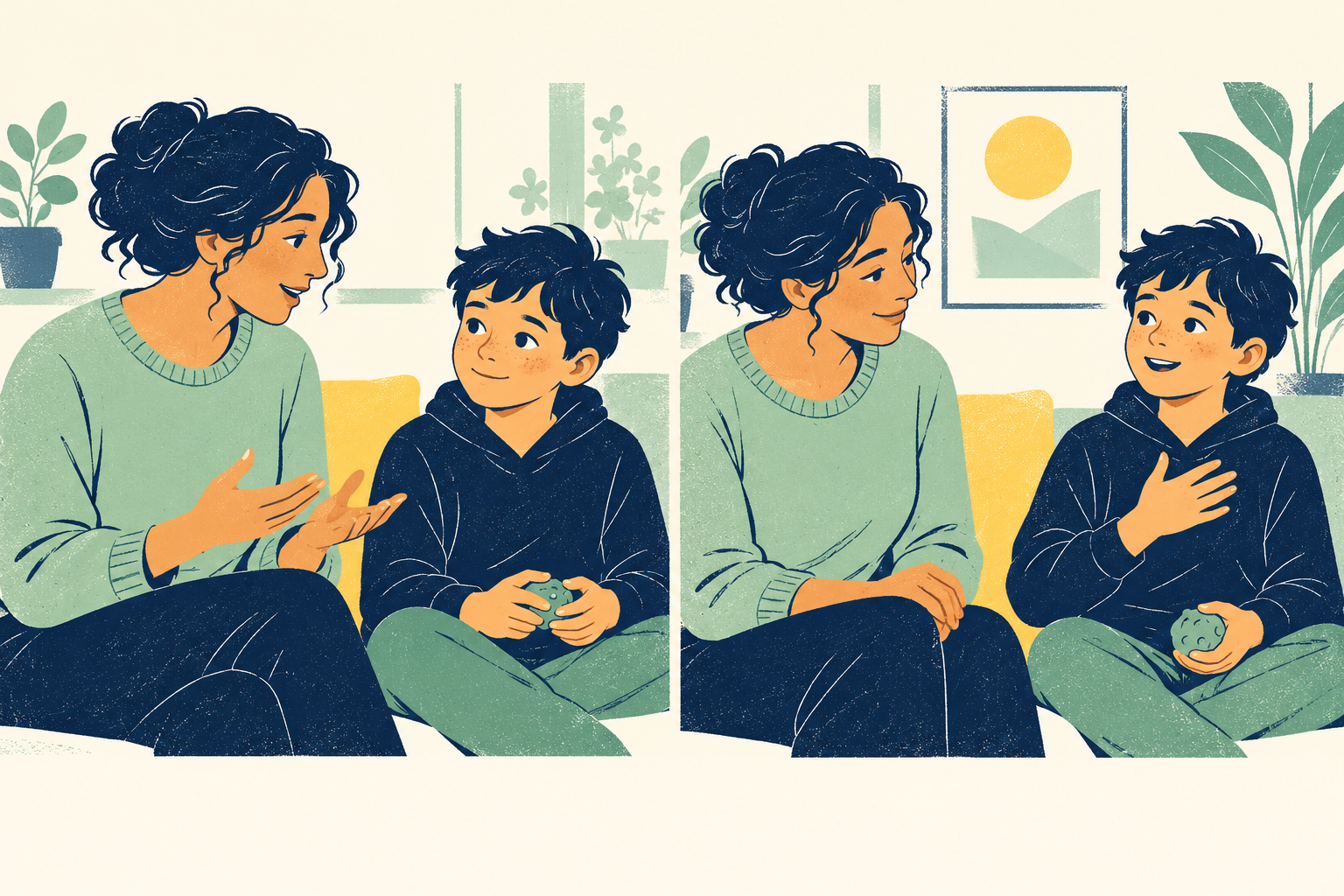
“Look at me when I’m talking” is often meant to secure attention. Yet eye contact is not a reliable listening test. Some children listen better while looking slightly away, moving, doodling or using an AAC device. Direct gaze may feel uncomfortable, culturally inappropriate or cognitively demanding. A more useful goal is shared understanding: can the child receive the message, show what they heard and respond?
Define listening by what happens next
Give children several valid ways to show attention:
- turn the body, face or communication device toward the interaction;
- pause a competing activity when possible;
- reflect one key idea: “You’re worried we’ll be late”;
- ask a relevant question;
- follow the agreed next step;
- say honestly, “I missed that. Please repeat it.”
No single sign proves listening. A child can stare directly at a speaker and miss every word; another can look at the floor and give an accurate summary.
Use “ready signal, short message, check-back”
First agree on a ready signal. It might be “I’m listening,” a thumbs-up, pausing headphones, or selecting a symbol. Then give the shortest complete message you can. Finally ask for a practical check-back: “What will you do first?” This is clearer than demanding a particular posture while delivering five instructions at once.
For younger children, get close without crowding, say their name once and use a gesture or picture alongside the words. With older children, ask what helps: walking while talking, getting the question in advance, or discussing difficult topics side by side in the car.
Teach reflective listening as a choice
Reflection means putting the speaker’s main message into your own words. Practise with light topics: “Tell me why that game is fun.” The listener replies, “You like it because everyone gets a different role,” then asks, “Did I get that right?” The speaker can correct them.
Make it clear that reflecting is not parroting and not agreeing. “I hear that you want more time” can be true even when the answer remains no. This distinction helps children listen during disagreement without feeling that understanding costs them their own position.
Try a two-minute listening swap
- Choose a harmless prompt, such as the best weekend breakfast.
- Speaker talks for 30 seconds in any comfortable communication mode.
- Listener names one idea and asks one genuine question.
- Speaker says what the listener understood accurately.
- Swap roles.
Allow movement, fidgets, drawing, typed responses, gesture or AAC. Remove the scoring for eye contact. The evidence is in the relevance and accuracy of the response.
Reduce barriers before correcting behaviour
If a child is not responding, check the environment. Is the television loud? Are they absorbed in a transition? Was the language too abstract? Do they need extra processing time? Say, “I need to tell you one thing. Tell me when you’re ready,” and wait. For urgent safety directions, use brief, direct language first and discuss the listening process later.
If a child has hearing, language, attention or communication support needs, follow the plan recommended by their qualified professional. Do not remove a communication device as punishment or insist on speech as the only acceptable response.
Respectful listening works both ways
Adults can show the same behaviours: put down the phone when possible, avoid finishing the child’s sentence, reflect what they meant and accept correction. If you cannot listen now, give a truthful return point: “I need five minutes to finish this call, then I can give you my attention.”
Useful listening is flexible, not performative. The question is not “Did my child look attentive?” but “Did we create enough access and time to understand each other?”
Continue with conversation turn-taking, The Whisper Line, or My People Map for identifying trusted listeners.