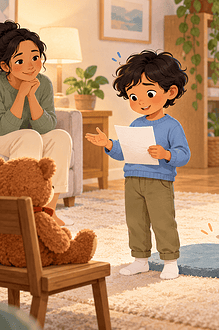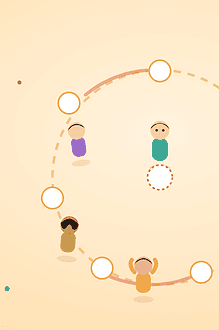
A child who always agrees may be trying to stay safe, while a child who argues loudly may not yet know how to protect an idea without attacking a person. Respectful disagreement sits between those extremes. It allows children to say what they think, listen for meaning and remain connected even when nobody changes their mind.
This skill is useful at the dinner table, in classrooms, with friends and online. It also supports safety: children need to know that respect does not mean automatic obedience when something feels wrong.
Give disagreement a simple shape
Teach three moves: acknowledge, state and explain.
- Acknowledge: “I hear that you think…”
- State: “I see it differently.”
- Explain: “My reason is…”
A younger child can use: “You like this. I like that.” An older child might say: “I understand why you want to finish tonight. I think tomorrow is safer because everyone is tired.” A teen can add evidence, ask a question and name what would change their mind.
The structure is not a magic formula. It simply slows the jump from different idea to personal attack.
Practise with harmless topics
Start where the emotional stakes are low. Debate whether breakfast foods belong at dinner, which animal would be the worst housemate, or whether books are better before or after the film. Assign family members positions they do not normally hold so they practise curiosity rather than defending identity.
After each round, ask: “What made you feel heard?” Notice tone, pauses and questions. Do not reward the “winner.” The success is a clear idea and a respectful exchange.
Replace common conversation stoppers
- Instead of “That’s stupid,” try “I don’t follow that part. Can you explain?”
- Instead of “Everyone knows,” try “The example I’m thinking of is…”
- Instead of “You always,” describe this moment.
- Instead of “Whatever,” try “I need a break before I answer.”
- Instead of repeating louder, ask “What did you hear me say?”
Children also need a way to stop. “We are going in circles. Can we pause?” is respectful. A conversation does not have to continue when there is shouting, humiliation, threats or pressure.
Let children disagree with you
If respectful disagreement is only permitted with peers, children learn that power decides whose voice counts. Invite their view on age-appropriate family decisions and listen before responding. You can keep the boundary while recognizing the argument: “You gave me a thoughtful reason. The bedtime stays the same tonight because you need rest, but we can review it this weekend.”
When you are wrong, say so plainly. “I interrupted you and then accused you of interrupting. I’m sorry. Please finish.” That teaches more than a lecture about manners.
Separate preference, fact and value
Help older children identify what kind of disagreement they are having. A preference may not need proof. A factual claim can be checked. A value question may require listening to experience and weighing consequences. Ask: “What evidence would help?” and “Is there a person affected by this whom we have not heard?”
Online, add two checks: Is the source reliable? Is this exchange still useful? Leaving a hostile thread can be a responsible choice, not defeat.
Respect is not forced agreement
Children should never be required to debate their dignity or tolerate demeaning language. They can say, “Do not speak to me like that,” leave, block someone online, or get a trusted adult. If a disagreement involves bullying, hate speech, coercion or safety, adult help is appropriate.
Keep the feedback specific
After a difficult exchange, avoid “You are so argumentative.” Try: “Your reason was clear, but the eye-roll made it harder to hear,” or “You disagreed without insulting anyone.” Then rehearse one sentence for next time.
For more practice, use EdCaptain’s guides on active listening, repairing a misunderstanding, and giving useful feedback.