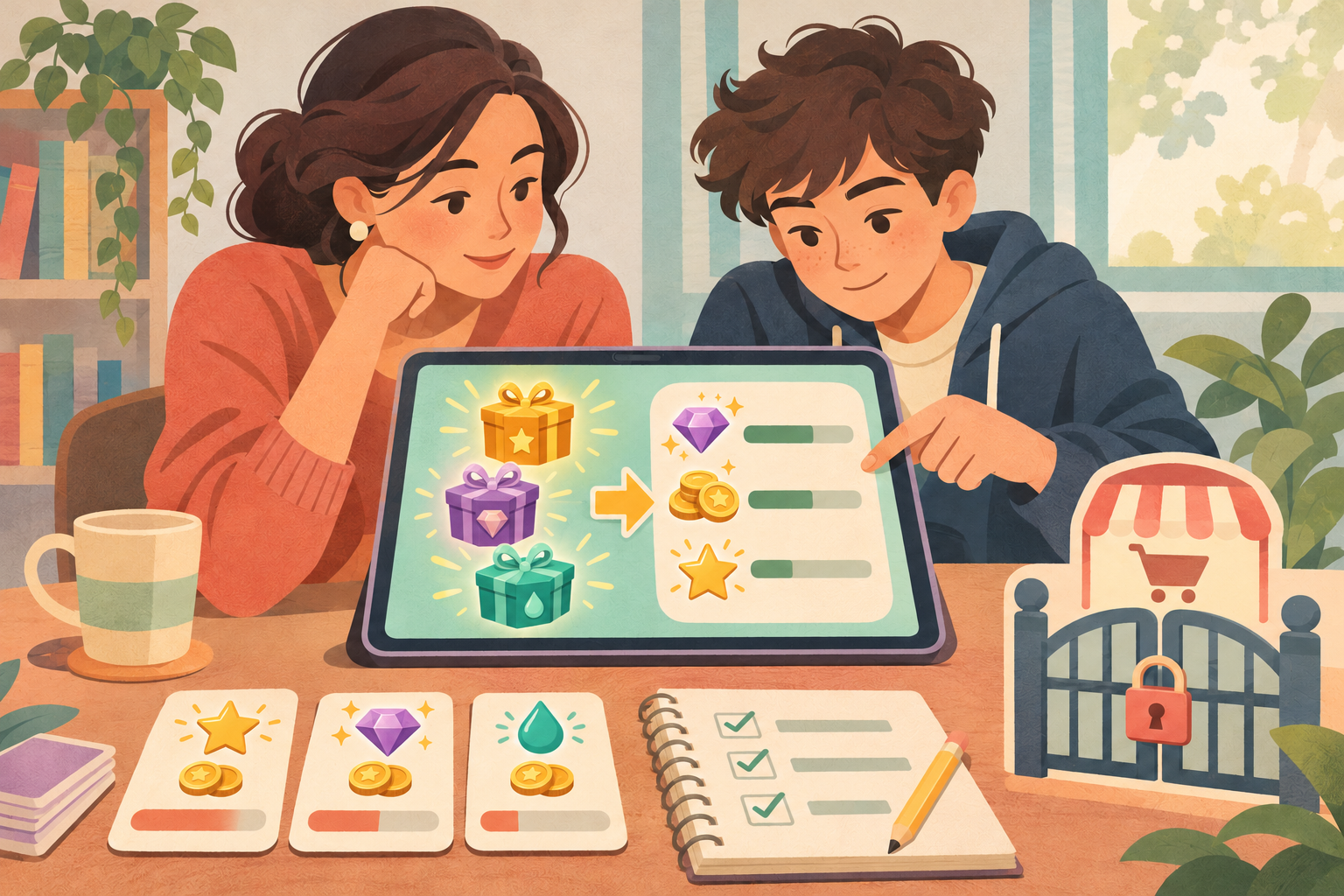
A child may see a sparkling chest, card pack or prize wheel. A caregiver needs to see the transaction underneath it: money or purchased currency is exchanged for an outcome the player does not fully know in advance. The reward might be cosmetic, useful in play or disappointing. The uncertainty is part of the offer.
The aim is not to turn every game into a maths lesson or to suggest that one purchase proves a health problem. It is to make the cost, odds and stopping point visible before excitement takes over.
Find the label before opening the store
ESRB uses the interactive element In-Game Purchases (Includes Random Items) for paid randomized rewards. That can cover loot boxes, gacha pulls, item or card packs, prize wheels and similar mechanics. Interactive elements sit alongside—but do not determine—the age rating. A game can have a low content rating and still contain spending features that need adult review.
Open the game’s official store listing and rating page. Then look inside the game with purchases still blocked. Identify which rewards can be earned through play, which require virtual currency, and whether that currency can be bought with real money.
Convert every offer into a real price
Virtual currencies make comparison difficult because families buy one amount and spend another. Write down the smallest real-money bundle and the price of one randomized attempt. If 500 gems cost $5 and one pack costs 120 gems, say the approximate real cost aloud. Also note leftover currency: an offer that leaves 20 unusable gems may encourage another purchase.
Do not describe purchased currency as “free” merely because it came in a bundle or subscription. Once real money bought it, spending it is still a financial choice.
Read probability without promising an outcome
Some games disclose “drop rates,” or the chance of receiving a rarity tier. A 5% chance does not mean a child will get the item once in every twenty attempts. Each draw may be independent, and long disappointing runs are possible. A displayed rate may cover a broad tier rather than the exact character or item the child wants.
Ask three questions:
- What exactly is guaranteed?
- What is only possible, and at what stated rate?
- Would the child still choose the purchase if the least-wanted result appeared?
If the answer to the third question is no, the family has a strong reason not to buy.
Use a no-chasing rule
Agree before play that a disappointing result never creates permission for “just one more.” Set the spending ceiling in real money, not gems or tokens, and use platform purchase approval. A useful script is: “We decided the amount before we saw the result. The result does not change the limit.”
EdCaptain’s in-app purchase family agreement helps define approval, spending limits and what happens after an accidental purchase. The guide to hidden ads, countdowns and dark patterns can help older children notice pressure that makes an offer feel urgent.
Adapt the conversation by age
For younger school-age children, keep purchases blocked and say, “This box costs real money, but we cannot choose what is inside.” Children aged ten to twelve can practise converting currency and comparing a guaranteed item with a random one. Teenagers can inspect probability disclosures and explain the maximum amount they are willing to lose for entertainment—not for a promised return.
Never lend money or allow a child to recover earlier spending by trading accounts, selling access or sharing credentials. Virtual items may be non-transferable, have no cash value and disappear if the game closes or the account is restricted.
Know when to pause the game store
Stop purchases if the game hides prices, the child is concealing spending, disappointment repeatedly leads to pleading, or a family limit is being bypassed. Review the payment account and purchase history calmly. If spending is causing significant distress or financial harm, seek qualified support rather than using shame.
A randomized reward can remain a game feature instead of a family crisis when the uncertainty, real price and stopping point are clear before the button is pressed.