When the lights go out, the first minutes are easier if nobody has to search a dark cupboard for a working torch. A family lighting kit is not just a pile of batteries. It is a small system: suitable lights, fixed locations, charged power, safe storage and a routine every caregiver understands.
Choose several modest lights, not one hero torch
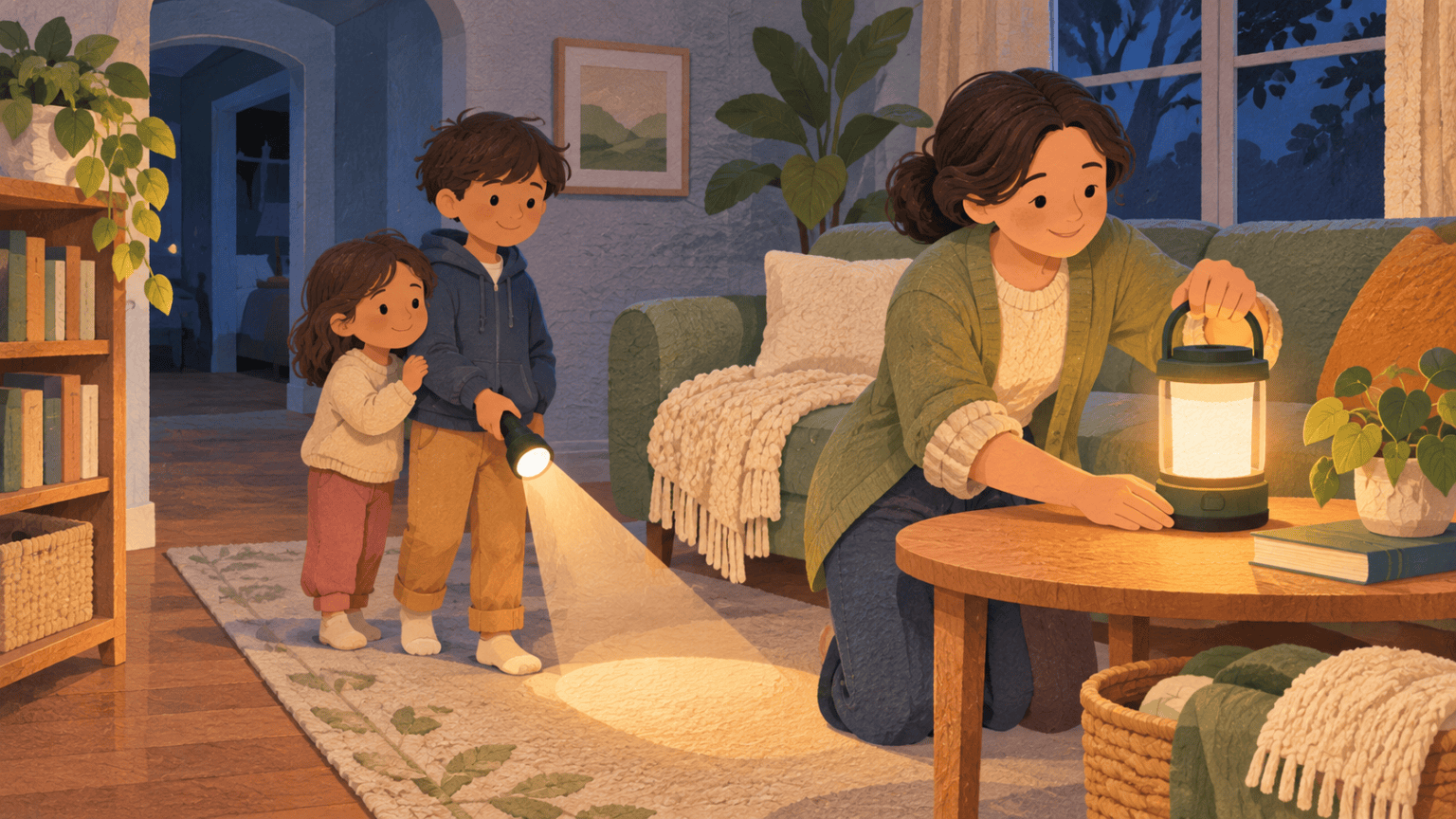
FEMA’s Ready.gov guidance recommends flashlights, lanterns and other battery-powered lights during outages. Use a mix: a handheld flashlight for each responsible adult, a stable lantern for a shared room and a low-output light for the route to a bathroom. A headlamp can keep both adult hands free while helping a child or checking equipment.
Prefer lights with straightforward controls that can be operated in the dark. A lantern should stand securely and not become hot in normal use. Check that battery compartments close firmly, especially where small button or coin cells might otherwise be accessible. Search the exact model for recalls before relying on it, and treat novelty children’s flashlights as electrical products rather than toys.
Give every light a home
Store lights where adults can reach them without crossing the darkest part of the home: beside sleeping areas, near the main living space and with emergency supplies. Keep one close to—but not on top of—the electrical panel. Do not block exits or leave loose devices on stairs.
Young children should not have unsupervised access to loose batteries, damaged lights or charging cables. Use the locked-storage approach in this household poison-prevention guide. Older children can learn a fixed flashlight location and how to bring it to an adult without opening the battery compartment.
Plan power and charging
- Use the battery type specified by the manufacturer. Do not mix old and new batteries, brands, chemistries or charge levels.
- Store spare batteries in original packaging or a purpose-made case so terminals cannot touch metal objects.
- Inspect for swelling, leakage, corrosion or heat. Stop using a damaged battery or device and follow local disposal guidance.
- For rechargeable lights, schedule a top-up and follow the supplied charger instructions. Do not charge on bedding, beneath cushions or where a child can pull the cable.
- Keep a power bank for communication devices if useful, but check its condition and manufacturer guidance regularly.
Write the last check date on a card in the kit rather than on the battery. Extreme heat or cold can shorten battery life, so a car kit needs more frequent inspection.
Use light without adding a fire risk
US Fire Administration guidance says to use flashlights, not candles, during a power outage. An open flame can be knocked over, placed near fabric or forgotten when someone falls asleep. Battery-operated flameless candles may provide gentle orientation light, but they still need intact battery compartments and safe storage.
Emergency lighting does not replace smoke or carbon monoxide alarms. Check backup power and placement using this family smoke-alarm plan and the carbon monoxide safety guide. Never run a generator, grill or fuel-burning appliance indoors to power or heat the home.
Practise a calm outage routine
- Stay still for a moment and ask children to call out rather than walk through darkness.
- An adult retrieves the nearest light and checks for immediate hazards.
- Place a lantern on a stable surface, never under fabric or beside water.
- Account for everyone and check official outage or emergency information.
- Preserve phone power and unplug sensitive equipment if authorities or manufacturer guidance advise it.
For children with sensory or mobility needs, test brightness, glare and controls in advance. Mark routes with low-level battery lights if that helps, while keeping floors clear. A child who fears darkness may benefit from a short script: “We stay where we are, call an adult, then use the torch together.”
Run a six-month check
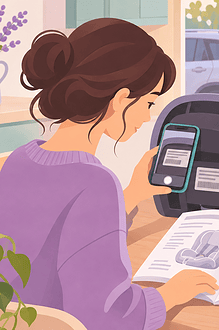
Turn on every light, inspect the casing and compartment, recharge or replace power as directed and confirm each device remains in its assigned place. Recheck after storms, travel or household changes. If a light flickers, overheats, smells unusual or has a swollen battery, stop using it. A simple kit maintained twice a year is more dependable than expensive equipment that nobody tests.