A humidifier can make dry air more comfortable, but standing water can grow microorganisms. Ultrasonic and impeller cool-mist units may disperse microbes and minerals. The useful question is not simply “Should we buy one?” but “Can we operate this model cleanly and only when needed?”
Measure first
Use a hygrometer rather than judging by dry skin alone. EPA says not to humidify above 50 percent relative humidity and broadly recommends a moderate 30–50 percent range. Condensation, damp walls, musty smells or wet fabric mean output is too high or placement is poor.
A humidifier is not treatment for unexplained breathing problems. Ask a clinician about persistent symptoms, especially for a baby or child with lung disease or allergies. Stop and seek advice if symptoms seem linked to use.
Choose for cleaning
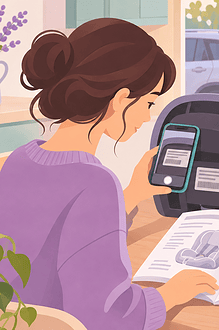
Look for tanks and water-contact surfaces you can reach, scrub, rinse and dry. Read the cleaning schedule before buying and check filter costs. Cool mist avoids scalding water but still needs electrical safety and stable placement.
Set it on a firm water-resistant surface where a child cannot pull the cord or tip it. Keep mist away from faces, bedding, curtains, walls and electronics. Do not add oils, medicine, fragrance or disinfectant unless the exact instructions permit it.
Use a daily water routine
- Unplug before filling, emptying or cleaning.
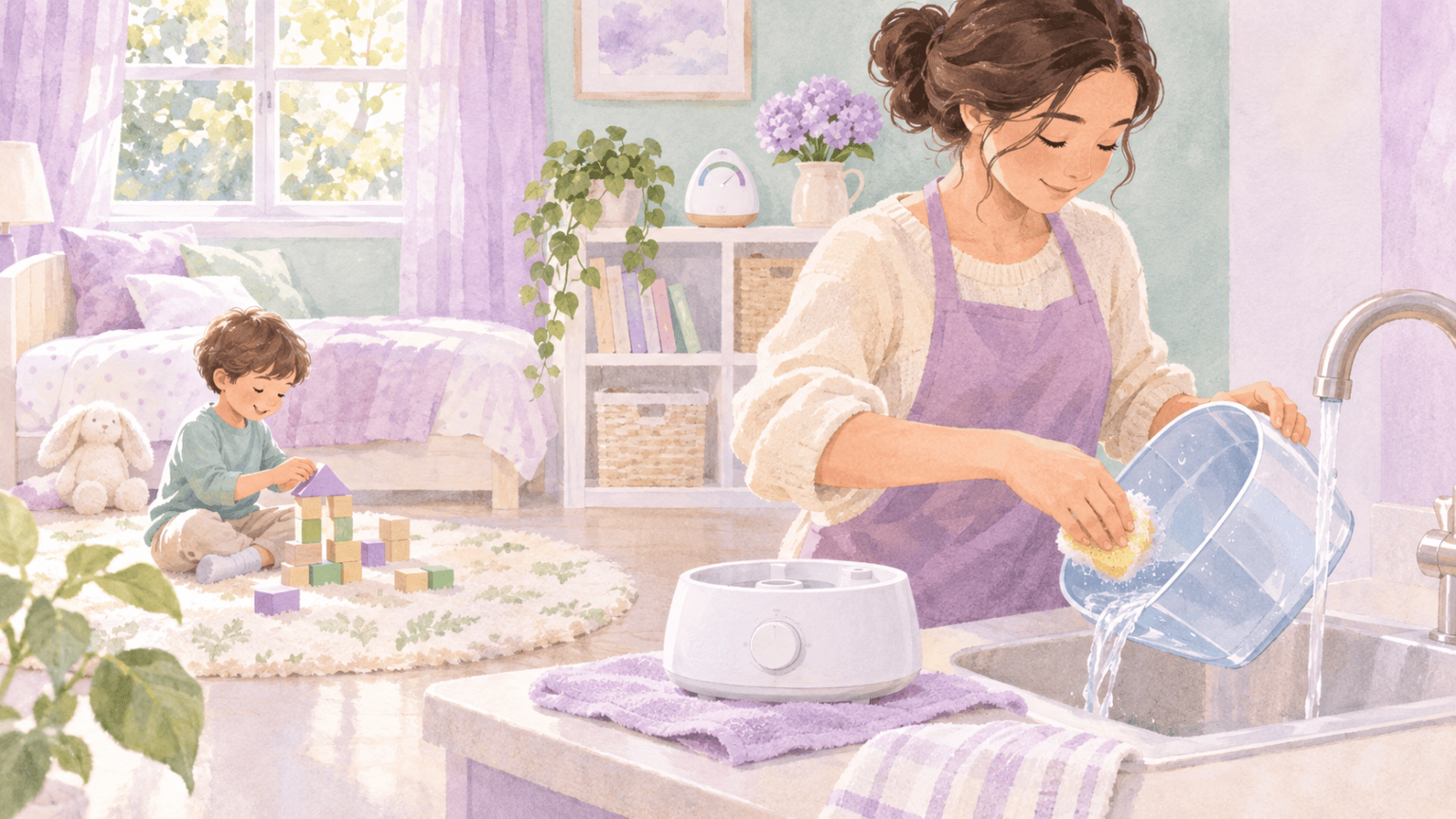
- Empty the tank daily, wipe surfaces dry and refill fresh.
- Use low-mineral water when manufacturer and EPA guidance recommend it.
- Do not top up yesterday’s water.
- Check the hygrometer and surrounding materials; reduce output if damp.
White dust can be minerals dispersed by an ultrasonic or impeller unit. Review water choice, cartridges and cleaning rather than assuming the machine purifies air.
Clean and rinse
EPA advises cleaning portable humidifiers every third day while following manufacturer directions. Remove scale and film from every water-contact surface. Use only permitted cleaners. Rinse with several changes of water so chemicals are not dispersed into the room.
Replace filters and cartridges on schedule. At season’s end, clean, discard used consumables as directed, dry fully and store dry. Clean again before reuse.
Fit it into family routines
Attach the water change to mornings and deeper cleaning to fixed days. Store tools and chemicals away from children. Use a child-eye-level safety walk for cord and tipping risks, and this poison-prevention guide for cleaners.
Stop if water smells, film appears, output changes or surroundings become damp. Contact the manufacturer for leaks, damaged cords or persistent malfunction. Seek medical advice for respiratory symptoms associated with operation. Measurement, fresh water and disciplined cleaning make the device manageable.
Sources and further reading
Adapt for bedrooms and shared care
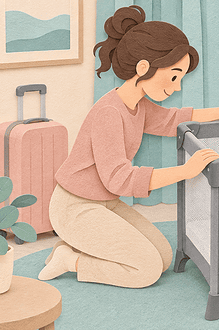
If the unit is used in a child’s room, keep it beyond reach while preserving safe airflow around it. Do not aim mist into a cot or place the machine where spilled water can reach an outlet. Secure the cord without using an extension lead or routing it beneath rugs unless the product and electrical guidance explicitly permit that arrangement.
Give every caregiver the same cleaning card and identify which water to use. A visitor who tops up an old tank can undo the routine without realizing it. When travelling, empty and dry the unit before transport and clean it again on arrival; do not carry standing water. If regular maintenance feels unrealistic during an illness or busy period, turn the machine off rather than extending dirty-water use. Ventilation and source control remain important parts of indoor-air care.
Do not let a child operate or refill the humidifier as a chore. Older teenagers can learn the routine under supervision, including unplugging first and rinsing away cleaning residue, but an adult should verify the finished setup before the device runs overnight.