By EdCaptain editorial desk · Published
The electric blanket comes out of a cupboard on the first cold evening. It worked last year, and putting it straight back on the bed feels like a small household job. Give it a separate check before anyone plugs it in.
This is a guide for adult caregivers checking heated bedding for an adult’s bed. It does not establish that a blanket is suitable for a child, or replace the instructions for the exact product. A neat-looking cover is not proof that the electrical parts inside are sound.
Start with the identity, not the switch
Find the product label, model and original instructions. Confirm whether it is an underblanket or an overblanket and which controller belongs with it. Cheshire Fire and Rescue Service warns against swapping the roles of underblankets and overblankets. A familiar connector or similar-looking controller is not enough to settle compatibility; ask the manufacturer if there is uncertainty.
Set out the questions before making the bed: How old is it? Where was it stored? Has anything heavy been stacked on it? Has it been wet, repaired or behaving differently? Keep it unused while you find an answer that affects safe operation.
If the instructions are missing, look for the exact model on the manufacturer’s official website or contact its support team. Do not substitute a general online video for the manual. If the model cannot be established, do not guess at settings, washing instructions or overnight use.
Inspect it unplugged, in good light
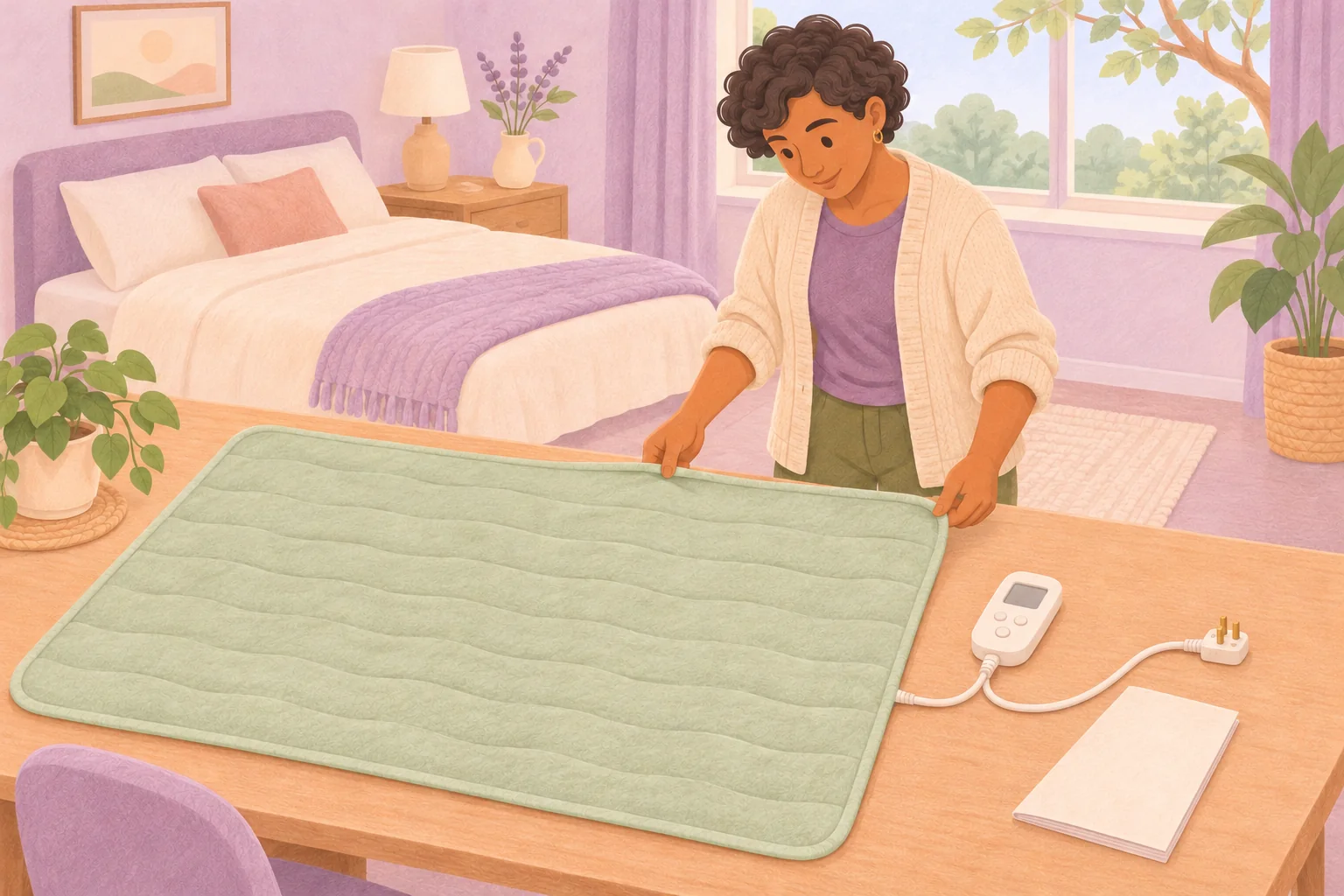
Choose a clear surface where an adult can see the blanket, cable and controls without children handling them. Keep the plug disconnected throughout this visual check. This is not an electrical test, and it cannot reveal every fault.
London Fire Brigade’s replacement warnings include worn or frayed fabric, scorch marks, wires showing through, damaged cords and damaged or overheating connectors. A control that has buzzed or produced an unusual smell is another warning. Do not switch a suspect blanket on to see whether the problem happens again.
When you find a warning sign, the next step is to stop use, not open the controller, tape a cable or stitch over an exposed wire. Keep the item separate from usable bedding and contact the manufacturer about replacement and appropriate disposal. A household handover can be very short: “This one is not for use. I’m checking the replacement arrangements.”
Make age and professional checks part of the decision
London Fire Brigade advises replacing electric blankets at least every ten years. That is an outside limit in its guidance, not a promise of ten safe years: damage or the manufacturer’s instructions can require earlier replacement. Its advice also says not to buy second-hand electric blankets.
An unknown-age blanket passed between relatives should not become the household fallback simply because it is free. Choose an ordinary non-electric warmth option while deciding what to do, rather than treating an uncertain item as urgently needed equipment.
Cheshire recommends a check by a qualified technician at least every three years. Ask the manufacturer or local fire service how to find an appropriate testing service; availability differs. A fire-safety visit is not automatically an appliance test. Record who checked it and what they advised, and continue ordinary condition checks afterwards.
Check the person and the bed, too
London Fire Brigade says not to use an electric blanket with an airflow pressure-relief mattress or when using emollient creams. If either applies, choose another warmth arrangement and discuss the situation with the relevant care team and fire service. Do not change prescribed skin care to make a blanket usable.
Check the actual mattress and blanket instructions together. Do not assume an adjustable bed, extra topper or familiar bedding arrangement is compatible. If an adult has difficulty reading the controls, remembering the shutdown routine or responding to discomfort, ask for individual advice before relying on the equipment. A family member’s willingness to “keep an eye on it” does not answer those questions.
Agree the routine before the next cold evening
- Use the intended setup. Follow the exact manual. Cheshire says not to use a blanket while folded or creased, or when wet or damp.
- Keep hot-water bottles out of the same bed. The Home Office’s winter fire-safety guidance applies this even when the electric blanket is switched off.
- Set the bedtime boundary. That guidance says to unplug before getting into bed unless the blanket has thermostatic control intended for safe all-night use. A timer or heat dial alone is not permission: confirm the exact model’s instructions.
- Make the handover visible. Keep the manual and a simple note of the agreed setup, last check and replacement date where the adults using it can find them.
A blanket should not be the only thing reviewed when a room becomes a sleeping space. Check the household’s smoke-alarm and escape plan, including how anyone needing help will leave. If smoke or fire develops, leave, stay out and call local emergency services from safety. The separate home extinguisher guide explains why equipment never justifies delaying escape.
Put it away so the next check is easier
Follow the storage instructions after the blanket has cooled. Cheshire advises a cool, dry place, no heavy items on top and no mothproofing chemicals. Home Office guidance allows flat, rolled or loosely folded storage; follow any stricter model instructions and avoid tight creases.
Keep its controller and instructions identifiable with it. Note any concern immediately rather than leaving it for the person who next opens the cupboard. The useful outcome is a clear decision: suitable under its instructions, awaiting advice, or out of use. “It still gets warm” is not a safety check.
Sources and further reading
- London Fire Brigade: electric blanket condition and replacement.
- Cheshire Fire and Rescue Service: use, checks and storage.
- Home Office: winter fire safety (Crown copyright; Open Government Licence v3.0).
Read our editorial policy and review methodology.