Smoke alarms are easy to forget because they are quiet most of the time. A family plan makes them visible: where each alarm belongs, how it is powered, when it was manufactured, who tests it and what everyone does when it sounds.
Draw an alarm map
US Fire Administration guidance calls for alarms inside every bedroom, outside each separate sleeping area and on every level, including the basement. Mark each on a floor plan. Follow local code and manufacturer placement instructions, especially around ceilings, kitchens, bathrooms, fans and vents.
Interconnected alarms add protection because when one sounds, all sound. Hardwired work belongs with a qualified electrician. Renters can send the map to the landlord and keep records of requests and tests.
Choose for the household
USFA recommends either both ionization and photoelectric alarms or dual-sensor alarms because the technologies detect different fire patterns. Check local requirements. People who are deaf or hard of hearing may need compatible strobe lights, vibration devices or bed shakers, and those parts need testing too.
Smoke and carbon monoxide alarms serve different hazards. Combined units may have different placement and replacement rules. Use this family carbon monoxide guide for a separate CO layer.
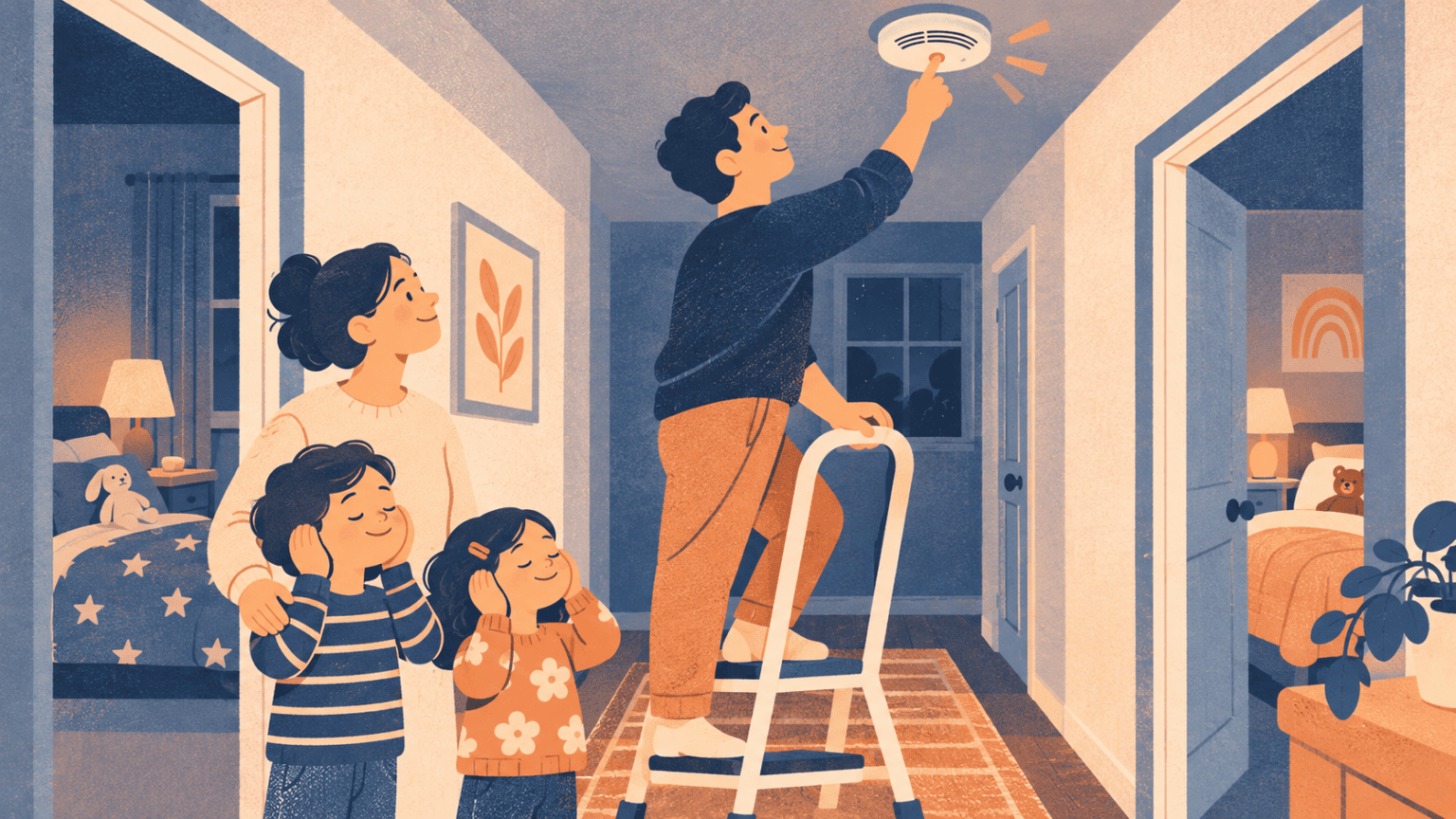
Test monthly
- Warn everyone so a scheduled test does not startle them.
- Press the test button as instructed; never use flame or smoke.
- Confirm the alarm is heard in each sleeping room with doors closed and check linked alert devices.
- Record the date and any fault.
- Replace batteries and clean only as the instructions specify.
A child with sensory sensitivity can use hearing protection during planned tests while learning the meaning of the sound. Say: “That loud sound means we go outside with an adult. We do not hide.” Practise the route separately when calm.
Handle nuisance alarms safely
If cooking or steam causes alarms, use the hush feature, ventilate and review placement. Never remove the battery as a cooking strategy. USFA advises keeping smoke alarms at least 10 feet from cooking appliances where feasible and permitted; exact placement still follows the manual and code.
Track age and replacement
Write manufacture and replacement dates on the map. USFA says alarms should be replaced 10 years from manufacture; some products may require earlier action. Test monthly, replace removable batteries on schedule and resolve persistent chirping promptly. Never paint, cover or decorate an alarm.
Add the check to a broader home safety walk. Redraw the map after renovations, a move or changed bedrooms. Practise two exits where possible and choose an outdoor meeting place. An extinguisher may help a trained adult with a very small fire, but every child’s job is to leave, not investigate or collect belongings.
Sources and further reading
Make the response inclusive
Assign one adult to help each young child or family member who may need physical, communication or sensory support. Use visual route cards, tactile cues or a practised phrase if they help. Keep mobility aids, shoes and essential communication devices where they support evacuation without blocking the path. Ask the local fire service about planning for oxygen equipment or other medical devices.
During drills, never hide to “make it realistic,” use theatrical smoke or lock a normal exit. Practise walking to the meeting point and counting everyone. Babies and toddlers need an adult carry plan; older children can learn never to return for a toy or pet. If an alarm sounds unexpectedly, treat it as real: leave first, call the fire service from outside and wait for permission to re-enter.
Keep the plan visible but private enough not to reveal household routines publicly. Review it with every overnight guest and after any alarm replacement. If a test fails, treat the affected area as unprotected until a working unit is restored; do not postpone the repair to the next monthly check.