A car seat can look normal after a collision while its history has changed. The decision belongs to the crash facts, manufacturer instructions and the seat’s complete identity—not whether the shell has an obvious crack.
Pause and collect facts
After a moderate or severe crash, NHTSA recommends replacing the car seat. For a crash that may be minor, collect facts before the next trip if another appropriate restraint is available. Photograph the seat in the vehicle, nearest door, vehicle damage and labels. Save the incident report and insurer details.
Apply all five conditions
NHTSA calls a crash minor only when all five are true:
- The vehicle could be driven away.
- The door nearest the car seat was not damaged.
- No passenger was injured.
- No airbag deployed.
- There is no visible car-seat damage.
If one condition fails, do not call the crash minor. NHTSA says never use a car seat after a moderate or severe crash. Even if all five are met, manufacturer instructions may still require replacement. Contact the manufacturer with the model, date and crash facts.
Verify identity and history
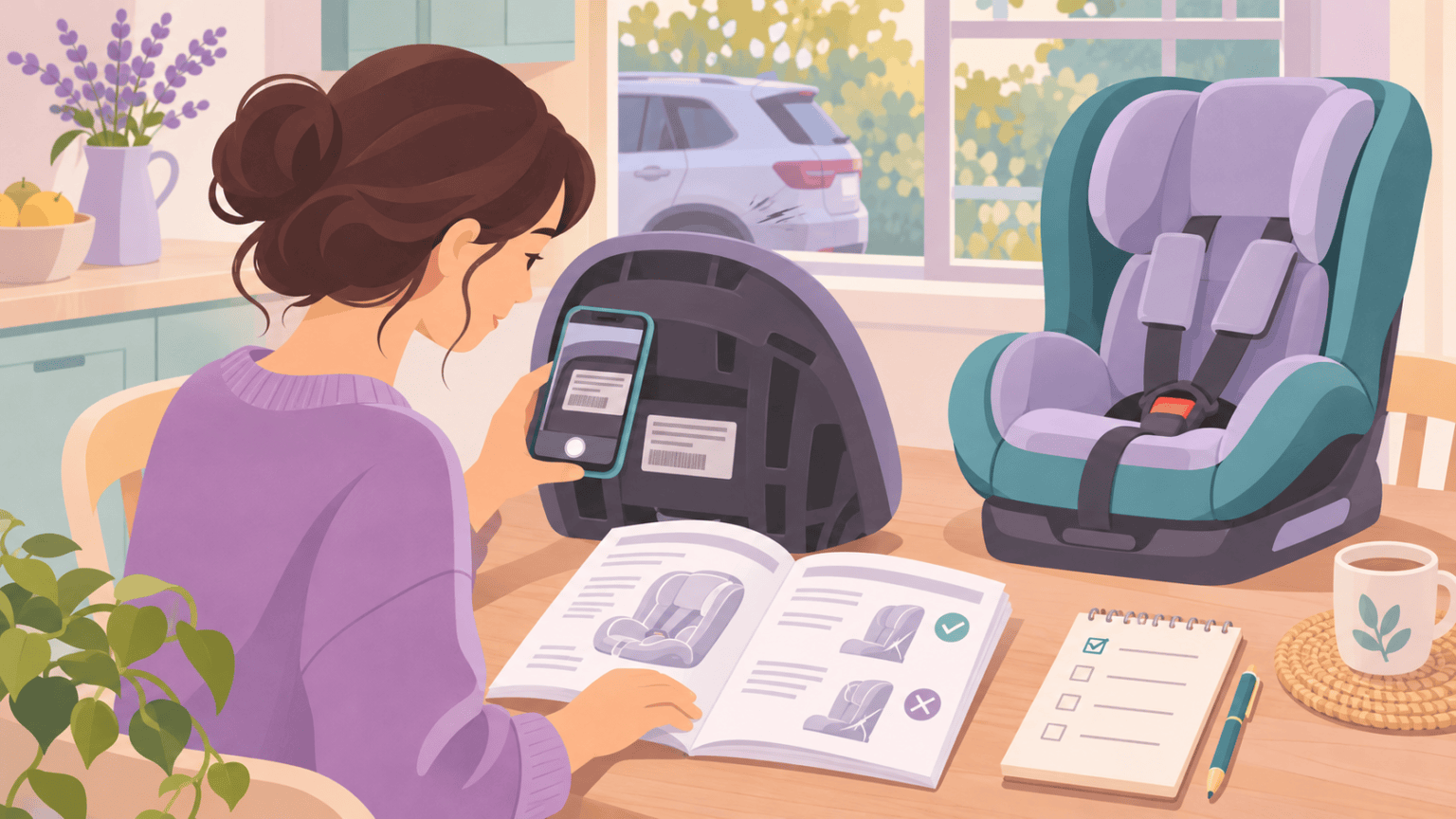
Find model, manufacture date and serial number. Check recalls and expiration or useful-life information. Confirm shell, harness, buckle, adjuster, lower attachments and base are correct original parts. Do not repair cracks, replace webbing with generic straps or add unapproved accessories.
A second-hand seat needs a trustworthy history: no disqualifying crash, unresolved recall, missing label, expired life or absent part. “It came from a careful family” is not a crash record. Use the second-hand product safety checklist.
Work with insurer and manufacturer
Ask what evidence the insurer needs and keep receipts. Coverage does not decide safety; manufacturer and official guidance do. If replacement is required, ask how to render and dispose of the seat so it cannot be reused. Keep labels until any claim is complete.
Reinstall and refit
A replacement must suit the child’s size and developmental needs, the vehicle position and both manuals. Do not turn an emergency purchase into a rushed installation. A certified child-passenger-safety technician or equivalent service can check the setup while the manuals remain controlling.
Keep a record in the glove box or phone: model, serial, manufacture date, purchase date, manual link and manufacturer contact. Share it with other drivers. Add recall checks to a wider family safety review.
When history is uncertain
If you cannot establish crash history, expiration or whether parts are original, stop using the seat until the manufacturer or qualified service resolves the question. Do not lower the standard because replacement is inconvenient; ask local health, fire or community programmes about loan or low-cost options.
Sources and further reading
Document the decision for every caregiver
Write one sentence in the transport record: “Seat replaced after crash,” or “Manufacturer confirmed continued use on this date after all NHTSA minor-crash conditions were met.” Include the representative or case number when available. This prevents a second caregiver from reopening the question with incomplete information or putting a removed seat back into service.
If the vehicle itself is being repaired, verify that seat belts, lower anchors and the seating position were not damaged. Ask the vehicle manufacturer or repair professional about any affected restraint hardware. A car-seat decision does not certify the vehicle. When the child moves to a different stage later, base the change on size, fit and instructions, not on the desire to retire a seat early or keep it longer after an uncertain event.
Never donate or sell a seat that has been removed because of a crash, expiration, recall without remedy or unknown history. Mark and dismantle it according to local disposal guidance so another family cannot mistake it for usable equipment.