By EdCaptain editorial desk · Published
The bunk bed fits between the wardrobe and the wall in the shop’s drawing. At home, however, its ladder might land where the bedroom door opens, and the top sleeper may be able to reach a ceiling fan. Floor space is only the beginning of the decision.
Before ordering a bunk bed for children aged 6–12, check the exact product and the room it will occupy. A smaller-looking bedroom is inconvenient; a bed that cannot be installed and used as instructed needs a different plan. Keep the current suitable sleeping arrangement until those questions are answered.
Start with who will use the upper bunk
Health Canada’s bunk-bed guidance says no child under six should be on the top bunk at any time. That includes visiting siblings and daytime play. Follow any stricter age and weight limits in the exact bed’s instructions.
Being six is not an automatic reason to choose a high bed. Consider whether your child can use the intended access comfortably and follow the rules, including when tired. A child who is frightened by the height or cannot manage the access needs a suitable low bed, rather than pressure to “get used to it”. If mobility or coordination makes the decision uncertain, discuss an appropriate sleeping arrangement with a relevant health professional.
There is a specific reason to rule out the top bunk: the NHS advises against it for a child who sleepwalks. Ask for clinical advice if sleepwalking creates an injury risk or disrupts sleep. Our sleepwalking safety guide can help with planning.
Get the model information before the measurements
Ask the retailer for the full model name, assembly instructions, overall dimensions, ladder position and required clearances. Check whether access can be placed on either side; do not assume the display model can be reversed. Obtain the permitted mattress dimensions and maximum thickness before buying a mattress separately.
Health Canada recommends checking the bed’s safety-standard information and using original manufacturer parts and instructions. A second-hand frame with missing hardware or an unidentified model leaves important questions unanswered. Do not accept a homemade repair in place of the specified component.
Keep a photo of the identity label and check official recalls for your country. The product-record and recall workflow explains how to match a model and batch. An empty recall search does not certify an old bed’s condition.
Mark the whole arrangement on the floor
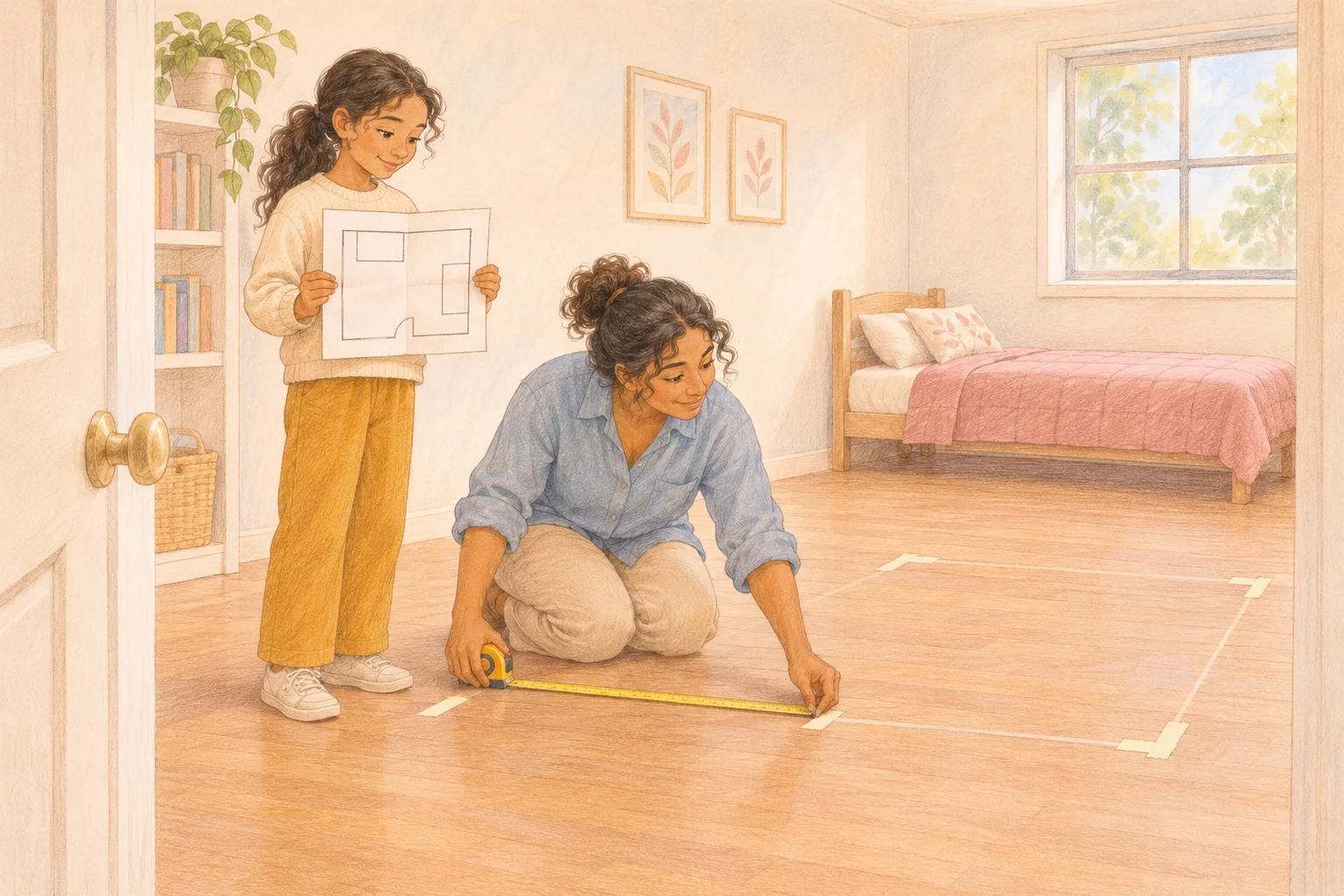
Use the manufacturer’s dimensions to mark the proposed footprint with removable tape or a paper sketch. Include the ladder or steps and any drawers that open into the room. This is a planning exercise for adults, not a load test or a promise that the bed is safe.
- Open the door and storage. Check that the bedroom door, wardrobe and drawers remain usable, and that the route out stays clear.
- Look upward. Check the top bunk’s proposed position against the ceiling, lights and fan, following the product’s clearance instructions.
- Look outward from the upper level. Consider what becomes reachable from that height. Health Canada advises positioning the bed away from fans, windows, cords and other furniture.
- Plan adult access. Think about changing bedding, checking a child and responding at night. If these tasks require unsafe reaching or improvised climbing, reconsider the layout.
If the arrangement only works by removing a guardrail or altering the ladder, it does not work. Ask the manufacturer about a permitted alternative or choose another bed. A wall is not a substitute for the required rail.
Choose the mattress as part of the bed
The US Consumer Product Safety Commission’s bunk-bed explanation describes entrapment hazards and requires upper guardrails on both sides. Its US rule also requires the rail tops to be at least five inches above the mattress. Those requirements illustrate why the mattress matters; one measurement alone cannot establish that a bed complies with all applicable rules.
Use the exact bed’s specified mattress size and thickness. Do not add a topper or extra padding that takes the sleep surface beyond its permitted height. Keep both the bed and mattress instructions available when ordering, so a replacement mattress is checked rather than assumed to be equivalent.
Entrapment testing uses specialist procedures. Do not ask a child to try squeezing through an opening, or use household objects to declare a frame safe. Resolve missing information with the manufacturer before use.
Rehearse the ordinary night, not a climbing challenge
After correct assembly and adult checks, explain use calmly. Nationwide Children’s Hospital recommends a nightlight near the ladder, careful ladder use and no play on the bunk or ladder. Keep the route clear. Stop using the bed or ladder if parts are damaged.
For ages 6–9, go through the short sequence with an adult nearby: use the intended ladder, move carefully, and call for help if something feels difficult. Do not turn this into a timed test. For ages 10–12, discuss late-night bathroom trips, guests and putting belongings away; greater confidence does not remove the bed’s limits.
Health Canada’s rules include one person on the upper bunk, staying inside the rails and never tying cords, scarves or ropes to the bed. Explain that the bed is for sleeping, not jumping or building a hanging den. Check younger visitors’ access rather than relying on the older child to supervise them.
Leave room to change the decision
Agree who checks fasteners and the ladder as the manufacturer directs, and keep the manual where adults can find it. Reassess after a move, a mattress replacement, damage or a change in how the child manages the bed. Do not keep using an unsuitable setup because assembling it took a weekend.
Choosing a low bed does not settle how siblings share space. The shared-bedroom privacy guide offers ways to create personal zones without making the upper bunk a prize. The useful result is a room the children can sleep in and adults can manage safely.
Sources and further reading
- Health Canada: buying, setting up and using bunk and loft beds.
- CPSC: guardrails, mattresses and entrapment requirements in the US.
- Nationwide Children’s Hospital: bunk-bed precautions.
- NHS: sleepwalking and avoiding the upper bunk.
Read our editorial policy and review methodology.