A fire extinguisher is a backup tool for a trained, capable adult facing a small, contained fire with a clear escape route. It is not a reason to delay evacuation, enter smoke or ask a child to help. Build the plan around alarms, escape and calling emergency services first.
Understand the label
US Fire Administration guidance describes classes: A for ordinary materials such as paper, cloth and wood; B for flammable liquids; C for energized electrical equipment; D for certain metals; and K for cooking oils and fats, mainly in commercial kitchens. Multipurpose A-B-C units are common for homes.
Choose a product listed by a recognized testing laboratory and large enough for likely hazards while still comfortable for the intended adult to operate. Ask the local fire service which rating and placement suit the home and local code.
Place it for escape
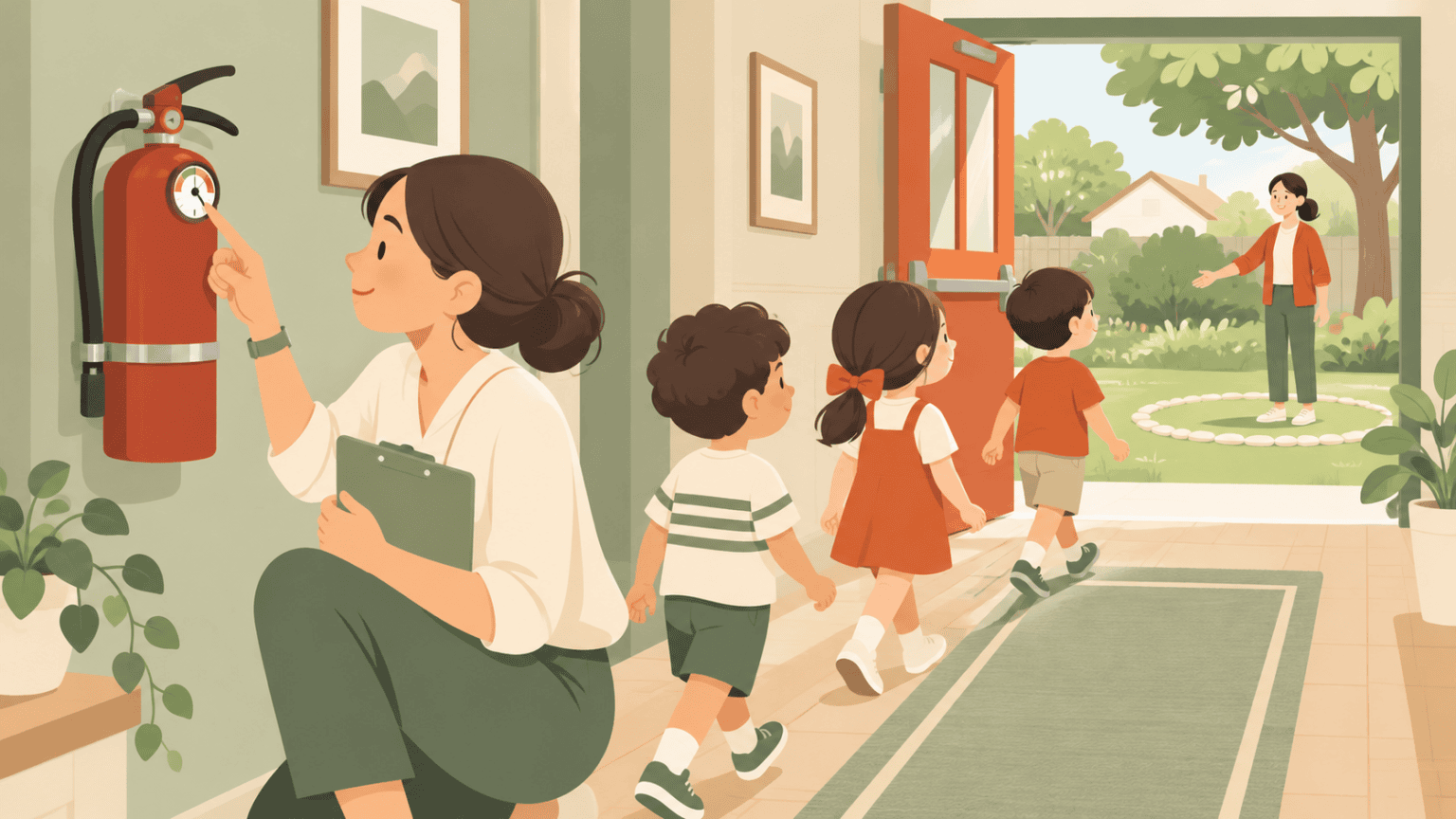
Mount it where an adult can reach it with the exit behind them. Do not hide it behind coats, place it where flames could block access or leave it for a child to handle. Follow mounting-height and environmental limits. A garage and kitchen may have different hazards.
Keep smoke and carbon monoxide alarms as separate layers. Use this CO safety guide, and include alarms in a home safety walk.
Use the go-or-leave checklist
USFA says consider an extinguisher only when every answer is yes:
- Have others been alerted and has someone called the fire service?
- Is the adult physically able and trained?
- Is the fire small and contained?
- Is the adult safe from toxic smoke?
- Is there a clear escape route?
If any answer is no—or there is doubt—leave, close doors if possible, stay out and call from safety. Young children and older adults should not use extinguishers. Teach children: “When the alarm sounds, go outside. Never hide and never go back.”
Learn PASS
Training from the fire service is best. PASS means pull the pin, aim low at the base, squeeze slowly and evenly, and sweep side to side. Even if discharge seems successful, leave and let firefighters check for hidden spread. Never fight a growing fire, heavy smoke, gas-cylinder involvement or a blocked exit.
Maintain it
Check the gauge on schedule. Ensure the pin and seal are present, hose and nozzle clear, cylinder undamaged and instructions readable. Some units need professional servicing, shaking or replacement. Record purchase, inspection and replacement dates. After any discharge, recharge or replace immediately.
Keep the unit inaccessible for play while adults know its location. An extinguisher adds a narrow option for a trained adult; it never changes the child’s job of leaving promptly.
Sources and further reading
Fit the extinguisher into a family escape plan
Mark two exits from each sleeping area where possible and select an outdoor meeting point. Keep keys needed for exit accessible to adults under the household’s safety plan. Practise getting outside without collecting phones, shoes or toys. A designated adult can call emergency services after leaving; no one should re-enter to fetch the extinguisher.
Families with mobility, hearing or sensory needs can ask the fire service about alerting and evacuation adaptations. The extinguisher should not narrow a corridor or create a protruding obstacle. If an adult cannot lift or control the selected unit, a larger rating is not helpful. Training may show that a lighter approved model and stronger escape plan is the better combination. Review the plan after moving, renovation or a change in who sleeps where.
Never test a live extinguisher with a short squeeze: even a small discharge can reduce pressure and require service. Use the gauge and scheduled inspection instead. Keep the manufacturer and service contact with the household safety record so an uncertain unit can be checked promptly.