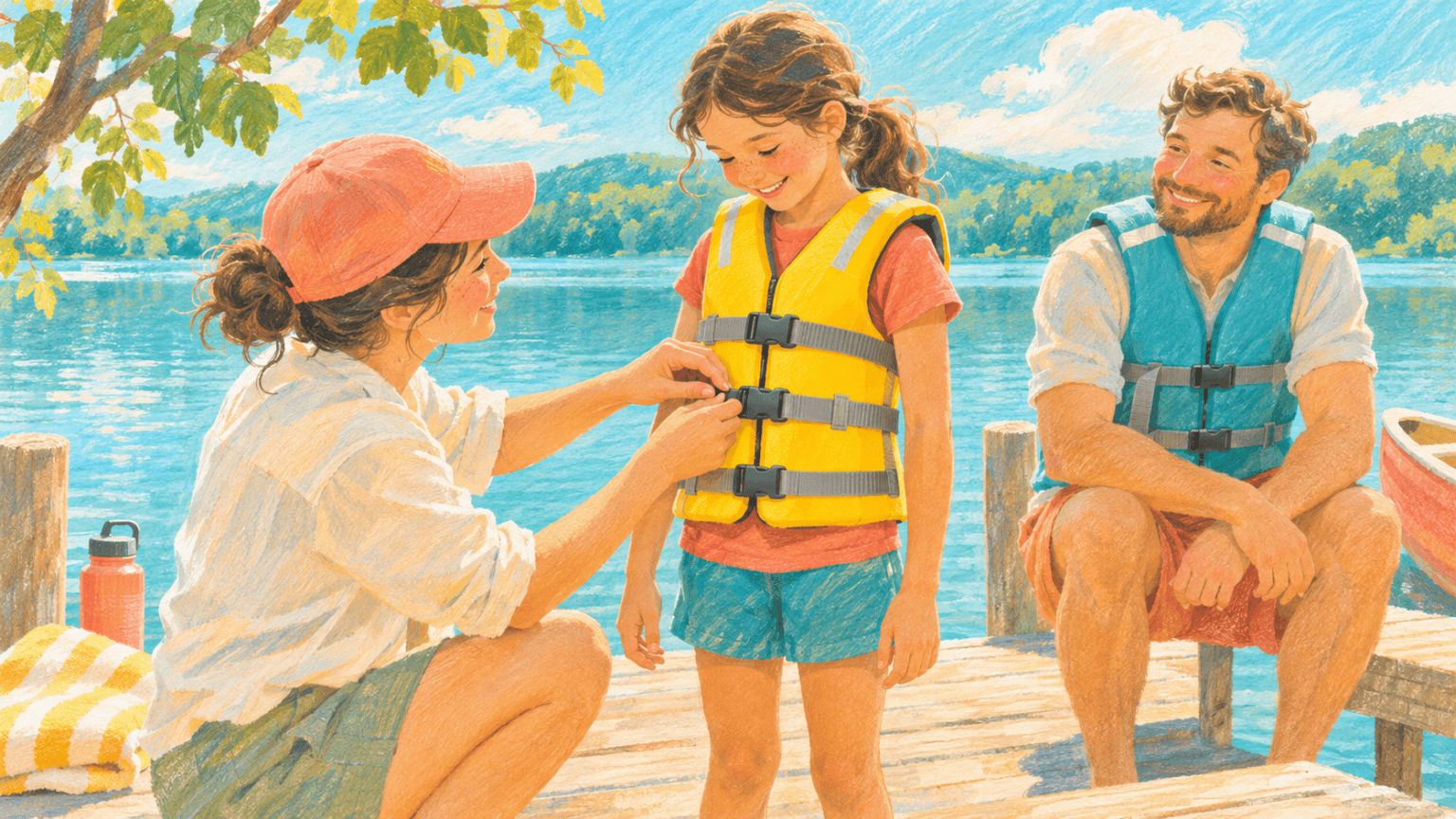
A child’s life jacket is protective equipment for the body they have today. Buying a larger one to “grow into” can let it ride up or slip off. Start with the approval label, activity and current size—not colour or an age range on a shop sign.
Read the label
Look for approval by the relevant national authority, intended activity, user weight and chest-size range. US Coast Guard guidance separates infant, child, youth and adult products by weight and notes that inflatable jackets are adult equipment, not a general child choice. Check rules for the water where you will boat.
Match the design to the activity. A jacket for calm recreational boating may not suit water skiing, white water or personal watercraft. A pool toy, swim vest or arm band is not automatically an approved life jacket and never replaces close supervision.
Check fit on land
- Dress the child in what they will wear on the water.
- Fasten every zip, buckle and crotch strap, tightening in the instructed order.
- Ask the child to raise both arms. Lift gently at the shoulders; the jacket must not rise over chin, ears or face.
- Check that straps lie flat and no buckle rubs the neck or interferes with sitting.
- Inspect foam, fabric, seams and hardware.
For infants, confirm the exact weight range and inspect head support and grab handle. The Coast Guard cautions that jackets may not work for every very small infant; consult the manufacturer and avoid boating until a suitable product is found.
Test in controlled water
Try the jacket in calm, shallow water with a capable adult holding the child within arm’s reach. Let the child feel floating, then ensure the jacket stays positioned and the airway remains clear. This is a fit check, not proof of self-rescue.
For sensory discomfort, introduce the jacket at home in brief sessions. Name each step and allow safe choices. Never remove straps, cut labels or modify foam.
Build a routine
Put jackets on before the dock or boat and keep them on as required. US federal rules generally require children under 13 to wear an approved jacket on a moving recreational vessel, with limited exceptions; state rules vary. Adults should model wearing their own.
Plan supervision with this family water-safety plan. A course builds skills without reducing supervision; see how to use a water-safety course responsibly.
Care and recheck
Rinse after salt, chlorine or mud, air-dry away from heat and store dry and uncompressed. Each season, recheck weight, fit and activity. Stop if the jacket rides up, restricts breathing, has damaged fasteners or no longer matches the label. The best jacket is the one that fits securely now and is worn.
Sources and further reading
Adapt for different children and outings
A child with limited movement, low muscle tone or a medical device may need professional input and a jacket designed for that use. Do not assume a standard fit test covers individual positioning needs. Contact the manufacturer and an appropriate clinician or adaptive-recreation specialist before boating. Keep rescue plans realistic for the adults present.
For cold water, sun protection or rain gear, repeat the full fit check over the actual layers. Bulky clothing can change how the jacket sits. At the end of the outing, record any strap that slipped or area that rubbed rather than simply loosening it next time. If a child outgrows a jacket, pass it on only with a readable label, intact parts and truthful history. Never promise that a jacket makes unsupervised water play safe.
Write the child’s current weight and the jacket’s permitted range on a seasonal gear list, not on the jacket label. Reweigh after a growth spurt and repeat the lift and water checks. A correct size on paper still needs a secure real-world fit.