Swimming lessons and water-safety courses can build useful knowledge, but they do not make a child drown-proof. The safest starting point is an adult plan: who supervises, what barriers are present, which water settings the family uses and how help is reached.
Choose the right learning goal
A caregiver course should cover drowning risks, supervision, barriers, life jackets, emergency response and differences between pools, baths, beaches, rivers and boats. A child programme should be age-appropriate, practical and clear about asking an adult before approaching water.
The American Red Cross offers caregiver courses, swim-lesson orientation and activities for children in early primary grades. Use these as examples of structured education, then choose a reputable local provider whose guidance fits your country and setting.
Ask the provider direct questions
- Which ages and abilities is the course designed for?
- What qualifications and safeguarding checks do instructors have?
- How are children supervised and counted?
- How does the programme support disability, language and sensory needs?
- Does it distinguish skill learning from proof of safety?
- What is the emergency plan for the venue?
Visit the site if possible. Look at access control, rescue equipment, visibility and whether adults are distracted by administrative duties. A confident marketing claim is not a substitute for these answers.
Practise dry-land rules first
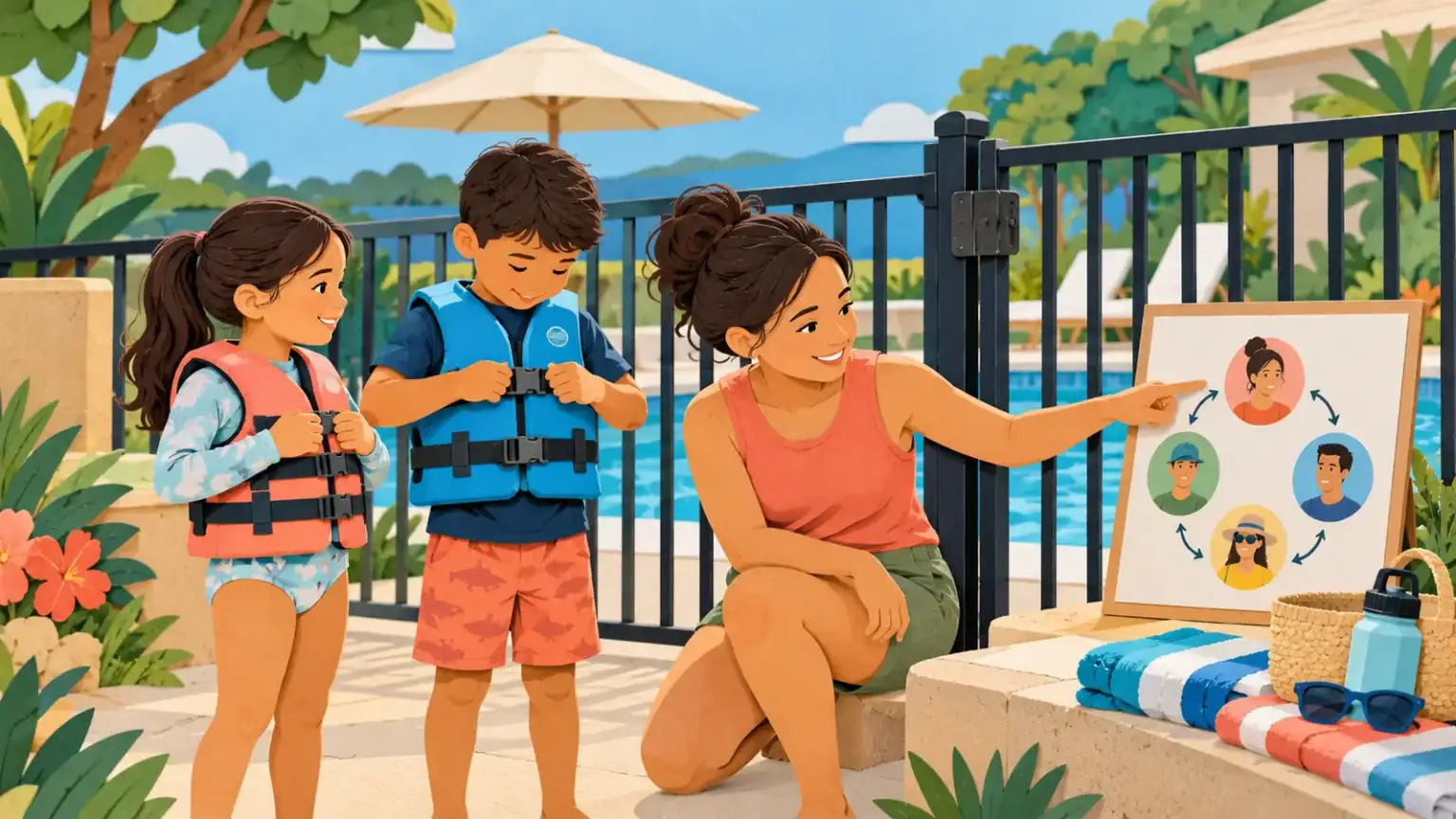
Before entering water, use a calm 20-minute family session. Identify the supervising adult. Practise stopping at a gate or water edge, asking permission, putting on a correctly fitted life jacket when required and moving away when the adult says the session is over.
For young children, use one phrase consistently: “Wait for my yes.” Older children and teens can discuss currents, depth changes, peer pressure, diving rules and why strong swimmers still use life jackets in appropriate settings.
Make supervision visible
At gatherings, name one capable adult as the active water watcher and hand over explicitly: “You are watching now.” That person stays close enough to act, avoids phones and alcohol, and does not assume another adult is watching. Rotate before attention fades.
Lessons do not replace barriers around home pools, emptying containers after use, or close attention in baths. Inflatable toys and swimming aids are not rescue devices. Follow local rules for approved life jackets and boating.
Adapt without excluding
Ask the child what helps them feel secure: a visual sequence, gradual entry, a quieter class, a familiar support person or an instructor experienced with disability. Do not force submersion, breath-holding or separation as proof of bravery. A child may learn water rules and rescue-call steps even if swimming is not currently accessible.
Connect the plan to EdCaptain’s calm safety-drills guide, family emergency communication card and family first-aid kit guide. Caregivers should seek recognised CPR and first-aid training rather than relying on a written summary.
Review after the course
Ask the child to show one rule in a dry setting and tell you whom to ask for help. Adults update supervision assignments, barriers and emergency contacts. Repeat the plan before holidays or a new water venue.
Progress in lessons is valuable, but the adult safety system stays in place at every skill level. The goal is safer participation, never permission to relax attention.
Plan for unfamiliar water
Before travel, ask about lifeguards, currents, weather, water quality, entry points and local warning flags. A pool lesson does not prepare a child for waves, cold water or a river current. Choose activities that fit the least experienced participant and leave when conditions change.
Adults should know the exact location well enough to call for help and identify rescue equipment without entering dangerous water themselves. Teach children to call a capable adult and reach or throw an appropriate aid only when local training supports it, rather than jumping in after someone.