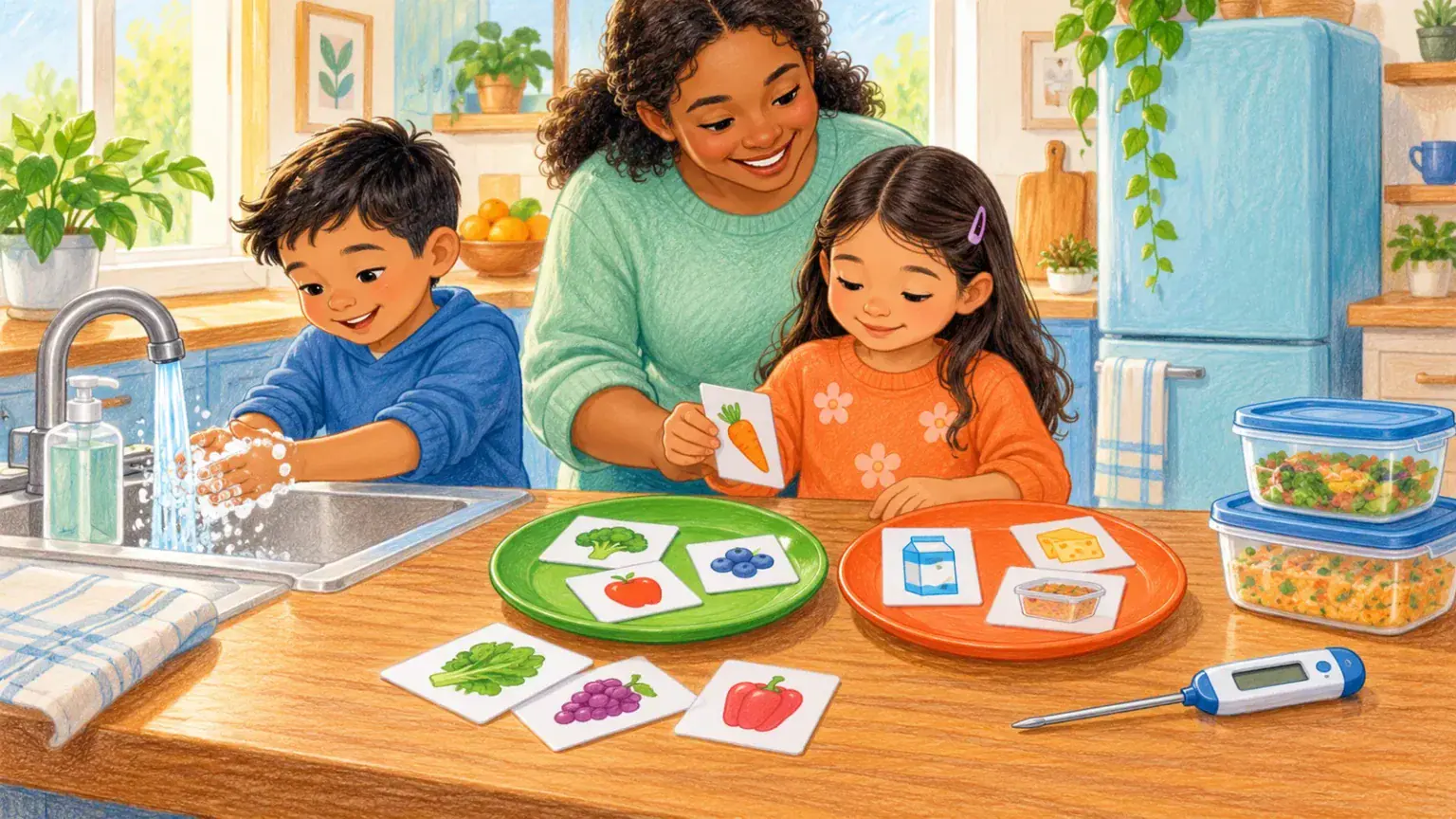
Food safety is easier to remember when it is attached to four actions: clean, separate, cook and chill. This workshop lets children practise the visible parts while an adult manages raw animal foods, sharp tools, heat and final temperature decisions.
Set up four stations
Allow 40 minutes. Use picture cards labelled clean, separate, cook and chill; soap and a sink; two clean boards or plates; an unplugged food thermometer for demonstration; and containers for leftovers. You can use pretend food or sealed packages. There is no need to handle raw meat during practice.
State the boundary: “Children may observe and practise assigned safe steps. The adult decides what is ready to eat.” Match roles to age, ability and local food practices.
Station one: clean
Practise washing hands with plain soap and water for at least 20 seconds, including backs, between fingers and under nails, then drying with a clean towel. Discuss when hands need washing: before, during and after food preparation; after the toilet; after touching animals, rubbish or raw foods; and before eating.
FoodSafety.gov advises rinsing fruit and vegetables under running water, without soap or bleach, and not washing raw meat, poultry or eggs because splashes can spread germs. Adults demonstrate the rule without creating a contaminated practice area.
Station two: separate
Use coloured cards to represent raw and ready-to-eat foods. Ask children to place them on separate boards and plates. Practise putting a cooked item onto a clean plate rather than the plate that held it raw. In a real kitchen, adults handle raw foods and wash hands, tools and surfaces with hot soapy water.
Show where leakproof raw-food containers sit in the refrigerator so juices cannot drip onto ready-to-eat food. Families who do not prepare animal foods can still practise separating allergens, unwashed produce and dirty packaging from ready-to-eat items.
Station three: cook
Explain that colour, smell and a timer alone cannot confirm a safe internal temperature. Show how an adult places a food thermometer in the thickest part without touching bone. Use the current local temperature chart for the food being prepared.
Children can read the display with an adult, but they should not handle hot pans or decide that undercooked food is safe. If a package provides cooking and standing instructions, follow them.
Station four: chill
Practise dividing pretend leftovers into shallow containers, adding a date and moving them promptly toward the refrigerator. FoodSafety.gov advises refrigerating perishables within two hours, or within one hour in temperatures above 32°C, and keeping the refrigerator at 4°C or below.
Local guidance may differ, so use the rules where you live. When timing or storage is uncertain, the adult makes the discard decision; a child should not taste food to test safety.
Adapt participation
A younger school-age child can match picture cards and wash hands. Older children can read instructions, label containers and help check a refrigerator thermometer. Offer seated work, large-print cards, non-slip tools and a break from strong smells or noise. No child should be penalised for avoiding an allergen or sensory trigger.
Use EdCaptain’s kitchen helper safety-zone chart, food-allergy gathering plan and power-outage food checklist for related routines.
Finish with a teach-back
Each person chooses one station and demonstrates the safe decision using pretend materials. Correct gently and repeat later in the real kitchen. The aim is a dependable household routine, not a certificate or a child taking over adult responsibility.
Audit one real meal together
At the next meal, adults narrate only the relevant steps: “I used a clean plate,” “The raw package stays separate,” or “I am checking the temperature.” Keep the child’s role simple and safe. Do not create fear by describing severe illness in graphic detail.
Review the routine when the kitchen, refrigerator or usual foods change. Replace cracked boards and worn containers, keep thermometers usable and make sure every caregiver follows the same storage plan. Consistency matters more than a perfect one-off workshop.