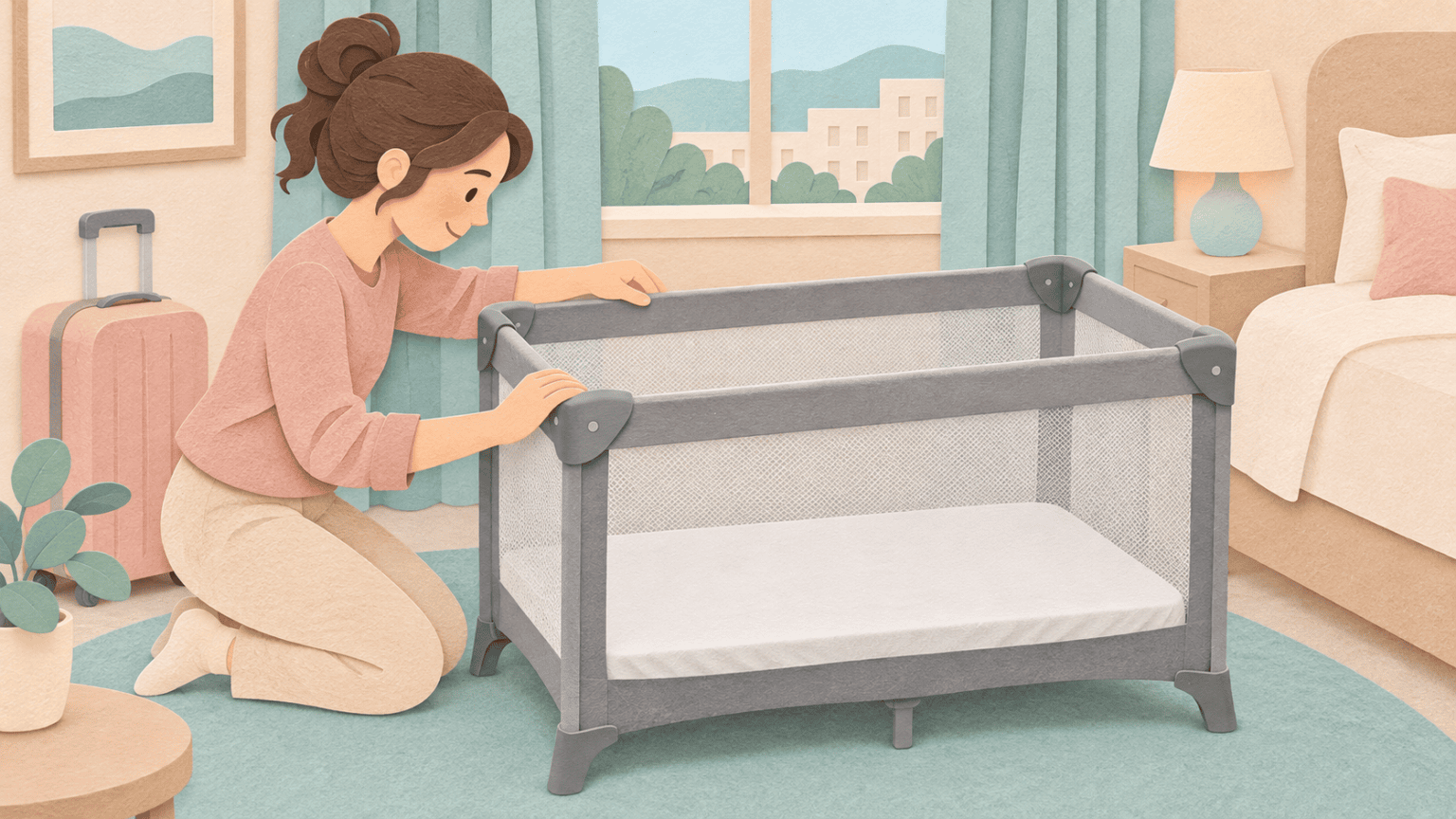
A travel cot or play yard is useful because it folds. That same folding design means every rail, hub, floor and accessory must be correctly set each time. A soft extra mattress may feel kinder to an adult hand but can create a dangerous side gap. Use the sleep space as designed, not as a small bed to customize.
Check before travel
Locate the label, model, date, instructions and original parts. Search the model in the relevant recall database. Reject torn mesh, damaged seams, bent rails, missing fasteners, an unreliable lock or a floor that does not lie as designed. A used item needs verified history; follow this second-hand product check.
Confirm the child remains within all weight, height, mobility and developmental limits. CPSC defines a play yard for a child who cannot climb out and is under the stated height limit. A bassinet insert has its own lower limits.
Set up in order
- Choose a level floor away from stairs, heaters, blind cords, lamps and reachable furniture.
- Open the frame exactly as the manual shows. Many designs require rails to lock before the centre floor is pressed down.
- Press and pull every rail; straight-looking rails may still be unlatched.
- Install only the pad or mattress supplied or specifically approved for the model, fastening every strap.
- Use only a tightly fitted sheet made for that pad if instructions allow one.
Run a hand around the perimeter. There should be no unapproved gap, raised corner or loose fabric. Never add a second mattress, folded blanket, pillow, topper or cushion. CPSC play-yard standards address entrapment, suffocation and misassembly; extra padding can defeat designed spacing.
Keep sleep bare
Place an infant on the back on the firm, flat surface with only the approved fitted sheet. No pillows, bumpers, loose blankets, positioners, toys or weighted products belong inside. Move a sleeping baby from a sitting device to an approved sleep space as soon as practical.
Do not drape a blanket over the frame. It can fall inside, reduce ventilation or create a cord-like hazard. Use only a canopy or net supplied and permitted for that exact model.
Make travel predictable
Practise assembly at home and save the manual. On arrival, complete the same rail-and-floor check before the child is overtired. A hotel-room safety scan helps find cords, unstable furniture and unfamiliar heat sources.
Before every sleep, verify locks, pad and bare space. Clean as directed and dry fully before folding. Stop if a lock will not engage, mesh tears or the child can climb out. Do not improvise a repair while travelling; arrange another approved sleep space.
Sources and further reading
Adapt for shared care and accessibility
If several adults assemble the cot, use a spoken checklist: four rails, centre floor, approved pad, bare space. A caregiver with limited strength should choose a model they can lock and test reliably or arrange help; forcing a stiff mechanism can leave it partly engaged. Photograph the correctly assembled product at home so another caregiver can compare the setup without guessing.
When the child wakes, remove them before folding or adjusting anything. Keep older children from climbing into the unit, leaning on the rails or attaching toys. If the manual allows a changing accessory, use its own restraints and limits and remove it exactly as directed before sleep. The main enclosure is not safe merely because the accessory looks secure. Consistency between home, grandparents and travel locations matters more than adding comfort items.
Keep pets out of the sleep space and do not use the play yard as storage between sleeps. Before placing the child inside, remove anything another person has left there and check that the product has not shifted against a wall, curtain or cable.