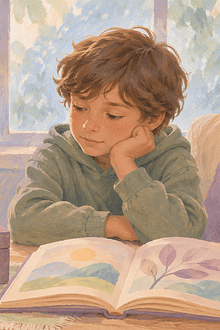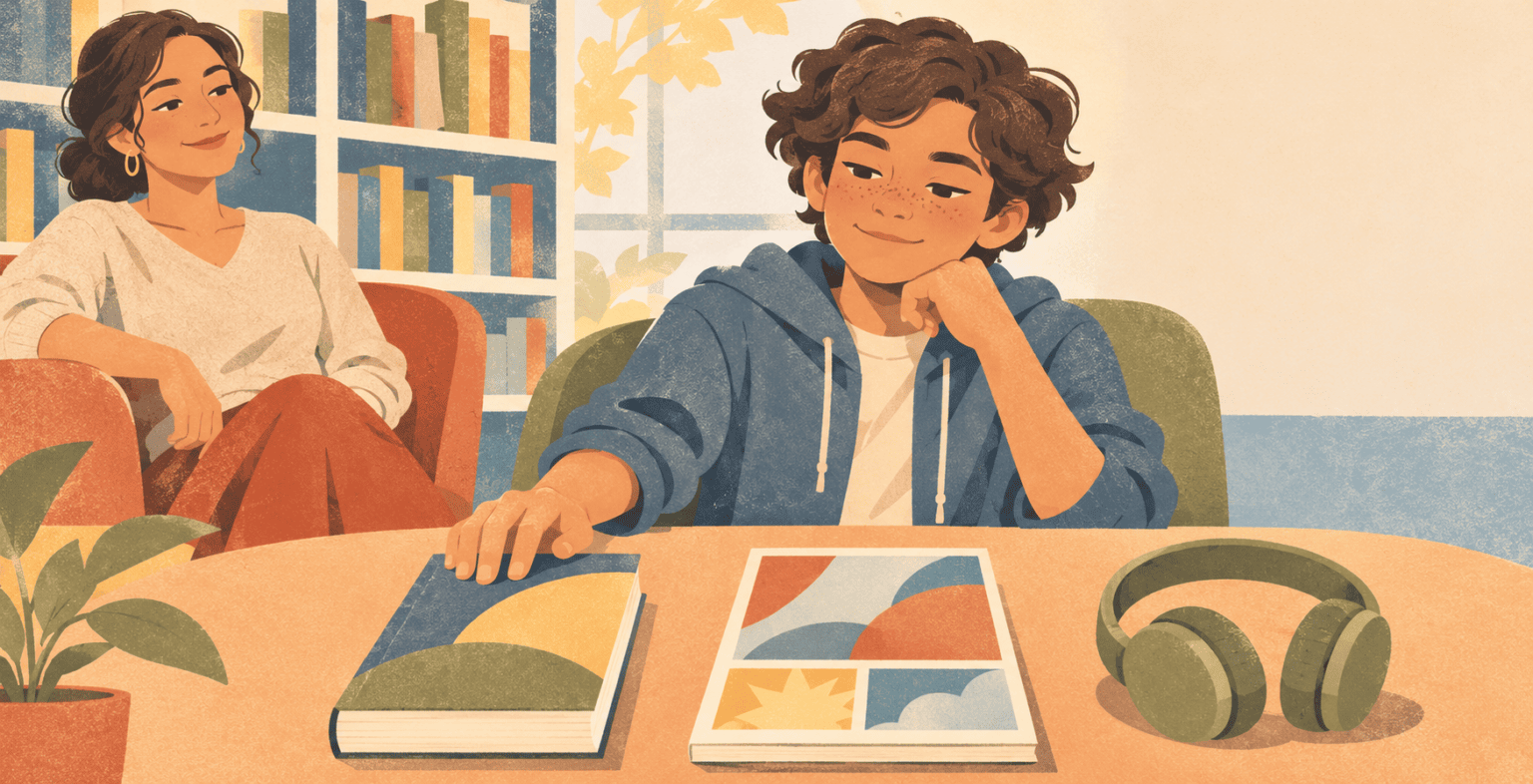
An older child can be interested in complex ideas while still finding some printed words, sentences or pages hard to read. When adults respond by offering books aimed at much younger children, the child may experience the material as a public label rather than support.
The aim is not to hide difficulty or promise a quick fix. It is to give the reader dignified, interesting choices at a level where they can make meaning, while school specialists provide any assessment or targeted instruction that is needed.
Separate the topic from the text demands
Look at two dimensions. First, is the subject, humour and visual style appropriate for the child’s age and interests? Second, what will the print ask the reader to do?
- How long are the words, sentences, chapters and pages?
- Is the type clear, with useful spacing and an uncluttered layout?
- Does the book explain essential vocabulary?
- Do illustrations, headings or summaries support meaning without making the book look babyish?
- Can the child reach a satisfying stopping point in ten or fifteen minutes?
A short book is not automatically easy, and a thick book is not automatically difficult. Graphic novels may contain demanding inference; nonfiction can be approachable when headings and images organise information. Preview a few pages with the child rather than relying on a single age or level printed on the cover.
Begin with genuine interest
Offer a small, varied set based on what the child already cares about: sport, machines, animals, music, mysteries, friendship, humour, history or current events. Let them reject a book without defending the decision. Choice can strengthen engagement, but a shelf of fifty options can feel like another test. Start with three.
Useful formats may include short novels, comics, narrative nonfiction, magazines, joke books, recipes, manuals, biographies, large-print editions and books paired with audio. The article on choosing an audiobook for shared listening explains how to evaluate narration and access without treating audio as a lesser form of reading.
Try a five-minute page check
- Ask the child to choose a page that looks possible.
- Decide whether they want to read silently, aloud, together or while listening.
- After a short section, ask what is happening—not how many words were correct.
- Notice the kind of support needed: a word, background knowledge, a pause, or help tracking the line.
- Ask, “Do you want to keep going, try it another way or choose something else?”
Do not turn this into an informal diagnosis. A single page cannot establish why reading is difficult. If the child regularly struggles with accurate word reading, fluency or understanding, speak with their teacher or an appropriately qualified reading specialist about evidence-based support.
Offer access without taking over
Shared reading can mean alternating paragraphs, the adult reading dialogue, or pausing audio so the child can study maps and images. For factual material, the child might read captions while the adult reads the main text. For a book with unfamiliar words, preview a few essential terms instead of interrupting every sentence.
When early word-reading practice is appropriate, choose material that matches the patterns the child has been taught. The guide to decodable books explains that specific purpose. An older reader still needs age-respectful content and should not be left alone with work that repeatedly produces failure.
Protect privacy and dignity
Do not announce a reading level to siblings, compare the child with classmates or use reading as a punishment. Ask before reading their work aloud or correcting them in front of others. Labels such as “lazy” or “not trying” can obscure the effort required.
Libraries and schools may use terms such as high-interest/low-readability, accessible text or supported reading. Ask to see actual pages. Marketing labels vary, and the child remains the best judge of whether a cover, voice and topic feel age-respectful.
Build a small reading pathway
When a book works, identify why: short chapters, a favourite subject, strong pictures, recurring characters, audio, predictable structure or room for discussion. Use that clue to find the next book. A series can reduce the effort of learning a new world each time, while different genres prevent the pathway from becoming narrow.
For information-rich choices, check nonfiction sourcing and page design as well as readability. The goal is a growing sense that books can answer real questions, not a race through levels.