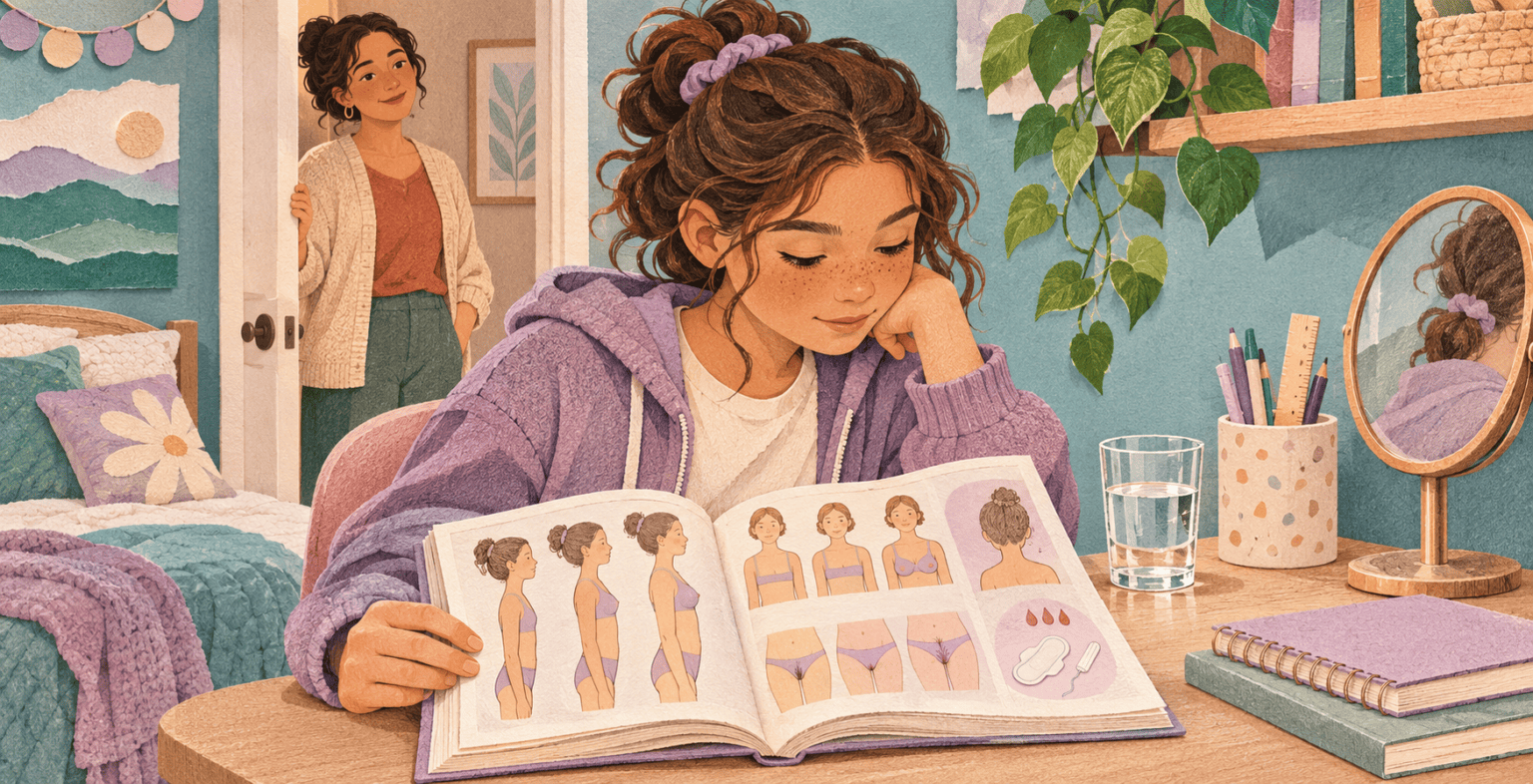
A puberty book can let a child return to a question privately, find a word they were too embarrassed to ask about and discover that bodies do not all change on the same schedule. It can also create confusion if the information is outdated, treats one body as the standard or turns normal variation into a list of deadlines.
Choose the book before it feels urgently needed. That gives you time to check it calmly and lets the child meet the information before a change becomes frightening.
Check the edition and expertise
Look for a recent edition, a named author and transparent health review or sourcing. Medical titles and credentials can be useful, but they do not make every statement current. Check a few claims against an authoritative health source, especially information about timing, menstruation, erections, skin care, hygiene and when to seek help.
A good book explains that development varies. It should not give a universal age by which every body “must” look a certain way. The American Academy of Pediatrics notes that adolescence includes physical, cognitive, social and emotional changes, and that variation can bring both curiosity and anxiety.
Look at the anatomy words and pictures
- Are body parts named clearly rather than treated as shameful?
- Do diagrams explain function without sexualising children?
- Does the book distinguish sex traits, gender identity and sexual orientation accurately?
- Are different bodies, skin tones, disabilities and family structures visible?
- Does it avoid implying that every reader will experience every change in the same way?
Inclusive language should increase accuracy, not make the text vague. A book can explain that some changes are associated with particular organs or hormones while respecting the different words people use for themselves.
Match detail to the child, not adult discomfort
Some children want a simple overview; others want precise answers and an index. Read sample pages about a topic adults often find awkward. If the tone becomes joking, alarmist or evasive, it may be hard for a child to trust the rest.
For younger children, choose clear sections, calm illustrations and information they can use now, with later topics available when needed. Preteens often appreciate a book that covers changes before they start and answers practical questions about periods, sweat, hair, voice, privacy and emotions. Teens may prefer a more detailed reference they can consult independently.
Make privacy part of the choice
Ask whether the child wants to choose with you, receive two or three options, or have a book left in a private place. Do not require them to read it in front of you or report what they learned. Say plainly: “You can read this alone. You can ask me anything, and if I do not know, we can find a reliable answer.”
Privacy is not secrecy from safe support. The book should tell readers when to speak with a trusted adult or health professional, especially about pain, worrying symptoms, very early or delayed changes, abuse or anything that feels unsafe.
Use a five-part page audit
- Accuracy: can you verify the core health information?
- Variation: does it show a range rather than a single “normal” body?
- Agency: does it respect privacy, consent and personal boundaries?
- Usefulness: can the child find answers through headings, contents and index?
- Support: does it direct concerns to qualified help without diagnosing the reader?
Read alongside—not instead of—conversation
A book is a door, not a one-time talk. Bring up small topics during ordinary life and leave room for questions later. EdCaptain’s guide to answering questions about sex and bodies offers language for calm, honest responses. Fathers and other caregivers can also use the practical guide to talking about puberty and periods without making it awkward.
If a child has intellectual or communication disabilities, look for concrete language, visual sequencing and repeated teaching about privacy and consent. The article on teaching puberty, privacy and consent in clear steps can help you adapt the conversation without withholding information.
Notice commercial messages
Some puberty books recommend branded products, cosmetic routines or restrictive ideas about appearance. Separate practical hygiene from marketing. Children do not need to remove body hair, hide every skin change or purchase a large kit to manage puberty. A balanced book should support comfort and health without turning development into a shopping list.
When a book is not enough
Use qualified health care for individual concerns. Seek timely advice if changes appear unusually early, expected development seems substantially delayed, symptoms cause pain or distress, or the child has questions the book cannot answer. Do not use a book to diagnose a hormonal or developmental condition.
The best choice leaves the child better informed and still connected to trustworthy people. Accuracy, privacy and respect matter more than a perfect cover or a promise to answer everything.