By EdCaptain editorial desk · Published
“The name on the cover is right” is a useful first check. It is not the end of proofreading a personalised storybook. A name can be correct on one page while a dedication contains a typo, an illustration uses the wrong character, or the story gives a relative the wrong family role.
Set aside a few quiet minutes for the final preview before paying or approving production. If you are ordering a gift, one discreet conversation with a caregiver can prevent a surprise that feels awkward rather than thoughtful.
Start with a small agreed reference
Before entering details, confirm the spelling the family actually wants printed. A child may use a shortened name at home and a longer one on official documents. Neither is automatically the right choice for a keepsake.
Ask: “Which name would you like in the book, exactly as written? Are there accents, spaces or punctuation I should preserve?” Also confirm any pronouns, family names, relationship words and the sender’s name for the dedication. Copy from the agreed reference rather than memory.
You do not need a birth certificate or a collection of private documents for this. Ask only for the details the gift requires. Keep your notes private, particularly if they include more than one child’s information.
Find out what the preview includes
Check whether you can inspect every personalised page or only a sample. As one publisher example, Wonderbly’s The Wondrous Road Ahead page offers a preview of all 36 pages and describes choices including the child’s name and character. This illustrates what a preview can offer; it is not a recommendation based on testing the book.
If a site shows only a generic example, ask how you can check your particular version before it is printed. “Can I see the final dedication and all pages containing the name?” is more useful than assuming that a polished sample will match the order.
Personalisation may be limited to the available options. A text field for a dedication does not establish that you can rewrite the story, change every character or remove a scene. Resolve an important limitation before ordering.
Make two separate passes through the pages
First read for meaning. Then inspect the personalised details. Trying to do both at once makes it easy to enjoy the pictures while missing the same small error several times.
- Read the whole story. Does it make sense with the choices you selected? Notice any family assumptions, distressing scenes or message you would not want attached to this child.
- Check every appearance of the name. Look at the cover, title page, story pages, dedication and ending. Inspect accents, apostrophes, hyphens and capital letters. A name that fits one line may wrap awkwardly elsewhere.
- Read pronouns and relationship words in context. Follow who is speaking and who is being described. Confirm that “Grandad”, “Auntie” or another chosen title refers to the intended person throughout.
- Compare the illustrations with the selected options. Check the character, any siblings or adults included, and repeated appearances. Do not assume that changing one selection updated every page without looking.
- Read the dedication slowly. Check its greeting, sender, date if included, punctuation and final line. Look for cut-off text or a missing word, especially after editing on a small screen.
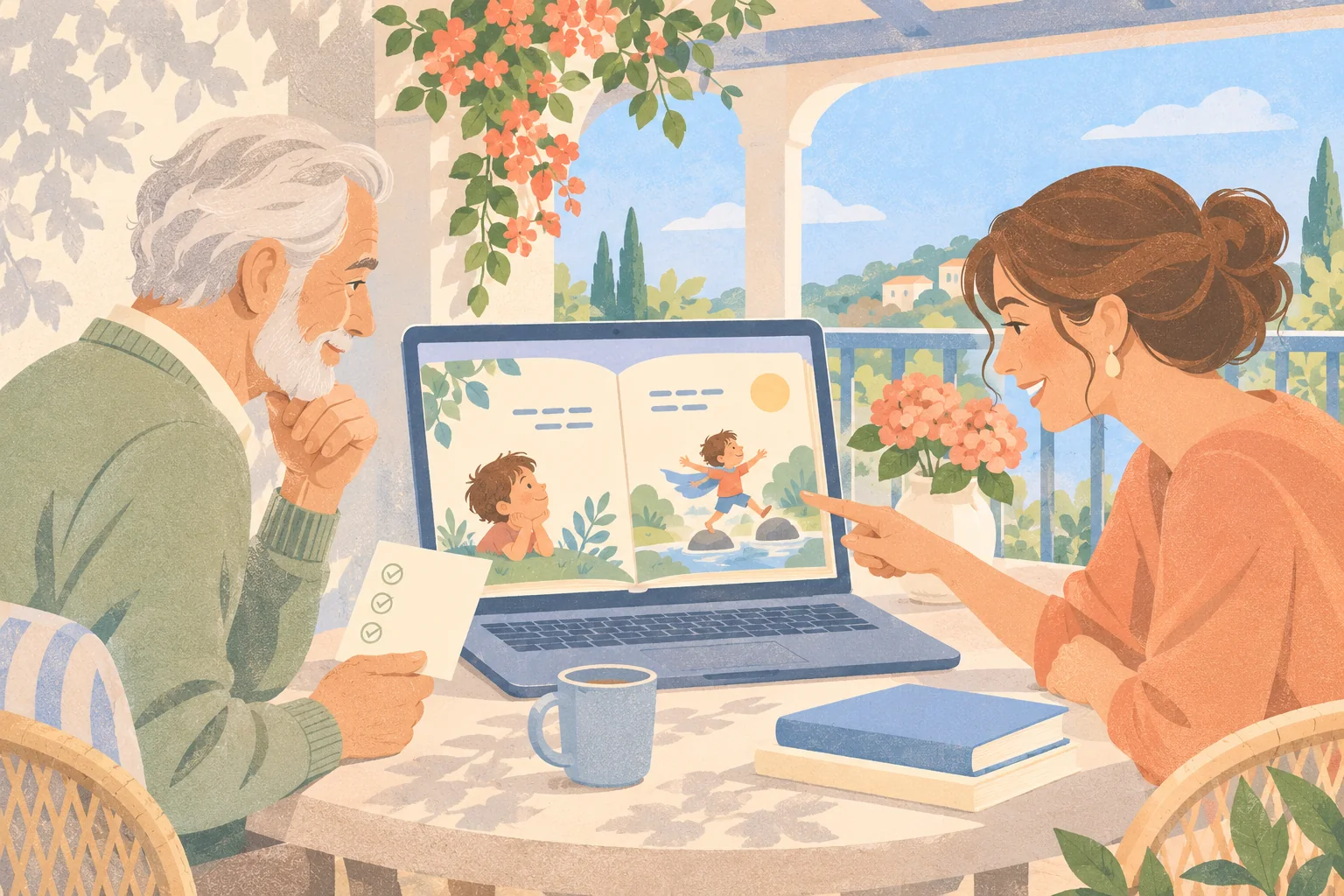
If someone can help, ask them to compare the final preview with the agreed details rather than simply asking, “Does this look nice?” You can read the dedication aloud while they check the written reference. A phone’s zoom or a larger screen may make small details easier to inspect.
For more than one language, check the actual result
Make sure the selected story language is the intended one. A name entered in another script does not necessarily mean the story will appear in that language. Inspect the rendered characters rather than trusting the input box alone.
If the preview drops a mark, substitutes a symbol or makes a phrase sound unnatural, ask the publisher what is supported. Do not silently change a child’s name to make the form accept it without checking with their caregiver. Our guide to choosing books for a multilingual family covers the separate question of whether the language and storytelling will work for the people reading together.
After an edit, return to the final preview
Correcting the input field is only part of the job. Refresh or regenerate the preview as the service instructs, reopen the relevant pages and confirm the change is visible. Then recheck other details you previously approved.
For two siblings’ copies, use a separate check for each. Confirm which name belongs with which character, dedication and cover. A correct first copy does not verify a duplicated or newly created second one.
Before sending a child’s name or image to a service, check the provider’s current privacy information. Wonderbly’s policy, for example, describes recipient details among information that may be supplied. A printed gift still involves an online submission. If the chosen product uses AI photo processing, see our guide to deciding about a child’s photo upload before selecting the file.
Keep the approved version and check the order
Where the service permits, save a private reference to the final proof or note the choices you approved. Check the number of copies, book format, language and delivery details separately from the story text. Keep any proof containing a child’s information out of public reviews and social posts.
Read the seller’s current correction and production information. Wonderbly’s Ireland terms ask buyers to report order errors promptly and note that printed colours may differ from a screen. Those are provider-specific details, not a universal correction window or a promise that an order can still be changed.
If you spot an error after ordering, contact the seller immediately with the order reference, the exact issue and the correction requested. Ask whether production can be paused and wait for confirmation; sending a message does not establish that the change happened.
A simpler alternative is an ordinary book with a carefully written gift note. Whichever route you choose, aim for a story the child can enjoy and details their family recognises, rather than a perfect surprise delivered under deadline pressure.
Sources and further reading
- Wonderbly: example of a whole-book personalised preview
- Wonderbly Ireland: order details and reporting errors
- Wonderbly Group: information submitted to the service
Read our editorial policy and review methodology.