A book can give a child words and images for loss, but it cannot decide how they should grieve. Children may ask the same question repeatedly, move between sadness and play, become angry, or prefer not to discuss the loss at all. Choose a book that makes room for those responses rather than prescribing a neat emotional journey.
If the loss is recent, preview the entire book alone. A beautiful cover does not reveal whether the story uses confusing euphemisms, frightening imagery or a belief system that does not fit your family.
Look for clear, concrete language
Young children can take phrases such as “went to sleep” or “we lost them” literally. A useful book explains death in words the child can understand, while leaving spiritual questions for the family to answer according to its beliefs. It should not suggest that sadness follows a timetable or that remembering well means feeling better quickly.
- Does the book distinguish death from sleep, travel and temporary separation?
- Are feelings varied rather than limited to quiet sadness?
- Does the child character keep ordinary routines, relationships and moments of play?
- Is there room for uncertainty and questions?
- Does the ending offer connection without promising that pain disappears?
Match the book to this child and this loss
A preschooler may need a short story with concrete events and repetition. A school-age child may want to know what happens at a funeral or why adults behave differently. A teenager may reject a therapeutic-looking book but accept a novel, memoir, graphic narrative or practical guide.
Consider the relationship and circumstances. A pet-loss story may help after a pet dies, but it may feel minimising after the death of a parent or sibling. A story about illness may be unsuitable after a sudden death. Check for hospital scenes, accidents, suicide, violence or other details that could overwhelm or misrepresent the child’s experience.
Read without demanding disclosure
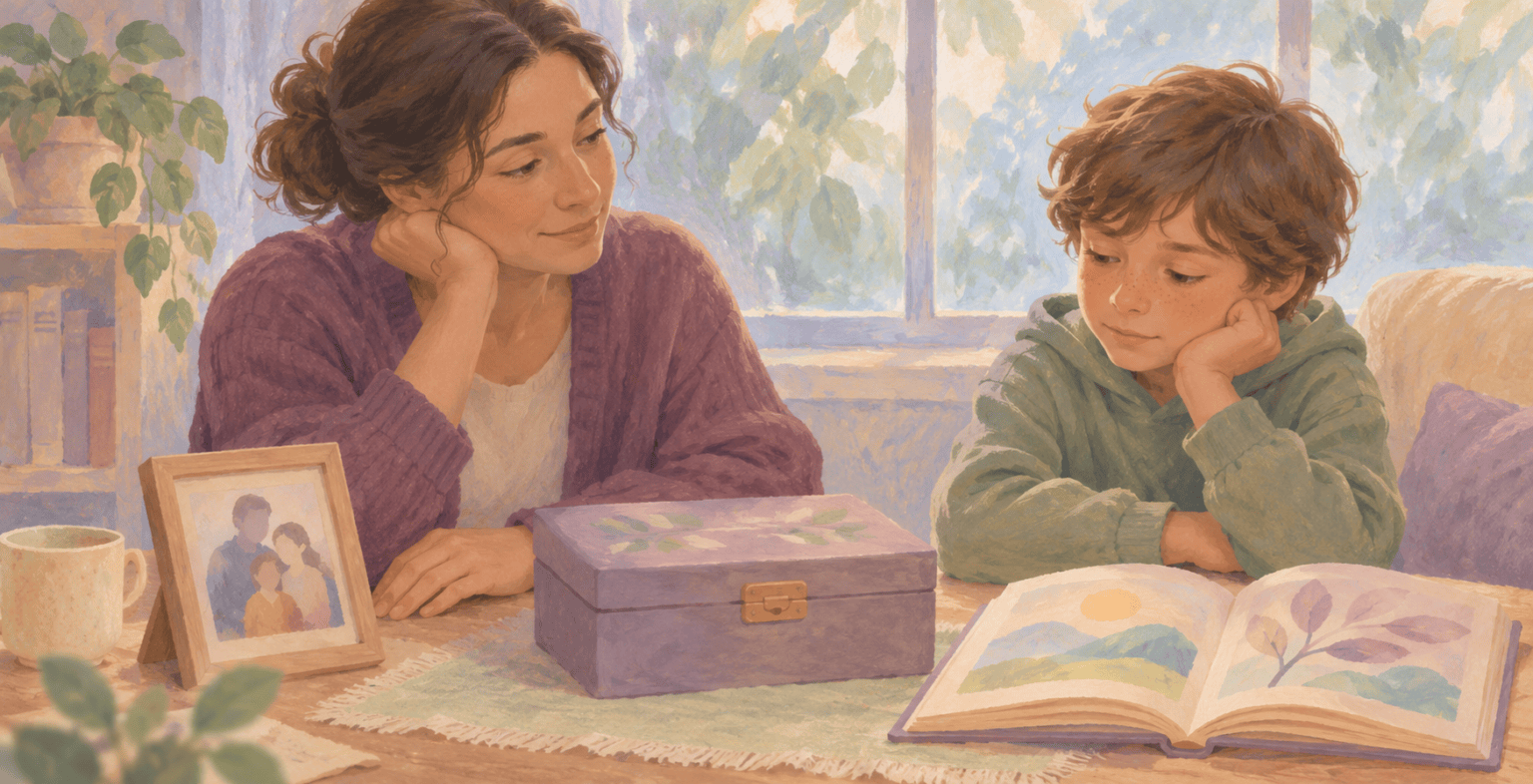
- Offer the book: “I found this. We can look at it together, or you can keep it for later.”
- Let the child choose the time and whether to stop.
- Read the words without adding a lesson after every page.
- Answer questions honestly within what you know and the child’s developmental level.
- If the child is silent, do not ask them to prove the book helped.
You can share a small observation—“The character gets angry as well as sad”—and wait. A child may respond days later. Follow their lead, as the American Academy of Pediatrics advises in its grief guidance.
Respect family beliefs without closing questions
Books may describe an afterlife, nature cycle, continuing bond, memorial ritual or no spiritual explanation. Decide whether that framing fits your family. You can say, “This is what the character’s family believes; people have different beliefs. In our family, we believe…” Avoid presenting a metaphor as a medical fact.
Representation matters here too. Funeral customs, faith, chosen family, disability and who provides care should be treated with respect. The general inclusive-book checklist can help you examine agency and stereotypes.
Notice what the book leaves out
No single story can cover every grief response. Pair reading with ordinary support: predictable care, honest information, chances to remember, and permission to play or rest. A book should not make the child responsible for comforting adults.
If a child shows persistent serious sleep disturbance, intense anxiety, depression, talks about self-harm, or cannot manage everyday functioning, seek help promptly from a qualified health professional. A book is not treatment or an assessment. EdCaptain’s guide to noticing when family stress needs more support can help adults plan that conversation.
Try before you buy
Ask a librarian for several age-appropriate options and read them first. Check publication date and author or consultant information for nonfiction. For fiction, focus on clarity, emotional honesty and fit. Reviews may warn about upsetting scenes, but the full text is the reliable check.
You might also choose a book that is not explicitly about grief but reflects the child’s current need—friendship, anger, sleep, change or remembering. The AAP’s feelings and resilience list illustrates how books can open conversations when a child is calm.