By EdCaptain editorial desk · Published
You remember a long, absorbing story from childhood. The copy you pick up for your child has the same title and author, yet seems to finish almost before it begins. Or school asks for chapter six, but your child’s chapter six contains a different event. Before assuming someone has missed a page, check which version of the story you have.
This guide is for caregivers choosing or checking an edition. A shorter version can be a deliberate, enjoyable choice. The useful question is whether its text matches what your family needs today.
Read the small description before comparing thickness
Abridged means shortened. Retold signals that a story has been told again in another writer’s words; it may also be shortened. Labels can overlap. Adapted is broader: find out what has actually changed rather than assuming a particular amount was removed.
Unabridged indicates that the text has not been shortened. For audio, Kobo distinguishes edited, shorter recordings from recordings containing the full text. Still check which text or translation a recording uses. “Unabridged” does not promise that every version bearing the title uses identical wording.
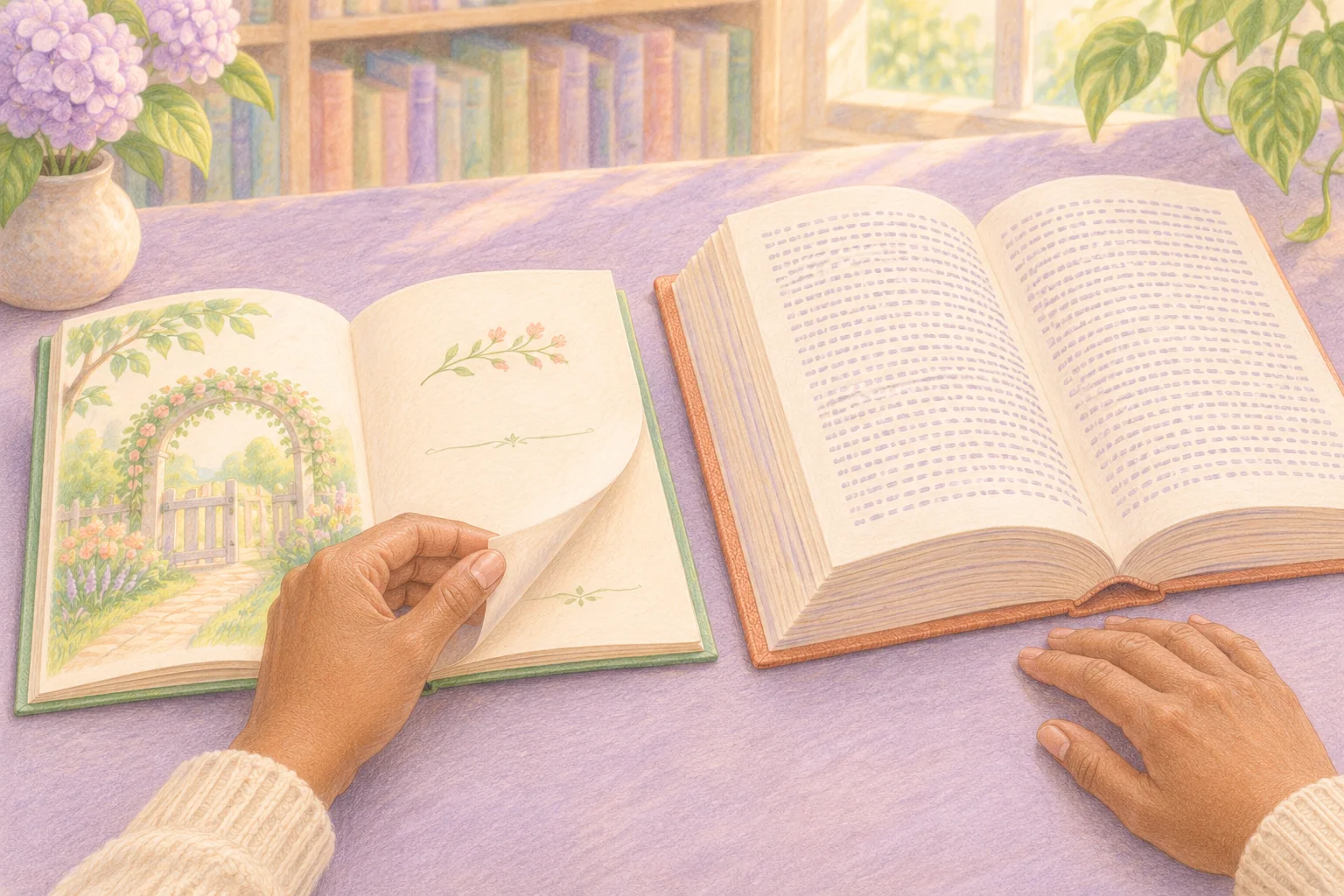
Illustrations, larger type, introductions and different page sizes also affect a book’s thickness. A thin copy is a reason to investigate, rather than proof of missing text. Likewise, an illustrated cover does not tell you whether the wording inside is complete.
One familiar title, several clearly different versions
Penguin describes Ladybird Classics: The Secret Garden, ISBN 9781409311263, as an abridged retelling, with 72 pages. That description tells you something important that the familiar title alone cannot.
The publisher also lists two audio editions: Indira Varma’s unabridged recording, ISBN 9780241332634, at 506 minutes, and Helena Bonham Carter’s abridged recording, ISBN 9780141326467, at 180 minutes. These are examples of edition differences, not recommendations based on listening tests.
You do not need to calculate a percentage of the story “lost”. Duration alone cannot tell you which descriptions, conversations or events remain. Start with the publisher’s explicit description, then inspect the particular version if those details matter.
Make a five-minute edition check
- Name the purpose. Are you introducing the plot, enjoying a family read-aloud, following a school text or looking for the author’s complete wording? Write that down before comparing copies.
- Look inside the actual book. Check the title page and its reverse for an edition statement and credits such as “retold by”, “adapted by” or a translator’s name. Read the back-cover description too.
- Record the identifying details. Note the publisher, format, ISBN and any stated abridgement or adaptation. For audio, add the narrator and whether it is a reading or another kind of production.
- Check the matching publisher page. Search the ISBN rather than the title alone. On a shop page, changing the format may also change the edition details displayed. If buying second-hand, ask for a photograph of the actual copy’s title and copyright pages.
- Resolve an unclear label before committing. Ask the librarian, bookseller or publisher: “Is this the complete text, a shortened text, or a retelling? Which wording or translation does it use?” If nobody can confirm, keep the uncertainty visible.
The International ISBN Agency explains that substantial text changes and different formats require new ISBNs. Use the number to identify the particular publication. A different ISBN does not, by itself, prove an abridgement: a hardback and paperback can differ in format while retaining the same story text.
When the book needs to match school or audio
If school names a title without an edition, ask what must match before buying: the complete text, a translation, chapter divisions, page references or a specified ISBN. Try: “We have a retelling. Will that work for this task, or should we borrow the edition you use?” A useful introduction to a story may still leave out a passage needed for a quotation or discussion.
For reading along with audio, compare the credited text or translation and sample the same passage where possible. If sentences diverge, check edition details before asking the child to track more carefully. A dramatisation or retelling may be enjoyable without functioning as a word-for-word partner for the printed copy.
Once the editions fit, our guide to choosing a family audiobook covers the separate questions of narration, listening context and playback access.
Choose a version without making it a status test
For a first encounter with a story, a retelling might suit the time and interest available. If your child wants the original language or fuller detail, look for a verified complete edition. Neither choice needs a promise to “graduate” to another version by a deadline.
Text coverage and accessibility are separate checks. Shortening a story does not establish that its vocabulary, layout or themes will suit a particular child. Equally, a complete text can be accessed through shared reading or a suitable audio format. For a reader who needs manageable print without a childish presentation, see choosing age-respectful books for an older developing reader.
Preview the actual version for frightening scenes, discrimination or other themes your family wants to discuss. An abridgement label does not guarantee their removal. Let the child stop or choose another book without having to defend the decision.
If you already own a retelling, keep it if it serves a purpose. You can borrow another edition when needed. Say, “This writer tells the story differently. Let’s check which version we want,” rather than treating a surprising difference as anyone’s reading mistake.
Sources and further reading
- International ISBN Agency: when editions and formats need separate identifiers
- Kobo: abridged and unabridged audio explained
- Penguin: the identified Ladybird retelling, and the two recording pages linked above
Read our editorial policy and review methodology.