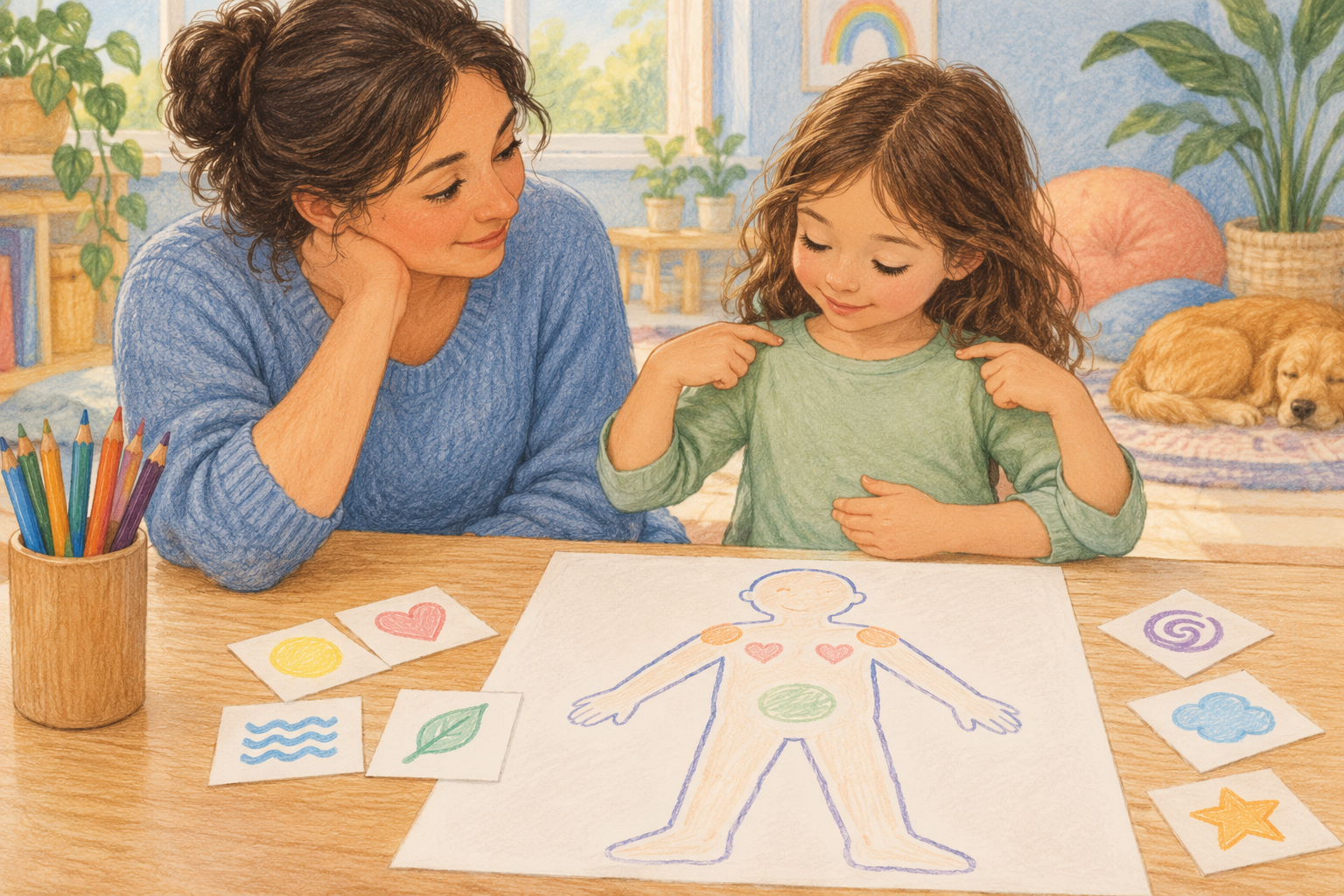
Emotions often show up in the body before a child has words for them: a tight jaw, quick breathing, warm cheeks, a heavy stomach, restless legs or an urge to hide. These signals are personal. A racing heart might mean excitement for one child and worry for another. The skill is not memorising a universal chart; it is noticing patterns in one child’s own experience.
Observe without declaring
Use tentative language: “Your hands are gripping the cushion. I wonder if your body is telling us something.” Then let the child correct you. “No, I’m cold” is useful information. Avoid “I know you’re angry” or turning every movement into an emotion test.
With babies and toddlers, caregivers do most of the noticing: changes in movement, gaze, sound, breathing or closeness-seeking. Respond to the need—comfort, quiet, food, movement or connection—without expecting the child to label it.
Make a personal body map
Draw a simple body outline. Pick one recent, manageable moment—not the child’s most upsetting experience. Ask:
- “What did your face, chest, tummy, hands or legs feel like?”
- “Did your body want to move closer, move away, get loud or become still?”
- “When did you first notice it?”
- “What helped even a little?”
Use the child’s words: fizzy, buzzy, hot, squeezed, wobbly, blank. There is no need to replace them with adult vocabulary if they communicate meaning.
Connect cue, possible feeling and choice
Build a flexible sentence: “When my shoulders rise, I might be worried or overloaded. I can check what is happening and choose a next step.” The word might matters. Body cues can also come from illness, pain, hunger, exertion or excitement.
Make a short menu of safe responses: drink water, move, reduce noise, breathe out slowly, ask for company, take space, use a sensory support already recommended for the child, or tell a trusted adult. The aim is earlier choice, not preventing all strong emotion.
Practise in neutral moments
Pause during a story, sport or music: “What do you notice in your body right now?” Include pleasant and calm states so body awareness does not become a search for problems. Compare before and after running, resting, laughing or solving a puzzle.
For ages 3–5, offer two concrete choices: “Does your tummy feel soft or tight?” Ages 6–9 can colour a body map. Tweens can track a cue, situation and helpful response for a week. Teens may prefer a private phone note and should control who sees it.
Co-regulate before teaching
When emotion is already intense, use fewer words and regulate yourself first. Lower your voice, reduce demands, protect safety and offer the agreed support. Reflection can come later: “What was the earliest clue you remember?” A lecture during overload is unlikely to build awareness.
Avoid turning cues into blame
Do not say, “You knew your fists were tight, so this is your fault.” Noticing is a developing skill, and a cue does not always arrive early enough to change course. Keep the boundary clear while staying supportive: “You were furious. Hitting is not safe. Next time we’ll look for the tight-hands clue and move away sooner.”
When to seek more help
Talk with a qualified health professional if body sensations are painful, sudden, persistent, linked with fainting or breathing trouble, or causing substantial distress. Seek urgent medical help for immediate danger. Emotional coaching should not be used to explain away physical symptoms.
Continue with Feelings Through Faces, Shadows and Statues, a calm-down box, or drawing feelings that are hard to say.