

By EdCaptain editorial desk · Published
Children deserve to enjoy what they have learned and accomplished. Yet many receive two confusing messages: “Be proud of yourself” and “Do not show off.” Some begin to deny every success. Others announce it in ways that leave peers feeling compared or dismissed.
The useful distinction is not pride versus modesty. It is sharing versus ranking. A child can state what happened, name their effort and enjoy the moment without claiming that the achievement makes them better than someone else.
Teach a four-part way to share
Offer a flexible pattern:
- Fact: What happened?
- Effort or learning: What did you do or discover?
- Credit or gratitude: Who or what helped, if relevant?
- Connection: Invite the other person in.
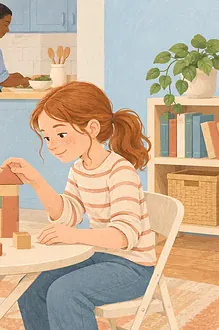
For example: “I made the school team. I practised serving every morning, and my cousin helped me. Do you want to hear about the trial?” A younger child might say, “I built this tall tower. It fell twice and I tried again. Want to see?”
Not every announcement needs all four parts. The pattern simply reminds children that achievement has context and conversation has two people.
Remove the ranking language
Bragging often appears as comparison: “I am the smartest,” “Mine is much better,” or “You could never do this.” Help the child describe the accomplishment without reducing someone else. Replace “I beat everyone” with “I finished first today,” then add what the child valued about the experience.
If a competition genuinely has a winner, children do not need to pretend otherwise. They can celebrate and still show sportsmanship: thank opponents, avoid taunting, and make room for other people’s feelings.
Match the moment and audience
Teach children to notice whether the listener has capacity. A friend who just lost the same competition may need comfort before hearing a detailed celebration. That does not mean hiding the achievement forever. It means choosing timing and tone.
Practise asking permission: “I have good news. Is now a good time?” Online, consider privacy and permanence before posting certificates, team details, locations or images of other children.
Do not train false modesty
When someone compliments the child, avoid demanding denial: “Oh, it was nothing.” A simple “Thank you, I worked hard on it” is both confident and grounded. If other people helped, the child can name them without erasing their own contribution.
Likewise, do not force children to credit luck when effort mattered, or effort when circumstances gave them an advantage. Accurate language is healthier than a performance of modesty.
Respond to boasting with curiosity
If your child repeatedly inflates stories or dominates conversations, look beneath the behaviour. They may be seeking reassurance, competing for attention or unsure how else to join in. Correct privately: “You wanted everyone to know you were proud. When you said nobody else was any good, it pushed people away. Try the fact without the put-down.”
Then provide ordinary attention that is not earned by achievement. Children who feel noticed for humour, kindness, questions and company have less need to make every success prove their worth.
Practise celebrating other people
At family meals, let each person share one thing they are pleased about and ask one follow-up question about someone else’s news. Include effort, repair, courage and contribution, not only prizes and grades.
A child can say, “That is great,” without pretending not to feel disappointed. Teach both truths: “I am happy for you, and I need a little time because I wanted it too.”
Keep success in proportion
Achievements are events, not identities. Avoid turning one result into “our genius,” “the athletic one” or the sibling everyone must match. Ask what the child enjoyed, what surprised them and what they want next. This keeps pride connected to learning rather than status.
Related EdCaptain resources include receiving compliments comfortably, using specific, honest praise, and giving kind, useful feedback.