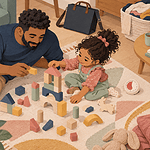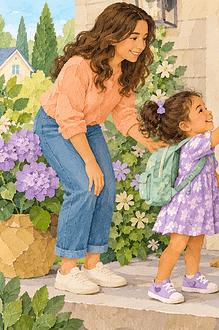
Praise can feel surprisingly complicated. Say too little and you may worry your child feels unseen. Say “Amazing!” after every scribble, bite and button, and the words can begin to feel automatic. The middle ground is not silence. It is attentive, honest feedback that helps a child notice what they did.
Move from a verdict to an observation
General praise such as “Good job” is kind, but it gives little information. A specific comment names the action:
- “You kept trying different pieces until the puzzle fit.”
- “You made room so your cousin could sit with you.”
- “You remembered to put the cup where small hands cannot reach it.”
This does not mean praising every effort or avoiding outcomes. It means keeping the statement true and proportionate. When a child is proud of winning, celebrate with them. When they lose, you can notice sportsmanship, practice or what they learned without pretending the result did not matter.
Let the child own some of the moment
Before supplying your evaluation, try curiosity: “You worked on that for a long time. What part do you like?” or, “How did you decide to solve it?” Some children want enthusiastic applause; others dislike being watched or singled out. Follow their cues. A smile, thumbs-up or quiet “You did it” may land better than a public announcement.
Be careful with labels such as “You’re the smart one” or “You’re always kind.” Labels can feel like a role a child has to protect. Describe the present choice instead: “You checked your answer another way,” or, “You noticed she needed help.” Children can then repeat a useful action without having to prove a fixed identity.
What to say when the result is messy
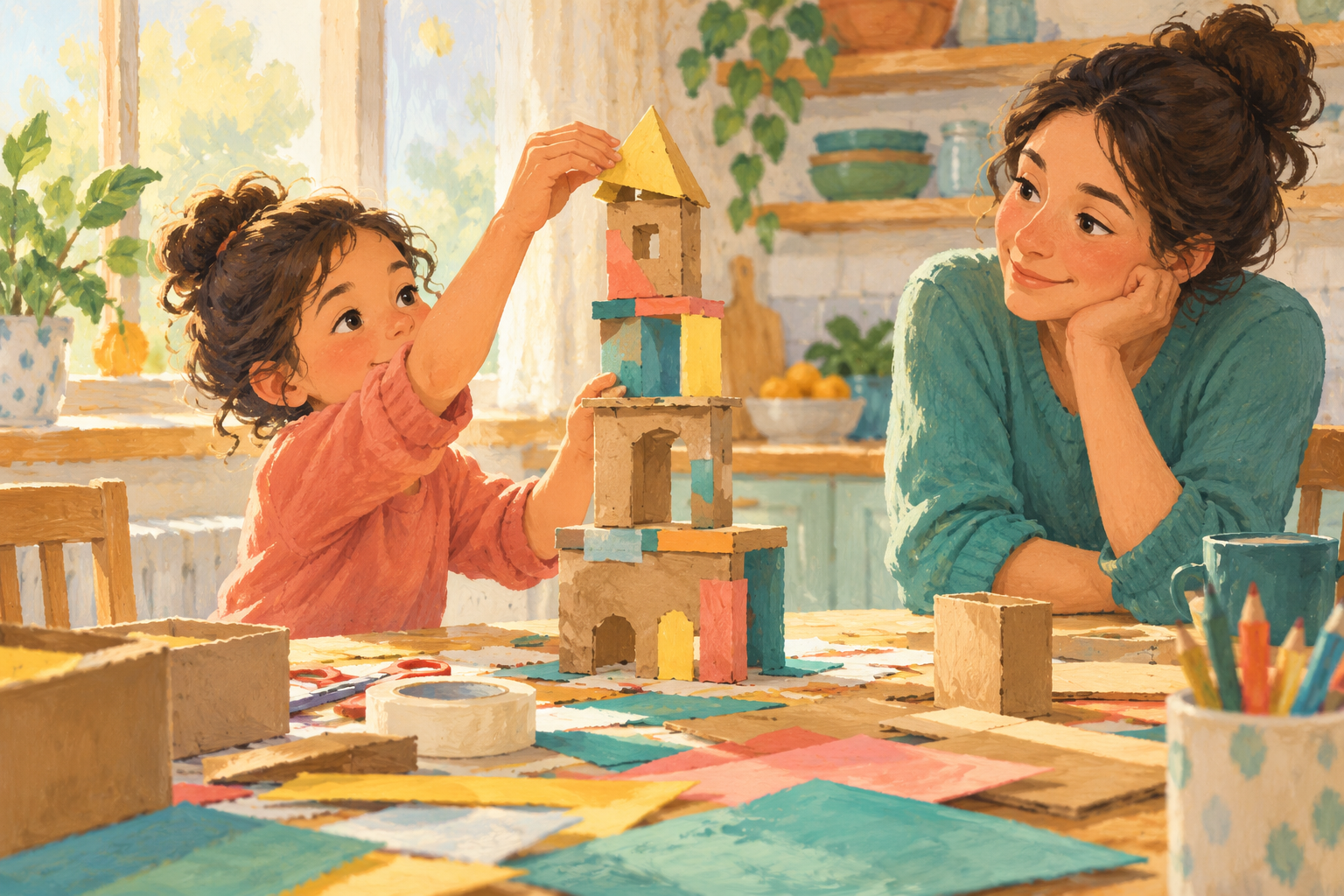
You do not need fake praise. If a tower falls or the drawing is not what your child hoped for, start with their view: “That did not turn out the way you wanted.” Then ask whether they want help, another try or a break. The goal is not to turn disappointment into a lesson immediately. Our guide to handling art mistakes offers more language for perfectionist moments.
A small experiment for this week
Choose one routine and replace one automatic “Good job” with a description. Notice the effort, strategy, care or contribution you actually saw. Then stop talking and let the child respond. Praise works best as part of a warm relationship, not as a constant scorecard or a way to control every choice.
If rewards and motivation are becoming tangled, read this practical guide to rewards, praise and motivation.