Age guide: 4–9 years. Adapt the activity to your child’s interests and abilities.
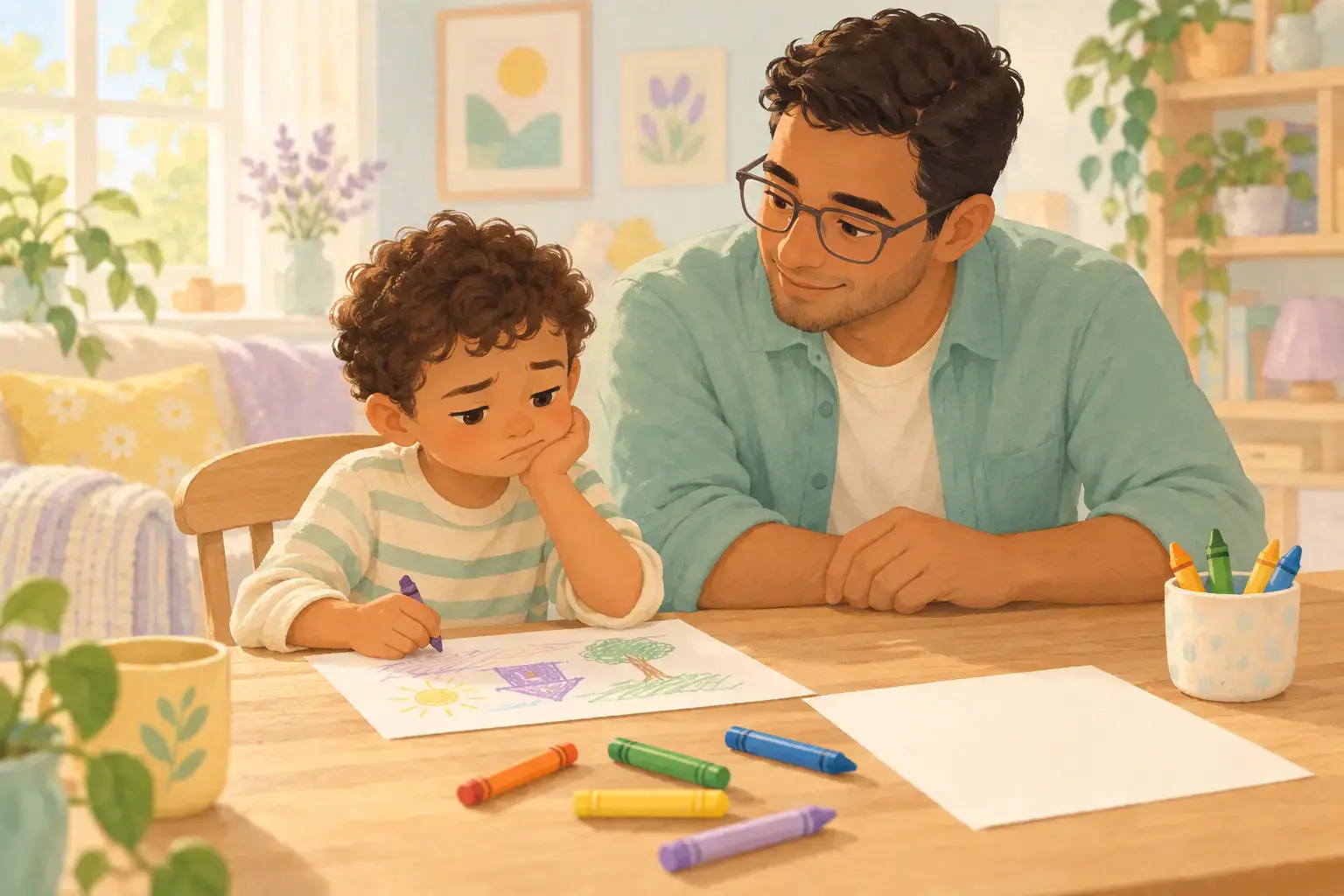
One line goes in the wrong place. The paper is suddenly “rubbish”, the pencil is abandoned and your child wants the entire picture gone. You can see an easy fix. They may need something else before they can hear it.
First, put the repair on hold
Try: “You’re upset because it isn’t how you wanted.” Acknowledge the disappointment without agreeing that the whole picture is worthless. Keep your voice ordinary and leave a little breathing room.
If pencils or other objects are being thrown, calmly make the space safe. Feeling cross is allowed; hurting someone or damaging shared belongings needs a limit.
Ask which kind of help they want
Offer a short menu:
- “Would you like me to listen?”
- “Shall we look at one way to change it?”
- “Would you like to put it aside?”
They may not know immediately. You can sit nearby without turning every disappointed moment into a lesson about resilience.
Make the next step small
If your child wants to continue, focus on the actual problem. A torn corner might need tape. A missing colour might need another tool. A drawing that does not match their idea might need a closer look at the object they are trying to draw.
NAEYC’s process-art guidance describes helping children break down creative problems when they ask for support. Try one change together rather than repairing everything at once.
Offer possibilities without demanding a positive spin
A stray line could become part of the picture. It could also remain a stray line. You do not have to insist that every mistake is secretly wonderful.
Try: “We could add something here, cover this part, leave it, or start again. Which do you prefer?” Keep a fresh sheet nearby. Starting over is not automatically giving up, and keeping an unwanted picture is not automatically growth.
Talk later about what made it hard
When everyone is calmer, ask whether the task was frustrating because of the materials, the time available, the example they were copying or the fear that someone would judge it. Look for a practical change you can make.
- Use a larger page or a more comfortable drawing tool.
- Put the adult example away if comparison is taking over.
- Keep unfinished work somewhere safe.
- Ask permission before showing the picture to other people.
If distress around mistakes is persistent and interferes with school, play or everyday activities, discuss the pattern with the appropriate educator or qualified professional.
For today, your child may need permission to be disappointed and still have a place beside you. The next picture can begin when they are ready.
Try next
- The box was the best part: cardboard play that starts with your child’s idea
- One table, different ideas: creative play for siblings