By EdCaptain editorial desk · Published
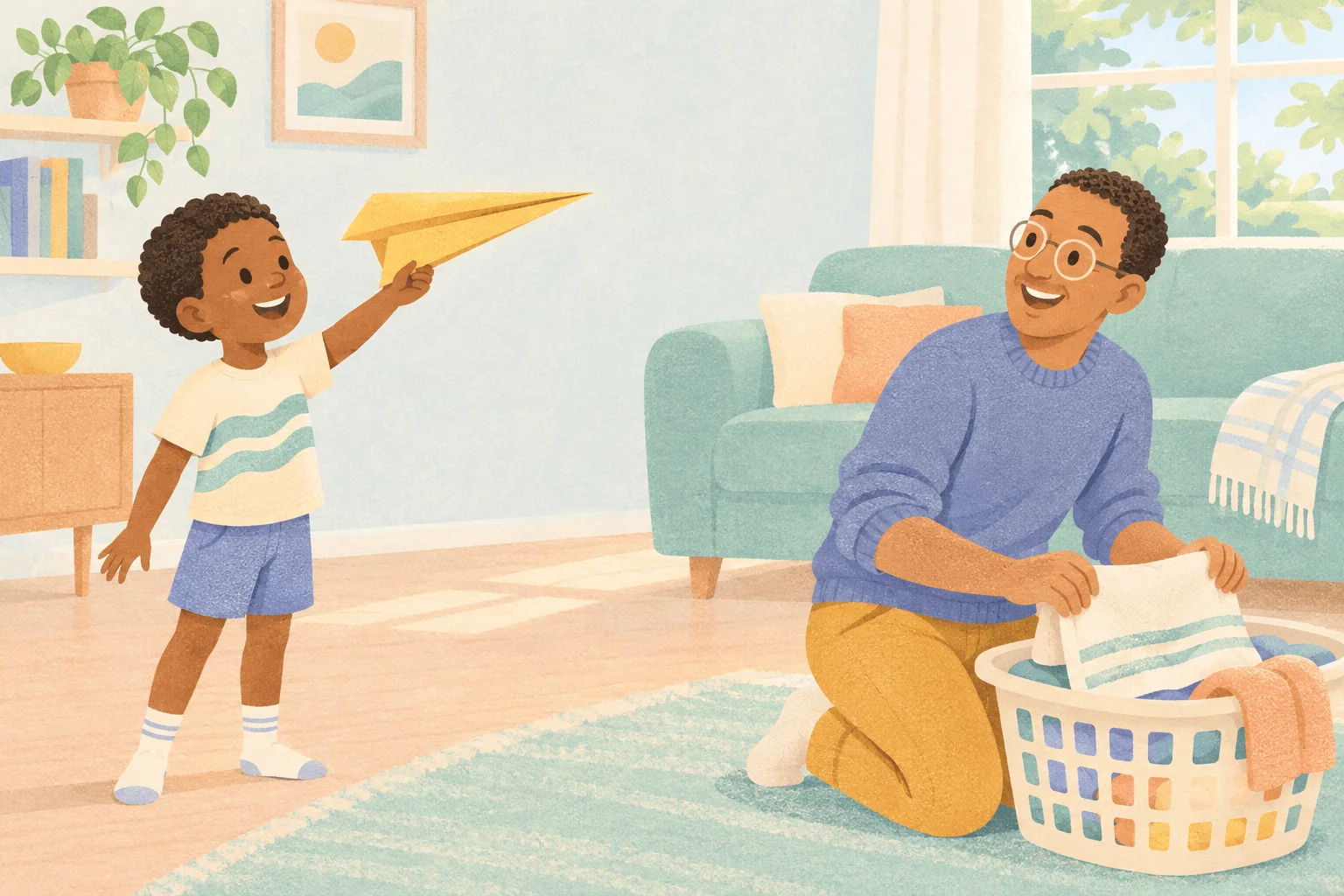
Your child has folded a paper plane and is ready to launch it. You’re on the phone, just getting to the part of the call you can’t miss. “Watch me!” they say. Then, louder, “Watch me!” You can hear them, but you can’t give the plane a proper look yet.
If you can speak, give a short, honest answer. “I heard you. I want to see the plane. I can watch when I hang up.” If the plane is already in the air, you can come back to what happened when the call ends. You don’t have to say you saw the flight to let your child know it matters to you.
Decide whether this is something to save or something to see now
A drawing can wait on the table. A bird outside the window may be gone in a second. It helps to answer differently, even if you only have a moment to think.
- When it can wait: Give a cue your child can recognise. “Put your picture on the chair. I’ll come look after I put the towels away.” Choose a step you can actually finish, then go to the chair. Asking them to put it somewhere can give both of you a reminder.
- When the moment will pass: If it’s safe and you can spare a glance, take it. Say what you saw. “I saw the bird land on the rail.” If you can’t look, acknowledge the moment without trying to save it. “I can’t look while I’m driving. I’d like to hear about it when we park.”
- When they need you for safety or help: Treat that as a different request. Check promptly if they’re hurt, stuck or in an unsafe situation. For a trick that needs adult supervision, ask them to stop and wait until you can supervise. Save the conversation about taking turns for a calm moment.
When you can’t speak, a nod or hand gesture you’ve agreed on beforehand can mean “I heard you.” Try it in an ordinary moment before you need it on a call. If a call runs long, update your child when you have a chance instead of repeating “almost done.” It helps if the signal is easy for both of you to see or use. If your child uses a communication device or signs, agree on a signal that fits their usual way of communicating and keep their way of asking for help available.
When you come back, pick up what they started
Go to them and name the thing you remember. “I’m off the phone. Where did the plane land?” If they still want to show you, give the next flight your attention. “It turned right at the end.” Then pause. They may want to tell you why it turned, hand you the plane or change the subject.
Harvard’s Center on the Developing Child describes these brief back-and-forth moments as serve and return. A child points, calls or shows you something. You respond to what they’re doing and leave room for their reply. The centre’s guide suggests looking for small chances during the day. Watching one launch and listening to what your child noticed can be a complete exchange.
If you missed it, say so. “I was still talking when it flew. I wish I’d seen that.” Your child might want to tell you about it or show you where it landed. If they say the next flight won’t be the same, they may be right. You can say, “You wanted me to see the first one.” Leave the decision about another try with them.
Make the answer easier to understand next time
A preschooler may understand “after this towel” more easily than “in a few minutes.” Keep the wait short when you can. A child in primary school might be able to save a drawing or choose which part they want you to see first. If they forget what they wanted to show, you can offer a reminder. “Was it the plane with the wide wings?” Let it go if they’ve moved on.
Use a way of paying attention that suits the moment. If you can’t see the detail your child is pointing to, ask them to describe it or bring it closer, if safe. You can show you listened by responding to what they told you. This guide to listening without requiring eye contact offers other ways to show attention.
When the requests tend to pile up at the same time each day, notice what you can realistically offer then. A regular moment before your first call or after you put dinner on the table can give your child another chance to share something. For an example that fits into a busy day, see how to set aside a short stretch of child-led time.
Sources and further reading
- Harvard Center on the Developing Child’s guide to everyday serve-and-return exchanges (PDF)
- UNICEF Egypt’s guidance on asking for time and communicating with family members
- UNICEF’s guidance on listening and making promises you can keep
Report an error or suggest an improvement
Was this useful?