You’re finding your seat at the school concert when your child leans over and says, “Please don’t yell my name.” You were planning to make sure they could hear you from the stage. Now you have something more useful to go on. “Okay. I’ll clap with everyone at the end. Does that feel right?”
A request for quiet can mean several things. Your child might want to concentrate, dislike hearing their name across a crowd, or prefer to celebrate later. You can take the request seriously even if they can’t explain it. Start by finding out what they want you to do at this event.
Make a plan before you take your seat
Talk somewhere your child can answer privately, such as while packing their kit or walking to the venue. Ask about one specific thing. “When you’re on the court, would you like me to clap with everyone or watch quietly?” At a recital, you might ask, “Would you rather I sit where you can spot me or a little farther back?” If they shrug or say they don’t know, offer an easy default. “I’ll sit with the other grown-ups and keep my voice down. You can tell me if you want something different.”
Check what their words mean in practice. “Don’t cheer” could mean “Please don’t use my name,” while ordinary applause for the whole group feels fine. A child who says “Don’t wave” might still want to know exactly where you’ll be. A child who finds gestures distracting might prefer to arrange a simple meeting point afterwards and skip signals altogether.
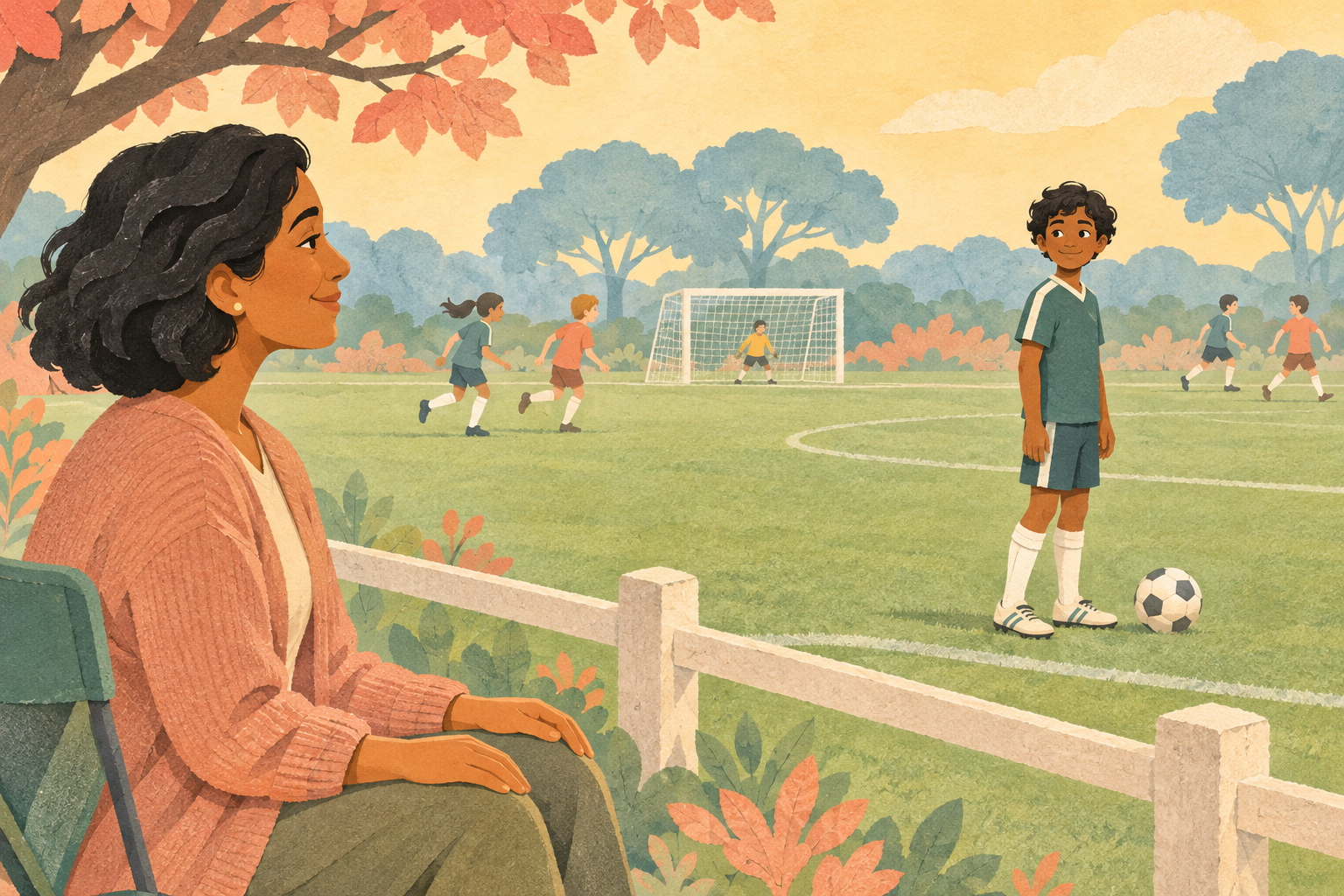
- At a game. Agree on where you’ll stand, what you’ll do if others start shouting, and whether your child wants a wave between plays. Follow the club’s spectator rules and leave instructions to the coach.
- At a performance. Agree on how you’ll join group applause. Ask separately about photos, filming and sharing, and follow the venue’s rules. Your child might be happy for you to clap and still want the phone to stay in your bag.
- When family members are coming. Give them the plan yourself. “We’re clapping with everyone and saving our congratulations for afterwards.” Let your child decide whether they want to explain their preference.
Make the choice easy to communicate
A preschooler might understand “little clap or hands in my lap?” better than a broad question about support. Show both options with your hands and let them point, copy you or choose a picture. For school-age children, make the plan concrete. “I’ll sit near the door. If you look over, I’ll smile.” For preteens and teens, a brief text earlier in the day can give them space to answer without teammates listening.
Use whatever communication already works for your child, including a communication device, pointing or a simple yes-or-no question. If crowd noise is part of the concern, ask which sound bothers them and check what the organiser can do. Your own quiet response is something you can promise. The whole room’s volume may be outside your control.
If they ask you to stay away
Find out whether it’s your presence or something that happens while you’re there. “Would it help if I watched from farther back, or would you rather I pick you up afterwards?” If attendance is optional and your child would like you to skip this one, agree on where and when you’ll reconnect. For an event where a responsible adult needs to stay, explain that plainly and offer the choices you can keep. “I need to stay at the venue. Would you prefer I sit at the back or wait in the lobby if that’s allowed?” Follow the organiser’s supervision and collection arrangements.
You may feel disappointed, especially if you were looking forward to seeing something they’ve worked hard on. Give yourself room to feel that without asking your child to change their mind. You can still offer a lift, help them find a missing shoe, or have a snack ready at pickup.
Let the first few minutes afterwards be ordinary
If your child comes out bursting to tell you about a save or a tricky part of the song, listen to their version first. If they head straight for their bag, try “I’m glad I got to be there. Want to talk now or later?” They may want water, quiet or a conversation about something else entirely. When they do want feedback, use a specific, honest observation they can respond to. “I saw you make room for your teammate” gives them a detail to talk about if they choose.
If you shouted after promising to keep quiet, acknowledge it privately. “I called your name after I said I wouldn’t. I’m sorry. Next time I’ll keep it to a clap.” Give them time to answer. If the whole event was difficult, the advice on helping a child recover after an embarrassing moment can help you decide what to say when they’re ready.
Check the plan again when the setting changes. A child who wants you quiet at a solo recital might welcome a cheer at a team game. A quick “Same plan today?” gives them room to tell you what feels right this time.