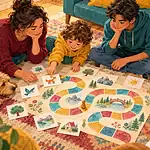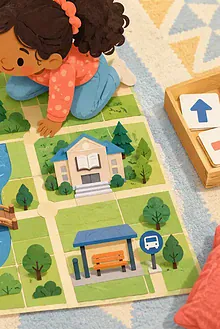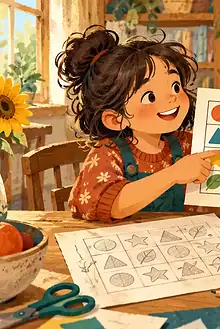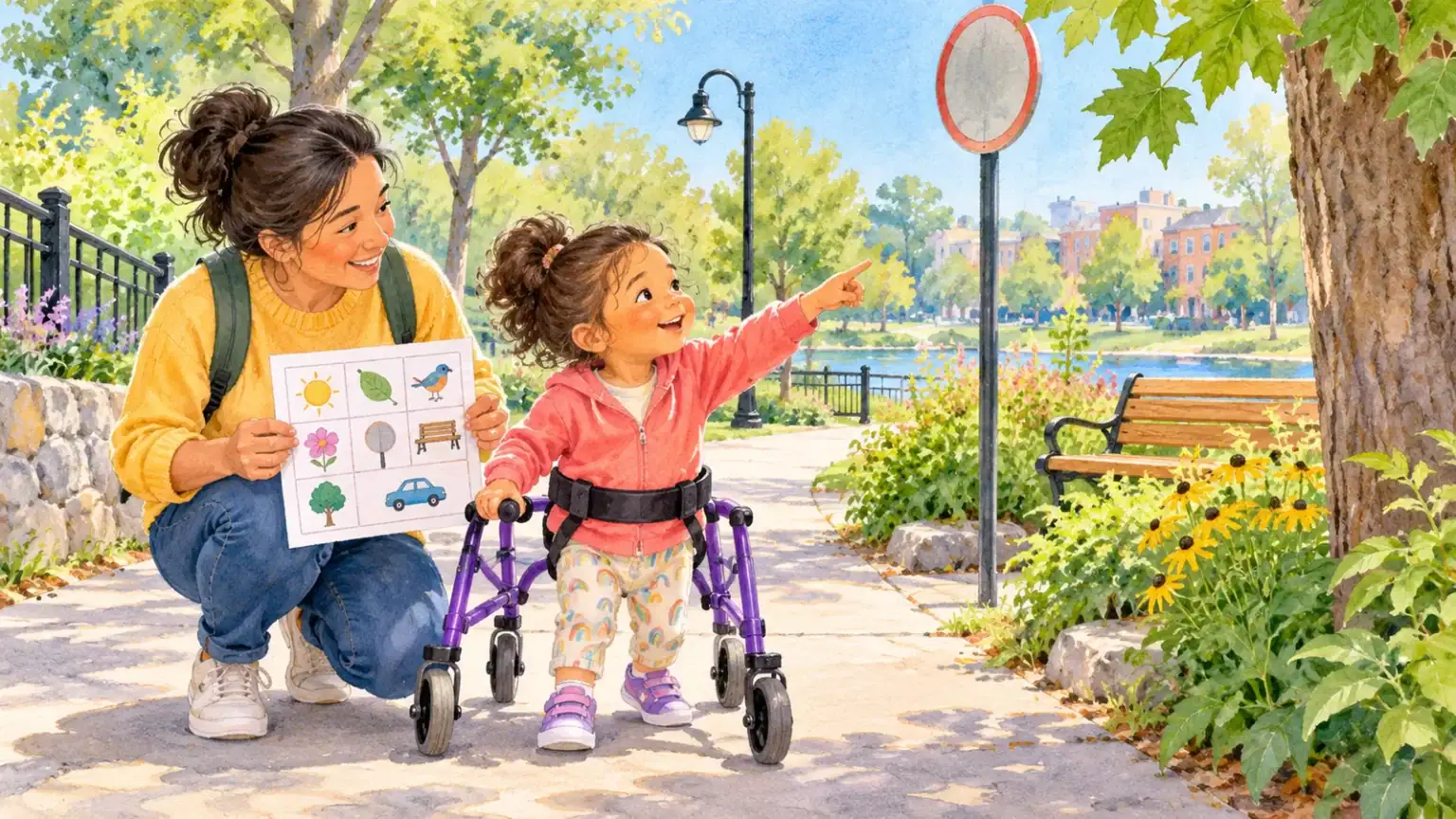
A scavenger hunt does not need written clues, a printer full of colour ink or a bag of objects carried home. For a child who is not reading yet, a one-page grid of simple pictures can turn an ordinary room, walk or waiting period into a noticing game.
The child can point, match, circle or photograph what they find. Nothing needs to be collected. That makes the game easier to use in small homes, public places and outdoor spaces where objects should stay where they are.
Materials
- one sheet of paper or thin card;
- a dark pen or marker, or a basic document app;
- six to twelve simple pictures;
- a pencil, reusable sleeve and wipe-clean marker, or small counters;
- optional phone or camera used by an adult.
For children who mouth paper or small objects, keep the sheet and markers in adult hands and use pointing or spoken choices. Supervise the environment rather than focusing so closely on the page that you miss traffic, water, animals or other hazards.
Choose pictures from the actual setting
Walk the route first. Pick items the child has a reasonable chance of finding: a spoon, cushion, round sign, leaf, something blue, wheel, door or bird. Use clear photos or simple drawings with one object per square.
Avoid pictures that encourage touching unknown plants, approaching animals, entering private areas or picking up rubbish. For an outdoor version, say “see it, leave it” and choose broad categories rather than rare treasures.
Build the printable
- Draw a grid with six large squares for younger children or up to twelve for older players.
- Place one bold picture in each square.
- Add an empty circle below each picture for marking.
- Print in black and white, or draw the page by hand.
- Test whether the child can tell the pictures apart at arm’s length.
Do not add decorative details that make the clue harder to recognise. If a child uses symbols or AAC, use the image style already familiar to them where possible.
Play in four simple steps
- Preview: name or point to each picture before starting.
- Choose: let the child pick which square to look for first.
- Find: when the object appears, the child points, matches or marks the circle.
- Reflect: ask one light question: “Which was easy to spot?” or “What surprised you?”
There is no need to finish the page. Stop when attention or energy drops. Play supports many kinds of learning, but this game is not a test and does not guarantee a developmental outcome. The American Academy of Pediatrics describes play as a context for social-emotional, cognitive, language and self-regulation development.
Make participation accessible
A child can play from a seat, wheelchair, buggy or bed by searching within their view. Another person can hold and turn the page. A child who does not point can use eye gaze, a yes/no signal or an AAC selection. For low vision, use fewer squares, high contrast and real objects at an appropriate distance.
For a mixed-age group, give younger children picture matching while older children add a category clue such as “something that moves” or “something people built.” Keep it cooperative: the group can complete one sheet together rather than race.
Try three variations
- Home reset hunt: find—not collect—six objects before ordinary tidying begins.
- Colour-and-shape walk: look for a circle, rectangle, red object and rough surface without touching.
- Sound hunt: replace pictures with symbols for a bird, footsteps, running water or a closing door.
If you want a broader week of low-cost activities, the balanced weekly play plan uses ordinary materials. For children who enjoy a trickier matching rule, try Backwards Bingo.
Keep the printable reusable
Slide the page into a transparent sleeve and mark it with a wipe-clean pen, or use removable counters large enough not to be a choking hazard for the children present. Store versions by setting—home, neighbourhood, journey—rather than printing a new sheet every time.
Let the child help design the next page by choosing two pictures. Their choices can make the game feel familiar without turning them into the adult route planner or safety checker.