A weekly activity plan can become another job for adults: seven themed crafts, seven sets of supplies and seven opportunities to feel behind. Children do not need a new production every day. They need time, safe materials, responsive adults and room to repeat what interests them.
- Build one small materials basket
- Five experiences for the week
- Move: sock-ball pathways
- Make: paper, tape and colour
- Imagine: one box, many places
- Notice: a slow look outdoors
- Connect: a story that changes hands
- Put the plan on one flexible page
- Follow the child without disappearing
- Review and repeat
- Sources and further reading
This plan uses five broad experiences across a week: move, make, imagine, notice and connect. They can happen in any order. Two can happen on one day; another can be skipped.
Build one small materials basket
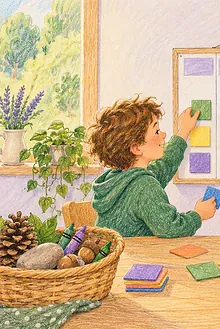
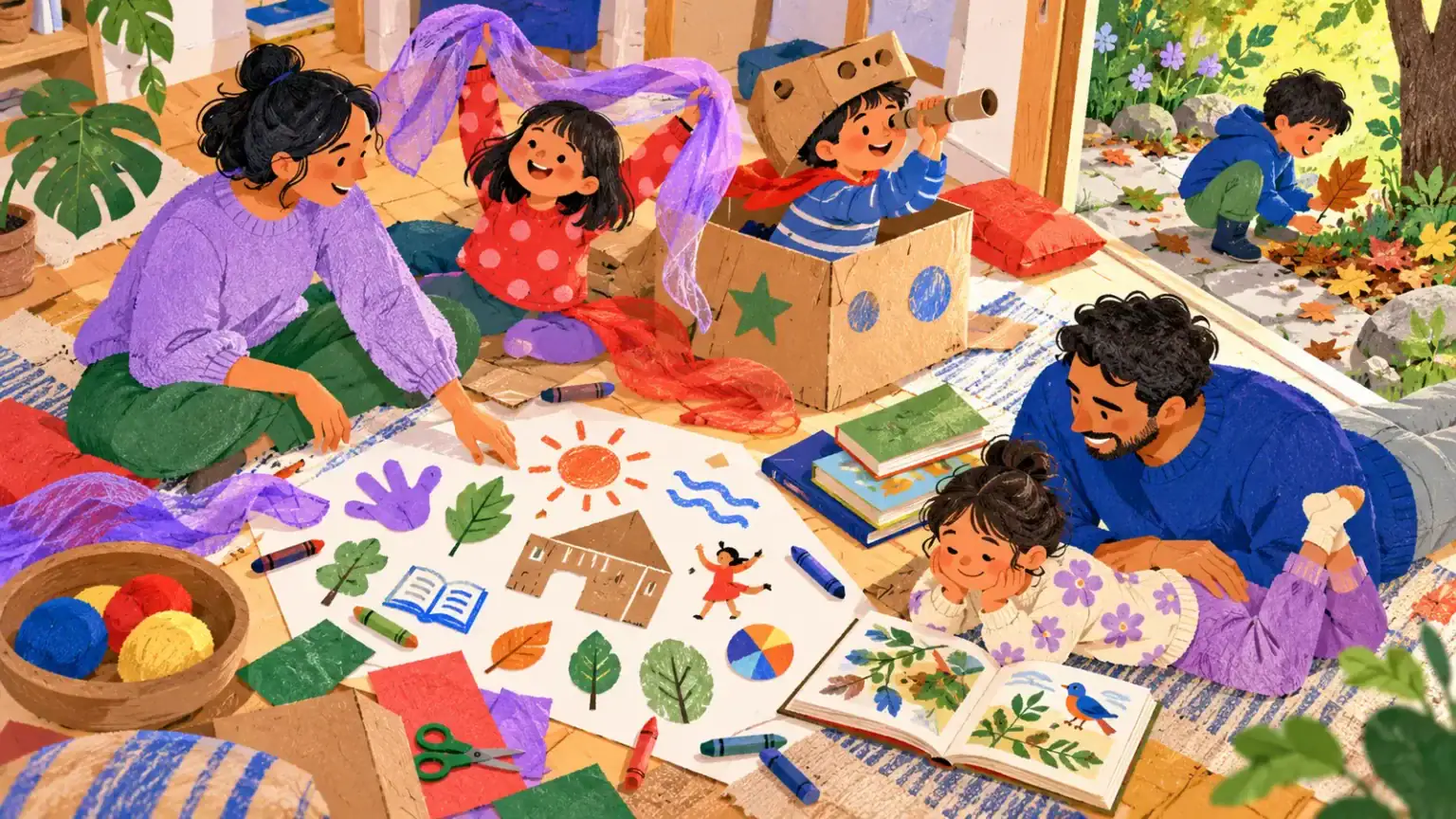
Gather a cardboard box, paper and crayons, two scarves, a few books, soft balls or rolled socks, tape, and a container for safe natural objects. Check every item for the youngest child who can reach it. Avoid small parts for children who may mouth them, supervise scissors and water, and remove cords or broken materials.
Store only enough to invite play. Head Start guidance notes that too many items can overwhelm some children. Rotate rather than accumulate.
Five experiences for the week
Move: sock-ball pathways
Make a target with a basket, then carry, roll or toss soft sock balls. Add cushions to step around if the floor is clear and the child can do so safely. A child with limited mobility might aim from a seated position or direct a partner.
Make: paper, tape and colour
Offer a large page and a few tools. The invitation is “What can these marks become?” rather than a model everyone must copy. Babies can explore safe paper textures with close supervision; older children can build signs, maps or folded structures.
Imagine: one box, many places
A box can become a bus, shop, den or animal bed. Let the child name the world. Adults can enter by taking a role: “Where does this bus stop?” Do not correct the plot into an educational lesson.
Notice: a slow look outdoors
On a walk, balcony or window, choose one category: sounds, shadows, birds, wheels or leaf shapes. Collect observations rather than living things. Children can photograph or draw what they notice.
Connect: a story that changes hands
Read a familiar book or invent a story one sentence at a time. A non-speaking child can choose pictures, gestures or AAC messages. Repetition counts; a favourite book for the tenth time is not a failed activity.
Put the plan on one flexible page
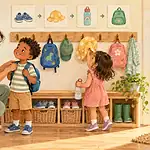
Draw five boxes and add the activity symbols. Do not assign every box to a fixed day unless the family finds that helpful. Mark three levels:
- full version: 20–30 minutes with setup;
- small version: 10 minutes with one material;
- tiny version: a song, one toss, one page or one observation.
A plan that survives tired days is more useful than one that looks impressive on Sunday.
Follow the child without disappearing
Offer two choices, stay available and notice what the child is doing. You might describe, imitate or ask one genuine question. Avoid testing colours and numbers throughout the play. Learning can occur without turning the activity into an assessment.
For babies and toddlers, everyday care and floor play already fill much of the day. WHO guidance emphasises varied activity spread across the day; one planned game is not meant to supply an entire movement need.
Review and repeat
At week’s end, ask: Which activity did the child return to? What created conflict? What was inaccessible? Keep the favourite, adjust one thing and leave the rest. Repeating a strong activity with a new location or partner often offers more than constantly replacing it.
EdCaptain’s flexible weekend visual plan can hold these choices without fixing every minute. For one activity that fits several ages, see One Topic, Every Age.
A balanced week is not one that touches every developmental label. It offers varied ways to move, make meaning, rest and connect—and leaves room for children to lead.