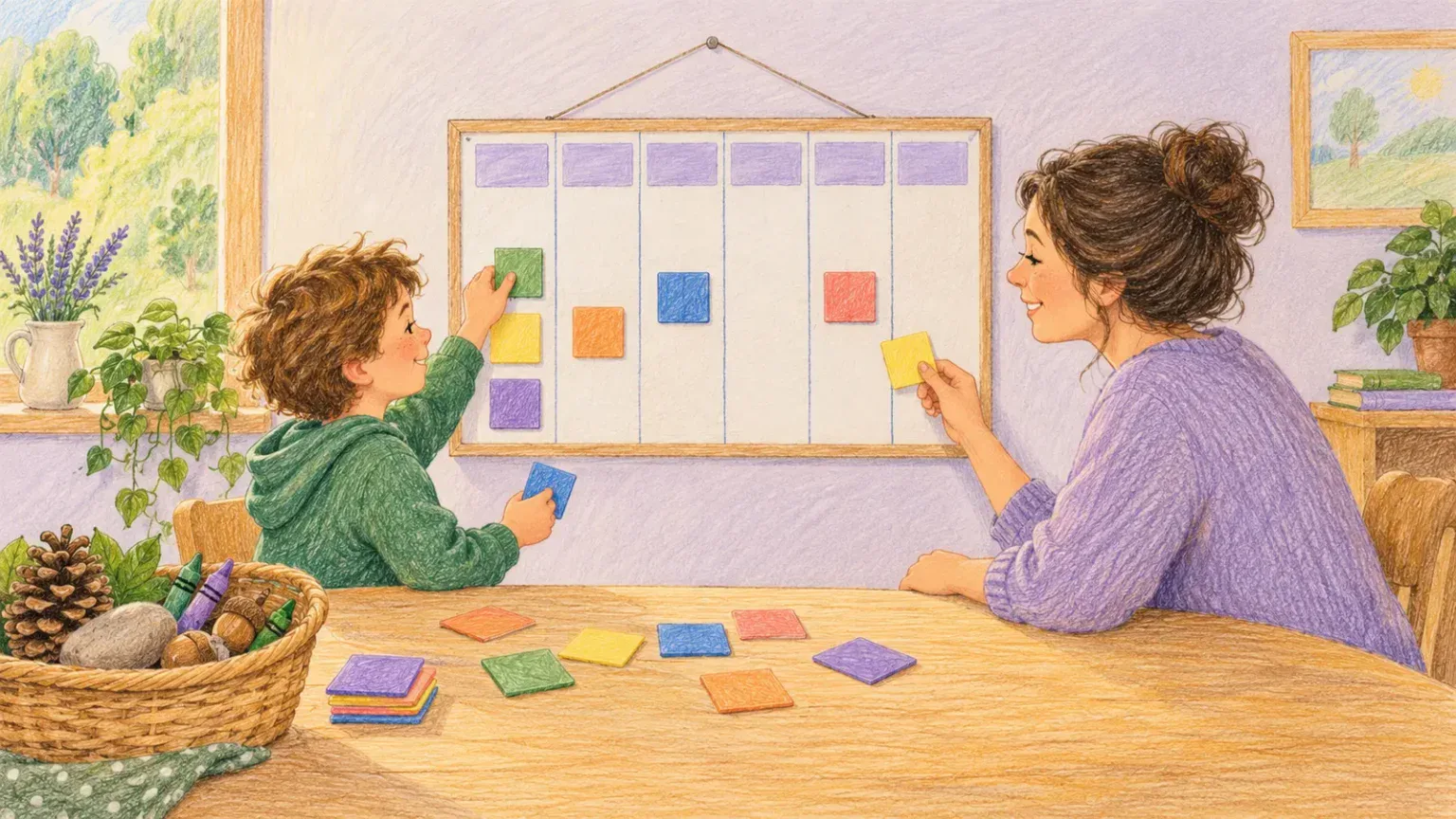
Inviting children to help plan the week can reduce repeated “what are we doing?” questions, but only if the board stays small. A page packed with activities becomes another demand. This version uses three optional windows, a short menu and visible blank space.
Adults set the frame; children make real choices
Before the planning conversation, adults identify fixed commitments, safety needs, available transport, budget and energy. Be honest: “We have time for one outing, one home project and one shared job.” Real choice means every option offered can actually happen.
Use paper divided into seven columns or a reusable board with blank coloured cards. Avoid writing private details where visitors can see them. The plan belongs to the family, not social media.
Build the menu together
Ask each child for ideas in four groups:
- Go: park, library, walk or visit.
- Make: drawing, cooking, repair or building.
- Help: meal prep, garden, laundry or pet care.
- Rest: reading, music, independent play or nothing planned.
Add a time and cost symbol that everyone understands. Remove ideas that are unsafe or unrealistic, explaining the reason without shaming the idea. Keep a “later” list so a big suggestion is not treated as foolish.
Choose only three windows
For example: Wednesday after school, Saturday morning and Sunday afternoon. Leave the remaining spaces blank except for fixed commitments. Children can place one card in each window and a backup card underneath. The backup is for weather, energy or access changes—not a consolation prize.
Use an energy check
Before starting, ask: “Do we have low, medium or full energy?” If the planned activity no longer fits, choose the backup or leave the window open. This teaches adjustment rather than rigid compliance.
Share ownership, not adult risk
A child can gather materials, check opening times with an adult, make a snack list or invite a sibling. Adults remain responsible for supervision, transport, money, online contact and safety. Older children and teens can lead more of the logistics, but they should not become default caregivers for younger siblings.
Use language that protects choice
Try: “Your idea is on Saturday. Today is blank.” “We can afford one paid activity this week; which matters most?” “The rain changed the plan, not your choice.” “You can join the shared job by washing, drying or choosing the music.” Avoid using the board as evidence in an argument: “You chose this, so you must enjoy it.”
When siblings want different things
Rotate who selects the shared window, or let one child choose the activity while another chooses the role, music or snack. Some windows can remain separate. Fair does not always mean identical, especially when ages, access needs and commitments differ.
The flexible weekend visual plan offers another way to show room for change. The balanced weekly plan can supply a small activity menu, and the low-energy plan is useful for backup cards.
Review the board in five minutes
At week’s end, remove cards rather than preserving a record of “success.” Ask: Which window was realistic? Which idea took too much setup? Did blank time feel restful or confusing? Change the frame for next week. Do not grade children on enthusiasm or productivity.
A child-led plan is not a promise that every hour will be interesting. It is practice in making choices inside real limits, adjusting when circumstances change and noticing that rest also belongs on a family calendar.
Keep the board readable
Use a few large cards rather than tiny details. Children who do not read can choose colours, objects or photographs; children who dislike visual clutter may prefer a short spoken check-in. Store unused cards out of sight. If the board itself becomes a source of conflict, remove it and return to two verbal choices. The tool is optional—the useful part is a short planning conversation with honest limits and permission for plans to change.