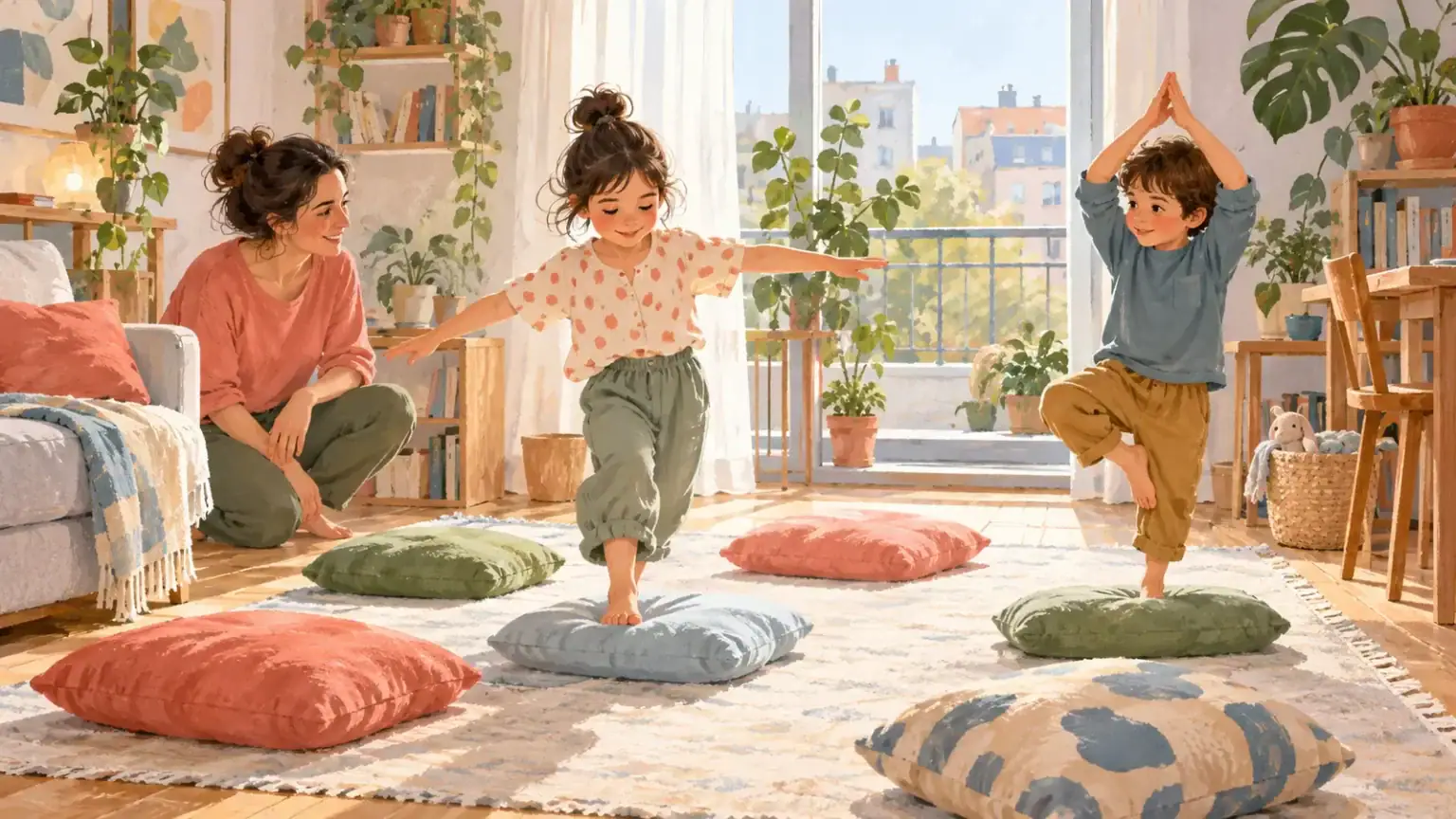
Children can move in a small home without turning the sofa into a launch pad. The key is to define a safe area, choose low-impact actions and end while control is still possible. This five-day plan uses slow balance, reaching, carrying and mirroring rather than repeated jumping.
Clear one movement square
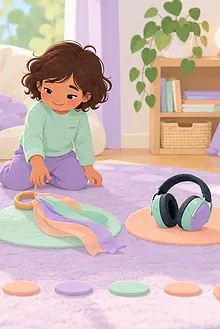
Move breakables, cords and sharp-edged furniture. Stay away from stairs, windows, heaters and doors that may open. Use a rug only if it lies flat and does not slide. Mark a boundary with cushions or paper; tape can damage some floors, so test it first. Bare feet or secure footwear may reduce slipping, depending on the surface.
Tell children the two rules: bodies stay inside the boundary, and anyone can call “pause.” If a child is too excited to use the boundary safely, switch to a seated activity rather than escalating instructions.
Monday: slow-motion mirror
Partners face each other and one leads very slow shapes: reach high, make a wide star, curl small, turn one palm. Swap after five moves. A seated child can lead with hands, face and shoulders. For a quiet challenge, move so slowly that clothing barely rustles.
Tuesday: cushion islands
Place two or three firm cushions far enough apart for a careful step, not a leap. Children travel between them while carrying a soft toy. Keep cushions flat; stop if they bunch or slide. A safer alternative is to place paper “islands” and step beside them rather than on them.
Wednesday: laundry delivery
Put a few light, soft items in a basket. Carry one item at a time to colour or person stations around the room. Older children can plan the shortest route or move in a squat only if it is comfortable. Avoid heavy loads, racing and obstructed vision. A seated version is sorting and passing items.
Thursday: invisible obstacle course
Call out movements that need no equipment: step over an imaginary puddle, duck under a branch, turn sideways through a narrow cave, freeze beside a sleeping bear. Children can narrate the next scene. Keep the pace walking-slow, and do not include blindfolds.
Friday: roll-and-reach
Sit or kneel facing a partner and roll a soft ball or bundled pair of socks. Place two targets within reach. Children can earn no points at all; simply vary direction and distance. If throwing begins, return to rolling or stop.
Build in a quiet ending
Finish every session with the same two minutes: place equipment in a basket, take a drink and choose one slow stretch or quiet pose. Predictability makes stopping easier. Give a warning—“three more rolls”—and offer a cleanup role. If a child needs a visual transition, adapt the visual goodbye routine.
Adapt for neighbours and different bodies
Use daytime hours, close doors gently, choose socks rather than balls and place play away from shared walls where possible. Ask downstairs neighbours about genuinely disruptive times if the relationship allows, but do not promise total silence from children.
Every activity can be led, narrated or completed seated. Reduce the number of stations, enlarge targets and allow extra processing time. A child who avoids movement can choose music, call “pause” or design the route. If pain, dizziness or breathing difficulty occurs, stop and seek appropriate medical advice.
For a mixed week that includes making and quiet play, use the balanced weekly plan. On tired days, switch to the ten-minute low-energy plan.
Keep only what fits
Notice which game produced steady movement rather than chaos, which surface was safest and when noise rose. Repeat the best option; there is no need for five new games every week. A small-space plan works when children know where movement belongs and adults can supervise without constant correction.