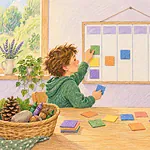
A conversation card should open a door, not shine a spotlight. At family meals, one thoughtful prompt is usually enough. Children may answer, draw, point, ask the question back or pass. The aim is warm attention, not extracting a daily report.
- Set the ground rules first
- Card 1: What made something easier today?
- Card 2: If today had a colour, sound or weather, what would it be?
- Card 3: What is something you changed your mind about?
- Card 4: What would make tomorrow five percent better?
- Card 5: Who helped, noticed or included someone?
- How to respond so the card still feels safe
- Keep different ages included
- Refresh the deck without making more work
- Sources and further reading
Set the ground rules first
Place five homemade cards face down. Choose one per meal—or none. Say: “Anyone can answer, ask a different question or pass. We listen without correcting the story.” Adults follow the same rules. Do not use an answer later to tease, punish or embarrass someone.
Put devices aside when practical, but do not let the device rule become the main event. Children who find meals difficult may participate for a short time, listen from nearby or use a drawing response. Continue following any individual feeding or medical guidance; conversation should never pressure a child to eat.
Card 1: What made something easier today?
This invites noticing without requiring a “best part.” A preschooler might say “my shoes” or point to a person. School-age children may name a routine, tool or friend. Teens can pass or describe one small convenience. Follow with a reflection—“The checklist helped”—rather than three more questions.
Card 2: If today had a colour, sound or weather, what would it be?
Metaphor lets children share without disclosing details. Offer pictures of sun, cloud and rain for younger children. Older children can invent a playlist title or choose two kinds of weather. Do not interpret the answer as a diagnosis; ask only, “Want to say more?”
Card 3: What is something you changed your mind about?
Adults should answer too. Keep examples ordinary: a food combination, a route, a game rule or an opinion about a character. This models flexibility without demanding a confession. If no one has an example, change the prompt to “What might you try differently next time?”
Card 4: What would make tomorrow five percent better?
Keep the scale small. A child might want their bottle ready, ten quiet minutes, a different breakfast or help finding a book. Separate wishes from promises: “I hear that you want a lift. I need to check before I say yes.” For younger children, offer two pictures or let them draw.
Card 5: Who helped, noticed or included someone?
This can highlight care without ranking family members. Include actions by the child, another person or even a stranger. Avoid insisting on gratitude when someone had a hard day. Adults can name an unnoticed task: “I saw you move your bag so there was space.”
How to respond so the card still feels safe
Active listening means giving attention and reflecting the meaning or feeling you heard. Try: “You were disappointed when the plan changed,” or “That sounded surprisingly funny.” You do not have to agree with every opinion. Correct dangerous misinformation later and calmly; do not pounce on small inaccuracies.
If a child shares a worry, ask whether they want listening, ideas or help. For immediate safety concerns, take appropriate action rather than keeping the conversation at the table.
Keep different ages included
Ages 3–5 can point, act or answer with one word. Ages 6–9 may draw before speaking. Ages 10–12 can rewrite a card. Teens may prefer answering while clearing dishes or later in the car. A non-speaking child can use objects, pictures, signs or an agreed yes/no response. Passing is participation when the rule is respected.
For a broader approach to calm family talk, see Family Meals Without Pressure or Perfect Dinner Tables. If humour enters the conversation, connect without making your child the punchline. For reluctant participation, borrow the opt-in structure from an inclusive family comedy night.
Refresh the deck without making more work
After a week, keep the card that felt natural and replace one that felt forced. Invite children to contribute a prompt, subject to privacy and kindness rules. Five useful cards beat a jar of a hundred questions. The best sign is not a long answer; it is that people trust the table enough to speak—or pass.