By EdCaptain editorial desk · Published
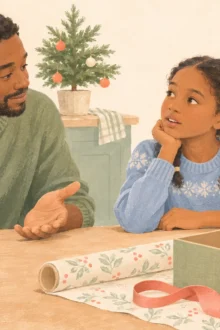
Two children are building something together when a relative calls across the room, “Is that your girlfriend?” Now the audience is looking at them instead of their project. One child laughs; the other says nothing. You can stop the commentary without asking either child to explain what the friendship means.
For families with children aged 6–12, the useful boundary is straightforward: adults do not need to assign a romantic label to a child’s friend. That leaves room for friendship, a genuine crush, uncertainty or feelings the child does not want to discuss.
Keep the first response brief
Try one sentence directed at the adult: “Please use their names. We aren’t putting dating labels on their friendship.” Then return attention to what the children were doing: “You were showing us how the bridge stays up.”
You do not need to ask, “You aren’t really boyfriend and girlfriend, are you?” That question turns the correction into another public demand. Nor do you need to announce, “They are too young to have feelings.” You are setting a boundary around the adult’s comment, not deciding the children’s inner lives.
The American Academy of Pediatrics’ guidance on first crushes advises against teasing children or dismissing their feelings. It also explains that a close friendship does not necessarily mean a dating relationship. You can respect both points at once.
Words for the adult’s next reply
Choose a response that fits what was said. You do not have to deliver all of these or make the child listen to a long discussion.
- “I was only joking.” “I understand you meant it playfully. Please leave their friendships out of that joke.”
- “But look how they are blushing!” “We aren’t interpreting their reactions for an audience. Let’s change the subject.”
- “They’ll get married one day.” “Let’s let them enjoy being friends now, without planning a relationship for them.”
- “You are making a big thing of it.” “I’m making a small, clear request: please use their names.”
A smile or laugh does not require you to keep the exchange going. You can stop making a child the subject without deciding whether they were embarrassed, amused or simply unsure what to do.
If the comment continues, move the conversation away or offer the children a change of space. Do not make them deliver the boundary for you. When practical, discuss the repeated behaviour with the adult out of the children’s hearing.
Check in without conducting an interview
Later, choose a quiet moment and say, “I heard the comments about your friend. I asked them to stop. How was that for you?” Your child may want to talk, correct your understanding or move on.
If they do not want to discuss it, try: “You don’t have to tell me who you like. I can still help stop comments you don’t want.” Avoid repeatedly asking whether the friendship is “really” something more. A boundary should not become a route to private information.
HealthyChildren.org’s communication guidance recommends respecting children’s ideas and feelings, avoiding hurtful teasing and choosing a suitable private time to talk. These scripts are ways to apply that general guidance to a specific family moment.
If your child says they do have a crush
Keep your tone ordinary: “Thank you for telling me. What would you like me to know?” You can listen without a knowing smile, a demand for details or a prediction about what will happen.
Ask before sharing the information with another adult. “Would you like this conversation to stay between us?” can open a discussion about privacy; avoid promising absolute secrecy if a safety concern may need help. Ordinary feelings do not need to become family news.
Do not contact the other child to find out whether the feeling is mutual, arrange a romantic encounter or announce your child’s feelings to their family. Caregivers can coordinate ordinary visits and supervision without turning friendship into a matchmaking project.
If your child calls someone their boyfriend or girlfriend, ask gently what that word means to them. It may describe a special friend or something they heard elsewhere. Listen before adding your own meaning, and keep everyday expectations about kindness, personal space and permission clear.
If your child says, “They’re just my friend”
Accept the answer. “Okay. You don’t have to prove that to anyone.” Avoid demanding they spend less time together to prevent comments. The people making the comments can change their behaviour.
Apply the same rule across genders. Two children who enjoy the same game need not have their future identity or relationships guessed by adults. If the discussion drifts into rules about who may play together, our guide to opening play beyond gender rules offers related language.
Give the child an option, not a responsibility
Ages 6–9: Offer a short phrase if the child wants one: “Please call them my friend,” or “I don’t want that joke.” Practise with you taking the adult role, and stop after a comfortable try. Your child can also come beside you or choose not to answer.
Ages 10–12: Ask how they would prefer your help next time. They might want an immediate brief interruption, a private word with the relative or a signal to leave the conversation. Respect their preference where possible while keeping responsibility for adult behaviour with adults.
A child who signs, uses a communication aid or needs time can choose an existing message, gesture or agreed signal. Do not require eye contact, a spoken comeback or a public explanation of why the comment is unwelcome.
Protect the other child too
Use the same boundary if the friend is visiting your home or your child starts repeating the joke. “We won’t make guesses about somebody else’s feelings.” Do not invite the children to kiss, pose as a couple or perform affection for a photo.
If a caption or family-chat message repeats the label, ask the sender to change or remove it. Do not circulate a screenshot to gather opinions. Our family-story privacy guide covers the wider question of sharing a child’s experiences.
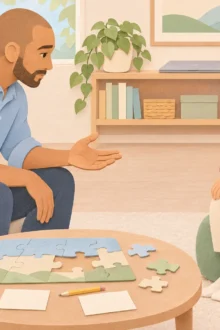
Before the next gathering, give the adult a useful alternative: ask about the children’s project, game or shared interest. Then notice whether the boundary holds. The aim is ordinary, comfortable friendship time—not a child who must laugh along to keep adults happy.
Sources and further reading
- HealthyChildren.org: first crushes, friendships and respecting feelings
- HealthyChildren.org: respectful communication and avoiding hurtful teasing
Read our editorial policy and health information guidance.