“Pink is for girls.” “Boys don’t play with dolls.” Children often repeat rules they have absorbed from advertising, classmates, relatives or the way adults arrange play. You do not need to shame them or deliver a long lecture. A calm correction and a wider set of experiences can loosen the rule.
Use a short response in the moment
Try: “Colours are for everyone,” “Toys are tools for play,” or “Children can choose what they enjoy.” If the comment targets another child, add a boundary: “We do not tease people for what they like.” Then return attention to the activity so the targeted child is not placed on display.
Ask later, “Where did you hear that?” The child may be describing what they notice rather than declaring what they believe. “Most of the football ads show boys” is an observation you can examine together. “Therefore girls cannot play” is the rule to challenge.
Connect toys to skills, not gender
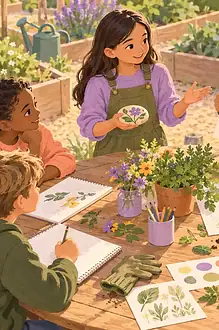
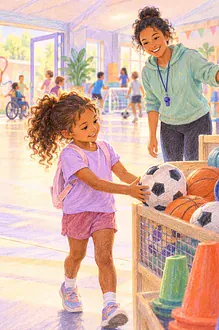
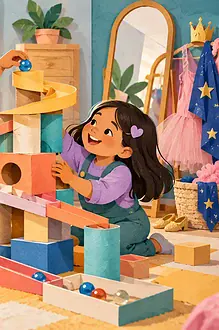
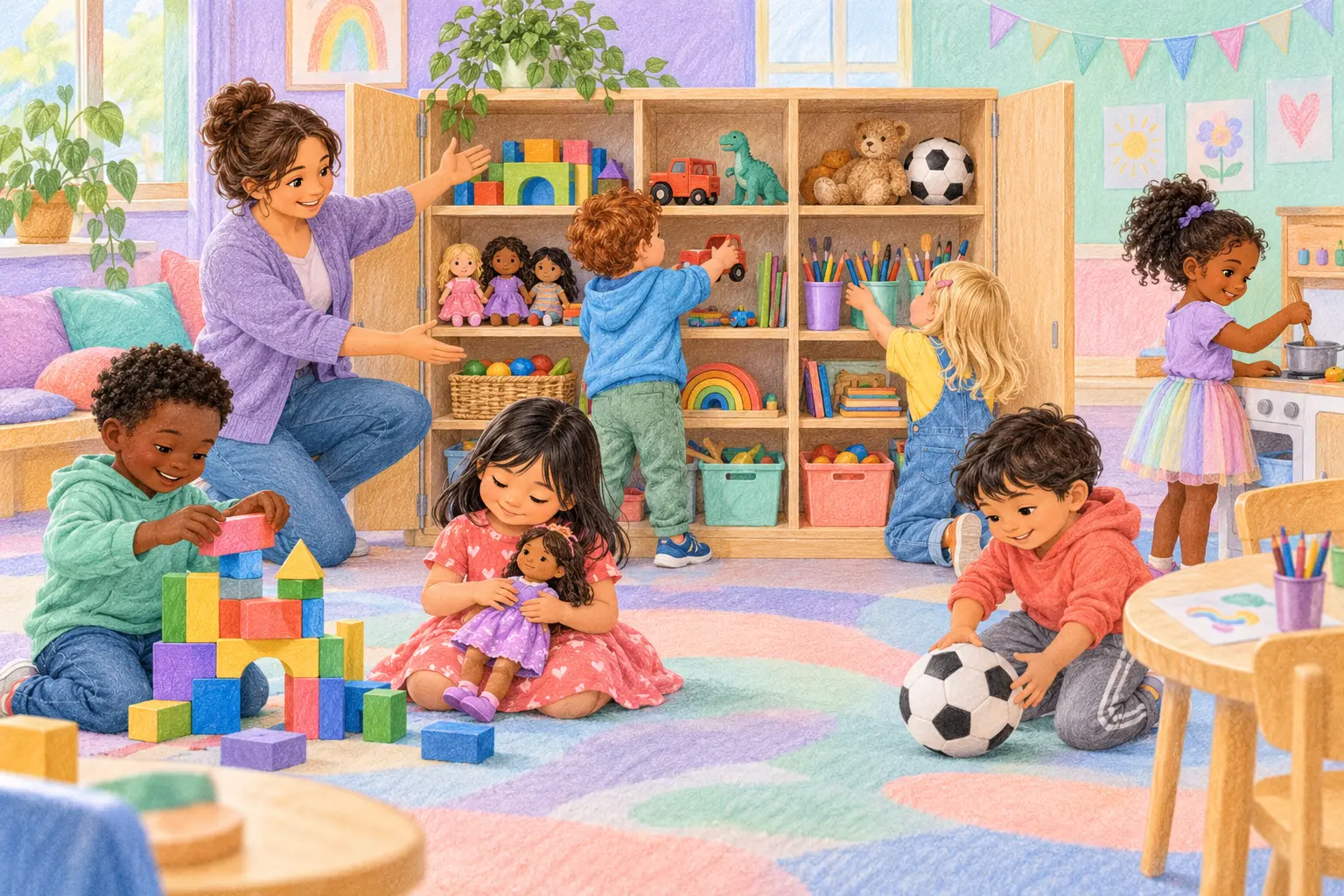
Blocks invite planning and spatial problem-solving. Dolls invite storytelling, caregiving and communication. Art materials support expression and hand control. Bikes and balls involve movement and coordination. These experiences are useful to children of every gender.
UNICEF recommends offering children a full range of toys and activities rather than restricting dolls, cooking play, building, sports or outdoor play by gender. Our article Dolls, blocks and dragons has more ways to arrange an inviting mixed play space.
Change the environment, not only the words
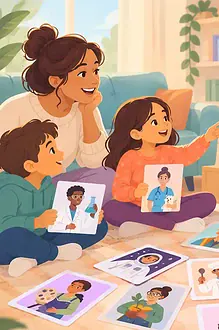
Place different materials together: figures beside blocks, fabric near vehicles, cooking props with a shop sign, drawing tools next to construction. Mixed materials create roles beyond the usual script—a firefighter caring for a baby, an engineer designing a garden, a chef building a delivery vehicle.
Look at packaging and online recommendations. If one aisle is coded pink and another blue, compare the actual function of the toys. Ask, “What can this help someone practise?” Choose books and shows where people of different genders care, lead, fix, create, feel and ask for help.
Do not force a symbolic choice
A child who loves trucks does not need to be pushed toward dolls to prove a point. A child who loves sparkles does not need to abandon them. Freedom means expanding options, not reversing the rule. Offer without pressure: “The costume box and building table are both open.”
If a child avoids an activity because peers might tease them, acknowledge the social risk. Practise: “I like it,” “It’s just a colour,” or “Anyone can play.” Ask the school or club how adults respond to gender-based teasing. Children should not carry the entire burden of changing a hostile group.
Notice adult messages
Children hear when adults praise girls mainly for appearance, tell boys not to cry, or assign lifting to men and serving to women. Make your own language more specific: praise persistence, kindness, creativity and courage across genders. Let children see adults share cooking, repairs, comforting and decision-making.
UNICEF’s guidance on equal treatment encourages adults to model varied roles and avoid jokes or phrases that reinforce gender stereotypes. If you slip, correct yourself aloud: “I said dads fix things, but people of any gender can learn repairs.”
Match the conversation to age
- Ages 3–5: Keep it concrete: “Toys don’t decide who can play.” Offer two open choices.
- Ages 6–9: Compare adverts and notice who is missing. Invent a new package for everyone.
- Ages 10–12: Discuss peer pressure and practise responding without insulting anyone’s preferences.
- Teens: Examine algorithms, influencers and the cost of gendered products. Respect their style while questioning limits.
Avoid interrogating a child’s gender identity because of one toy, colour or activity. Interests do not require a label. Create a nurturing environment where children can explore and tell you who they are in their own time.
The aim is not a perfectly balanced toy basket. It is a child who knows that curiosity, competence, care and joy are not restricted by gender.