Age guide: 3–8 years. Adapt the activity to your child’s interests and abilities.
“That’s a girls’ toy.” “Boys don’t play families.” A small comment can narrow a game before it begins. Children pick up ideas about who is allowed to do what from many places, including adults who do not mean to set limits.
You can make home a place where a child is welcome to build a tower, comfort a doll, invent a dragon or do all three in one afternoon.
1. Offer possibilities without assigning them
UNICEF recommends giving children access to a variety of play experiences without sorting them into boys’ and girls’ activities. Put building materials, pretend-care items, drawing tools and movement opportunities within reach as space and budget allow.
That does not mean buying a new collection. A teddy can visit a cardboard clinic. A paper map can lead a toy bus to a pretend kitchen. Familiar materials can support more than one kind of story.
2. Follow the interest, not a balancing scorecard
A child who loves trucks can love trucks. A child who wants to play families every day can do that. Offering variety is different from requiring them to choose something else to prove a point.
Join what interests them: “Where is the truck going?” or “What does the baby need?” A new role can emerge naturally without replacing the game they chose.
3. Answer a limiting comment simply
- “Anyone can care for a baby.”
- “Building is for anyone who wants to build.”
- “Colours are for everyone.”
- “You can choose a different toy. You cannot stop someone else enjoying this one.”
Keep your tone matter-of-fact. If the comment came from another adult, you can say, “We let them explore different kinds of play.” Your child does not have to argue the case.
4. Make room for different people in the story
Notice who gets to be the helper, builder, leader or person who needs help in books and pretend games. Offer stories and characters with varied genders, family structures and disabilities when they are available.
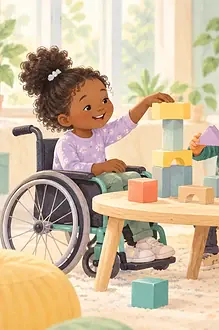
A girl can repair the spaceship. A dad can settle the baby. A character who uses a wheelchair can lead the adventure. Give characters interesting choices rather than making one identity their entire story.
5. Let children reshape the roles
If your child turns the doll’s bed into a rocket, ask where it is going. If the fierce dragon needs a blanket, help find one. Creative play often mixes ideas adults keep in separate boxes.
You do not need to praise a child for being different or make their choice a public lesson. A relaxed welcome is enough: “Yes, you can play with that. Tell me what is happening.”
Try next
- “I can’t draw”: help your child find a way back to the page
- “I’m bored”: a small nudge towards a game of their own